

Ben Affleck's Animals Is A Secret Remake Of One Of The Best Crime Thrillers Ever
This article contains spoilers for "Animals."
A wealthy man's son is kidnapped with a heavy ransom attached. The choice should be easy, but his money is tied up in a venture. From there, it gets even more complicated when it turns out the kidnapper actually abducted the son of said wealthy man's employee. After choosing the noble route, our hero has to deliver the ransom himself.
Which movie am I talking about: Akira Kurosawa's "High and Low" or Ben Affleck's new Netflix thriller "Animals?" Trick question! "Animals" wasn't advertised as such, but as many reviews have noted (including /Film's own underwhelmed "Animals" review), it sure plays like a "High and Low" remake. What's even wilder is that an Americanized "High and Low" remake only came out last year: Spike Lee and Denzel Washington's "Highest 2 Lowest."
In an interview with Entertainment Weekly, Affleck (who co-wrote the "Animals" script with Connor O. McIntyre and Billy Ray) claimed to have never seen "High and Low." Even so, he apparently delayed production on "Animals" to avoid comparisons to "Highest 2 Lowest." In the same way that Affleck's 2010 excellent bank robbery drama "The Town" feels a bit like "Heat: Boston Edition," you'll still be thinking of other movies watching "Animals."
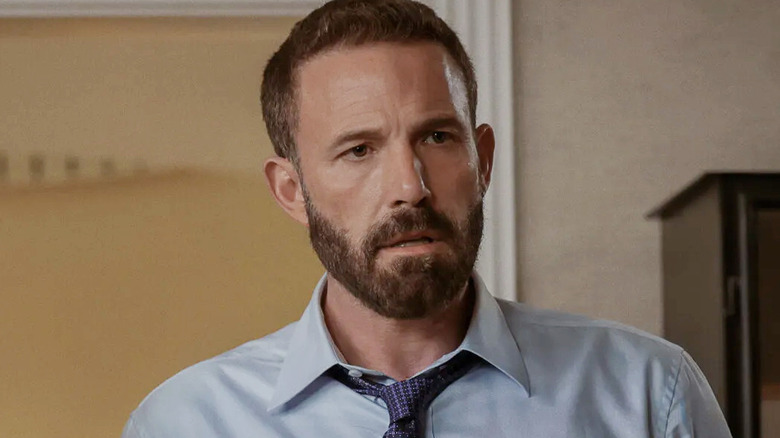
"Animals" stars Affleck as Mark Kimball, an ambitious lawyer running to be mayor of Los Angeles. Mark has sunk all he has into his campaign when, on Halloween night (and Election Day eve), the kidnapper calls. "High and Low" is a bitingly political film all about social class. Making the lead into a literal politician maps onto that, especially since the child taken in "Animals" is the son of Ramon (Luis Gerardo Méndez), an undocumented Mexican immigrant. Does "Animals" live up to its promising, though borrowed, premise and the comparisons it invites?
Animals plays like an unauthorized remake of Akira Kurosawa's High and Low
Now, "High and Low" itself adapted Ed McBain's 1959 procedural novel "King's Ransom." That alone speaks to what a universal, and undeniably exciting, premise this is. But seeing as Akira Kurosawa executed it so perfectly the first time, why try again?
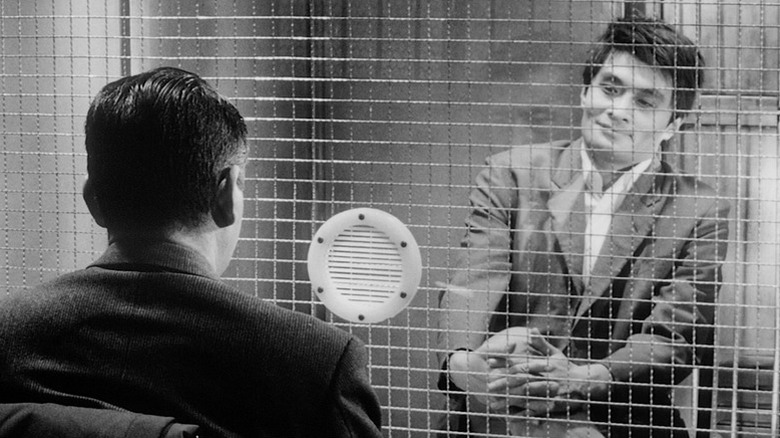
In "High and Low," the lead is Kingo Gondo (Toshirō Mifune), a businessman who had been planning a leveraged buyout of his shoe manufacturing company. The first half of the film is set entirely on Gondo's hilltop mansion. The blocking of "High and Low" remains ready made for film school, with Kurosawa making Gondo's living room resemble a theater stage. You can track characters' relationships and thinking just from how they move across the screen. In "Animals," though, Affleck prefers repeated closeups of characters yelling into cell phones stitched together with whip pans.
The biggest divergence from "High and Low" is a whole new character. Instead of phoning the police, Mark's campaign manager Sam (an underused Steven Yeun) calls in an enigmatic fixer, Dayle Burton (Gillian Anderson). Like a platinum blonde Winston Wolfe, Dayle solves expensive and incriminating problems for a steep fee. The purpose of the character, thematically, seems to be that success in politics requires compromises and indebting yourself to powerful people. Mark is specifically running for mayor as an independent, which, beyond keeping the movie as nonpartisan as its lead, tells us he's the kind of man with no patience for party machines or backslapping.
In a rare case of Affleck trusting his audience and camera like Kurosawa did, you can only glean the kidnapper's motive in "Animals" from some newspaper clippings in his office. As an environmental lawyer, Mark got some polluting businesses shut down, and the kidnapper lost his livelihoods.
How High and Low's remakes compare to Kurosawa's film
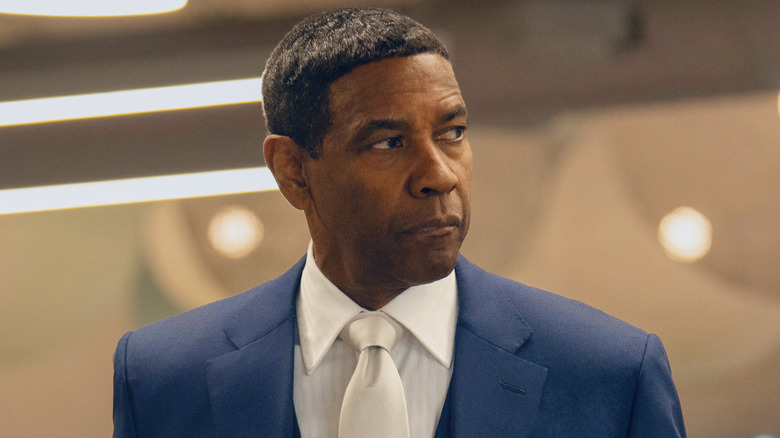
In "High and Low," Gondo worked his way up out of poverty. The kidnapper was a poor man who resented his success and impossible-to-miss mansion on a hill. "Highest 2 Lowest" followed that too, with some new social commentary on Black capitalism. There, David King (Denzel Washington) is a music mogul, and the kidnapper (A$AP Rocky) is a rapper who failed to score a record deal from his idol. Both movies conclude with the hero and villain, the high and low, sitting across from each other in a prison visitation booth. In a fatal error, however, "Animals" never gives a moment of face-to-face reckoning for Mark.
In the third act, Dayle tags along on Mark's ransom delivery, where he asks her and her driver to kill the kidnappers (a phone call she records). One convoluted set piece later, Dayle is lying dead while Mark and Ramon are left alone with the latter's son and $7 million. An ending montage shows that Mark came public with the kidnapping, spinning himself as the hero of the event to propel himself to political victory.
Now, contrary to what the tabloids would suggest, Ben Affleck is a thoughtful guy. He's also voiced a disillusionment with the political process, including on the "Animals" press tour. "Animals" ends with Mark making himself a hero — and presidential contender, it's implied — on the back of a lie and literal buried bodies, while employing Ramon's family as props to win over Latino voters. I don't think you're meant to read it as an unironic happy ending, at least not without some discomfort. But the rest of "Animals" isn't cynical enough, especially towards Mark himself, for it to land.
"Animals" is streaming on Netflix.