

Why Is Genetic Tinkering Banned In The Star Trek Universe? The Eugenics Wars Explained
Welcome to Trekspertise, a series where we break down the technology, history, details, and decisions that make the Star Trek universe so complex — and so fun.
By "Star Trek" creator Gene Roddenberry's own estimation, Earth would need to have a reckoning before it can reach its utopia. Roddenberry looked out at the world in the mid-1960s and saw a lot of turbulence, bigotry, and war running rampant. He envisioned a clearer future wherein humanity had grown past all of that, but before it could have a catharsis, Earth had to essentially reach its low point.
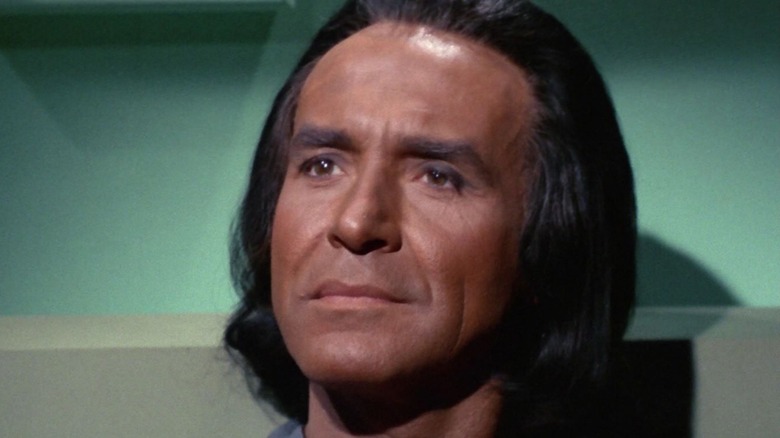
In the episode "Space Seed" (better known as "the one with Khan"), it was stated that Earth would pass through a series of devastating global conflicts called the Eugenics Wars. In the original series, it was said that the Eugenics Wars would be fought from 1992 to 1996, although when the TV franchise caught up with those years in real time, some eventual rejiggering had to be done to time-shift those wars forward. The actual chronology of the Eugenics Wars remains a little hazy.
The important thing to remember is that Earth had to survive the War and its consequences, nearly bringing humanity to the brink of extinction. Only then, in a post-war period, did an engineer named Zefram Cochran build Earth's first faster-than-light engine. On its maiden voyage to space, that engine would attract passing Vulcans to Earth. Thereafter, Earth would begin its reconstruction and take its first earnest steps toward the post-capitalist utopia Trekkies all know and love.
Ever since, though, there have been many episodes of "Star Trek" that have mentioned that genetic engineering has been banned in the Federation, largely because augmented people have been known to become tyrants like Khan (Ricardo Montalbán), one of history's most notorious genetically engineered denizens. Khan casts a shadow over the entire "Star Trek" universe.
Earth had to break its addiction to war before Star Trek's utopia could begin
Although the actual years have shifted about, the motivation behind the Eugenics Wars has remained consistent on "Star Trek." Sometime in the mid-to-late-20th century, scientists found they could tinker with human genes and give them superior strength and intelligence. The new race of super-men, nicknamed Augments, had powerful brains, lungs, hearing, and five times a human's ordinary physical strength. As it so happens, they also developed arrogant, aggressive personalities. Augments began using their super abilities to take over Earth. In "Space Seed," we learn that Khan took over most of Asia and the Middle East by 1992.
Other powerful Augments took over the rest of Earth, and much of humanity was enslaved. The origin of the actual destructive part of the Eugenics Wars is a matter of some debate in the "Star Trek" universe, and there have been some bits of dialogue that imply either a) a human uprising against the Augment tyrants, or b) warlike discord between the Augments themselves. The theories about the battle origins are stated in a conversation in the pilot episode of "Star Trek: Strange New Worlds." Regardless of the origin, though, Earth was heartily bombed, and millions upon millions were killed.
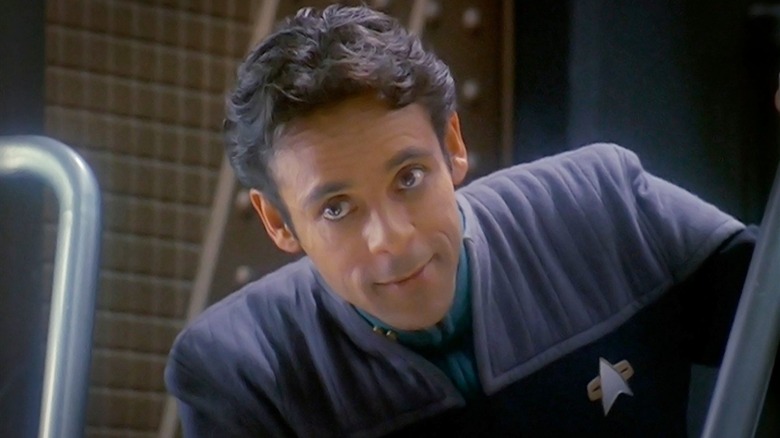
One can see why Earth — and, eventually, the Federation — would want to keep freelance genetic tinkering illegal. A lot of the laws were made explicit in the "Star Trek: Deep Space Nine" episode "Dr. Bashir, I Presume?," which established that Dr. Bashir (Alexander Siddig) had been genetically enhanced in utero, illegally, by his parents. He had to keep his enhancements secret, and even pretended to be weaker and dumber than he actually was to allay suspicion. Dr. Bashir let "Deep Space Nine" buck franchise norms.
Genetic engineering smacks of ableism
"Star Trek" has long been one of pop culture's most palpable utopian texts, so the banning of genetic engineering makes sense. After all, implying that all beings need to have certain kinds of "perfect" bodies is antithetical to the egalitarian, all-welcoming message of Starfleet. If you have a disability, you will be accommodated. If you have medical needs, medicine is free and easy across the Federation. Several of the arguments against genetic engineering appear in the "Star Trek: The Next Generation" episode "The Masterpiece Society," about an enclosed colony devoted to "genetic purity." As one can imagine, the blind Geordi La Forge (LeVar Burton) bristles at their ableist "perfection" ethos.
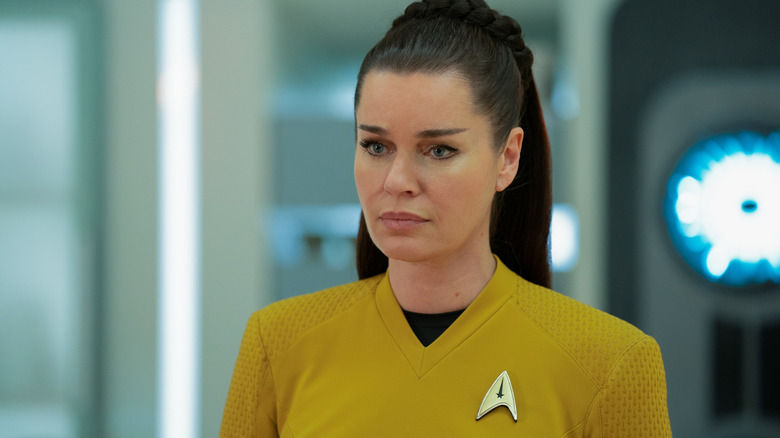
But there is a gray area when it comes to tolerance. In individual cases, genetically enhanced citizens had no say in their in-utero development, and they have had to plead for clemency from the Federation. This was the case in the "Strange New Worlds" episode "Ghosts of Illyria," wherein Una Chin-Riley (Rebecca Romijn) lied about her genetically engineered upbringing as an Illyiran in order to serve in Starfleet. She said she was a human. (We've written about Una's Starfleet ban before.) She was put on trial and ultimately found not guilty, defended on the grounds of Starfleet's famed open arms.
Certain kinds of limited genetic tinkering are allowed for medical reasons in "Star Trek," and certain diseases and conditions are cured in such a fashion, but no one is allowed to "cosmetically" enhance anyone else. Thanks to the Eugenics Wars, a taboo remains about the practices, and laws are very stringent on the matter. We can't have any radical Übermensch taking over the world again, can we?