

A Beloved Star Wars Writer Had To Fight For His Star Trek: The Motion Picture Credit
Still active to this day, Alan Dean Foster has authored numerous original sci-fi novels and adaptations of pop sci-fi properties. "Star Wars" fans know him as the ghostwriter of 1976's "Star Wars: From the Adventures of Luke Skywalker" (which was credited to George Lucas) and the author of 1978's "Splinter of the Mind's Eye," among others. He's also novelized "Alien" movies, "Terminator Salvation," and "Transformers, along with "The Black Hole," "Krull," "The Last Starfighter," "Alien Nation," and so, so many more.
Trekkies, meanwhile, know Foster for his "Star Trek Logs" novels (which he wrote from 1974 to 1978, extrapolating from "Star Trek: The Animated Series") and for receiving a story-by credit on Robert Wise's 1979 film "Star Trek: The Motion Picture." It's one of the rare film or TV credits on his resume, as Foster ultimately stuck with writing books instead of going Hollywood.
When it came to his "Star Trek: The Motion Picture" credit, however, Foster had to fight for it. As explained in the oral history book "The Fifty-Year Mission: The Complete, Uncensored, Unauthorized Oral History of Star Trek: The First 25 Years," edited by Mark A. Altman and Edward Gross, "Star Trek" creator Gene Roddenberry tried to bilk him out of his credit. Thus, Foster had to file to get his credit re-added to the film. Roddenberry was on vacation at the time, though, so Foster was successful, ending a saga that, as we'll get into shortly, started many years earlier.
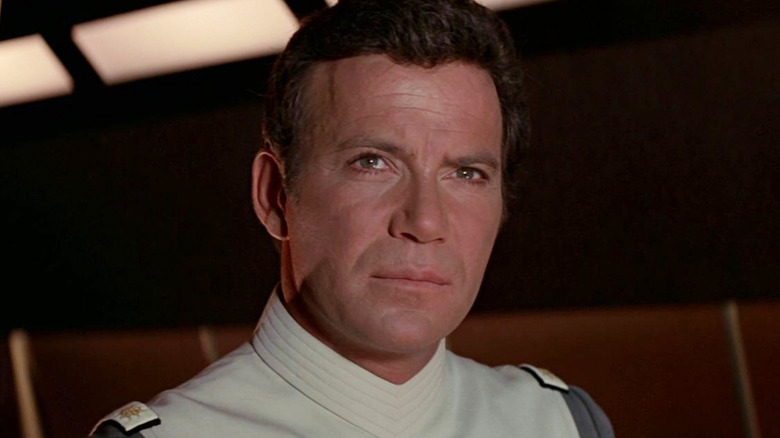
Alan Dean Foster wrote the original treatment that became Star Trek: The Motion Picture
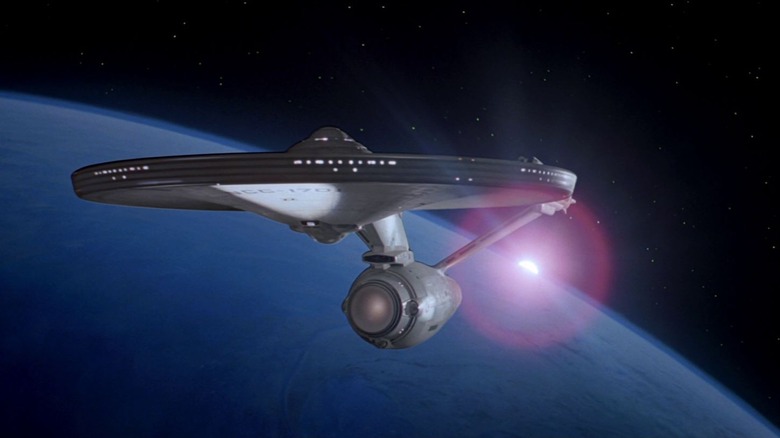
"Star Trek: The Motion Picture" began its life as a Gene Roddenberry "Star Trek" TV series that was to be titled "Star Trek: Phase II." Alan Dean Foster became involved in its development early on, as he wrote a treatment for the "Phase II" pilot (an episode that was to be called "In Thy Image"). The plot of the pilot involved a modern-day NASA probe returning to Earth centuries after mysteriously gaining sentience. That ended up being the story for "Star Trek: The Motion Picture" instead.
According to credited screenwriter Harold Livingston in "The Fifty-Year Mission," the original credits for "The Motion Picture" presented to the WGA stated that it featured a script by Livingston and a story by Foster, with Roddenberry, the project's originator, being left off. Livingston claimed to have brokered a peace between Roddenberry and Foster, suggesting the two share a story-by credit, but Roddenberry hated that idea. "He was mad," Livingston explained.
As Foster recalled:
"The first thing they did was try to deny me my screen credit. When the credits came out to be filed with the Guild, they read, 'Screenplay by Gene Roddenberry and Harold Livingston, story by Gene Roddenberry.' I'm a very low-key guy. I'm a handshake-is-my-bond kind of guy. I called my agent and said, 'What's going on?' And he said 'Oh, it's nothing.' 'What do you mean it's nothing?'"
Foster's agent tried to play off the oversight as "just business," but Foster was still angry. His agent then suggested he file for story credit, so he did.
Alan Dean Foster had to file to get his credit on Star Trek: The Motion Picture
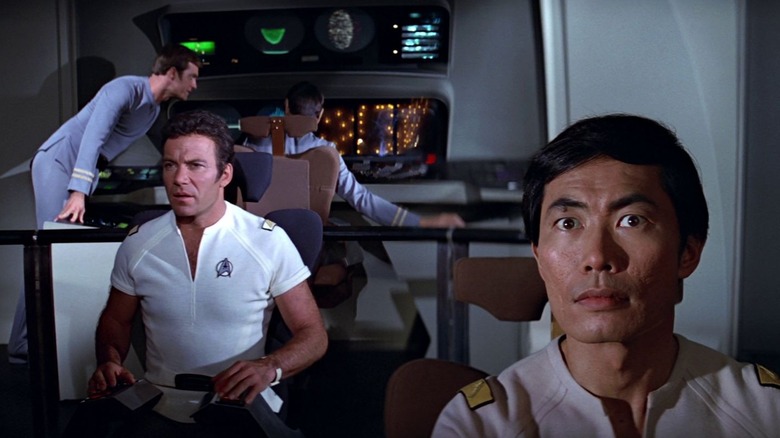
Alan Dean Foster felt he was well within his rights to get story credit, as he contributed "98% of the writing on the treatment." Harold Livingston, being the go-between for Foster and Gene Roddenberry pointed out that just because Roddenberry was being a jerk didn't mean that Foster had to get bitter about it as well.
Foster agreed to split a story-by credit, as his treatment was, he admitted, based on a one-page idea that Roddenberry originally wrote. But then Roddenberry's vacation caused a lucky accident. As Foster recounted:
"I then get this very strange letter back saying that Gene Roddenberry is off in La Costa someplace recuperating; he's very tired, very busy, and he really doesn't have the time for this. I just laughed. Is this real life or Kindergarten? I just threw up my hands and said 'Fine, whatever,' and that's why I have sole story credit on the movie."
Having worked on both the "Star Wars" and "Star Trek" franchise by that point, Foster noted how much their respective creators — George Lucas and Roddenberry — differed. Roddenberry was standard Hollywood, he explained, while Lucas was anti-Hollywood. Lucas, Foster clarified, was less concerned about branding and credit and more excited to share an idea he had with the world. He was "the quiet kid in the back of the class who hardly ever speaks up." Meanwhile, "Gene was like 'I AM STAR TREK,'" as Foster put it.
For my part, I'll simply add: Though the movie is often accused of being boring, "Star Trek: The Motion Picture" is far more interesting if you know how to engage with it.