

Why Sci-Fi Legend Alan Dean Foster Stuck With Writing Books Instead Of Going Hollywood
We may receive a commission on purchases made from links.
For sci-fi fans of a certain sort, Alan Dean Foster is an important name. He's a prolific author who has made a tremendous mark on the genre. He's a novelization extraordinaire, and he also wrote "Splinter of the Mind's Eye," the lost sequel to "Star Wars: A New Hope." He's worked adjacent to Hollywood for roughly 50 years. So, why did he write books instead of movies?
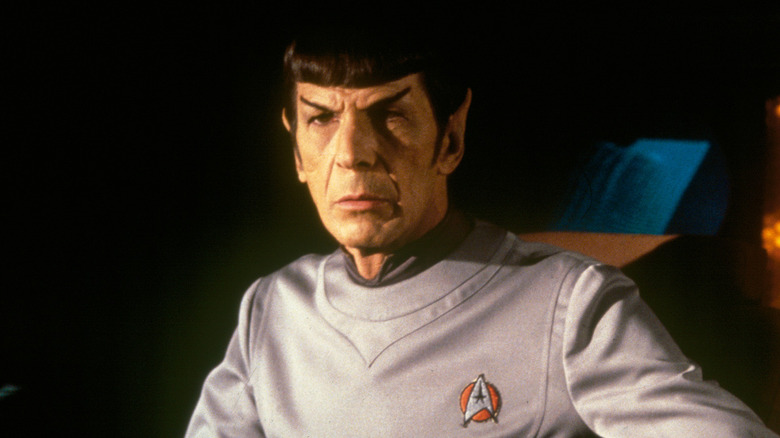
In a 1978 issue of "Starlog," Foster was interviewed about his work on "Star Trek: The Motion Picture," which was his first and pretty much only screenwriting credit in Hollywood. He ultimately received a "story by" credit on the movie, with Harold Livingston getting the screenplay credit. But Foster had already made a name for himself in this universe, as the writer of several "Star Trek" books.
The success of Foster's "Star Trek" books led Gene Roddenberry and the producers of the new "Star Trek" series to invite Foster to submit a story. That became the basis for "Star Trek: The Motion Picture," which has been accused of being boring, though that can hardly be blamed on Foster. In any event, it was a taste of Hollywood for the writer. But during the interview, he expressed skepticism about the process:
"Several other people — mostly associate producers — have worked on the script, so I don't have high hopes for seeing my treatment faithfully transferred to the screen. I'm hoping enough will survive so that it's recognizable. Who knows, they may decide to do the whole thing as a Western next week."
Foster added that the Hollywood experience is a group of people "to whom science fiction means giant cockroaches." Therein lies the main reason why, it seems, Foster chose mostly to write books instead of movies.
Alan Dean Foster didn't have high opinions of writing movies in Hollywood
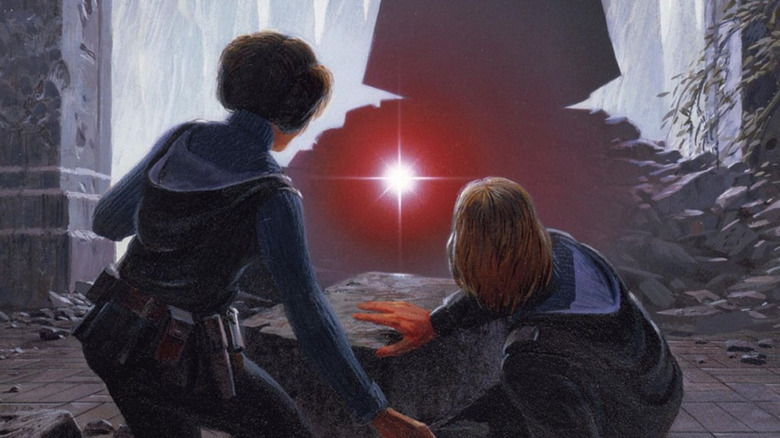
Alan Dean Foster has written novelizations of some of the best sci-fi movies ever, including "Alien," "The Thing," and the original "Star Wars," expanding the scope of many franchises on the page.
But working in those sandboxes is more about working with something that's already done, to a degree. Even when he's writing an original story in an established universe, there's far less scrutiny than there would be on a movie. It's not that Foster has an issue working with pre-existing IP; it's just that the nature of writing in Hollywood is a very different beast.
Speaking further in that "Starlog" interview, Foster made his feelings on writing in Hollywood crystal clear:
"They pay ridiculous amounts of money for ridiculously simple writing. And you'd have an easier time selling a novel you've written in Spanish to a Spanish publisher than you would trying to crack Hollywood."
"It can be done, but you sacrifice a certain part of your humanity," Foster added. The author also concluded that people who write movies successfully "live in such a small, specialized environment. They all want to make the cover of People magazine. They forget they're going to be buried in the same dirt as everyone else."
This was a long time ago, but Foster pretty much stuck to working outside of movies, at least directly. Foster wrote the "Star Wars: The Force Awakens" novelization, which had to remove hints at a Finn and Rey romance. He's worked in the "Transformers" franchise and the "Terminator" franchise in the 2000s and 2010s. Foster still touches some of the biggest movies of all time, but in his own way.
You can grab one of Alan Dean Foster's many novels on Amazon.