

5 Years Ago Today: One Of The Most Controversial Horror Sequels Of All Time Hit Theaters
Sponsored Content. We may receive a commission on purchases made from links.
With my last breath, I hope that I croak, "Evil dies tonight!" Yes, it's been exactly five years since "Halloween Kills" hit theaters on October 15, 2021. Yet, that line, which is repeated a meme-worthy number of times in the highly controversial horror sequel, remains burned in the minds of those who were there.
Being the follow-up to director David Gordon Green's acclaimed "Halloween" (2018), expectations were high for "Halloween Kills." Its predecessor, a hybrid legacy sequel and reboot, had become quite the success by wiping the slate clean and dismissing every "Halloween" film since John Carpenter's 1978 slasher classic of the same name as urban legend and hearsay. In fact, Universal was so pleased with the movie's performance that it quickly greenlit the remaining entries in Green's "Halloween" trilogy.
To jog your memory: 2018's "Halloween" explores the impact that Michael Myers (Nick Castle and James Jude Courtney) had on Jamie Lee Curtis' Laurie Strode, one of the few survivors of his Halloween night killing spree 40 years prior in Carpenter's film. As we see, this has also affected Laurie's grown-up daughter Karen (Judy Greer) and granddaughter Allyson (Andi Matichak) leading up to Michael's return in the present-day. On the whole, it's an imperfect but compelling study of intergenerational trauma, with the movie's actors bringing more dramatic weight to its nasty kills and loving homages to Carpenter's genre-defining picture.
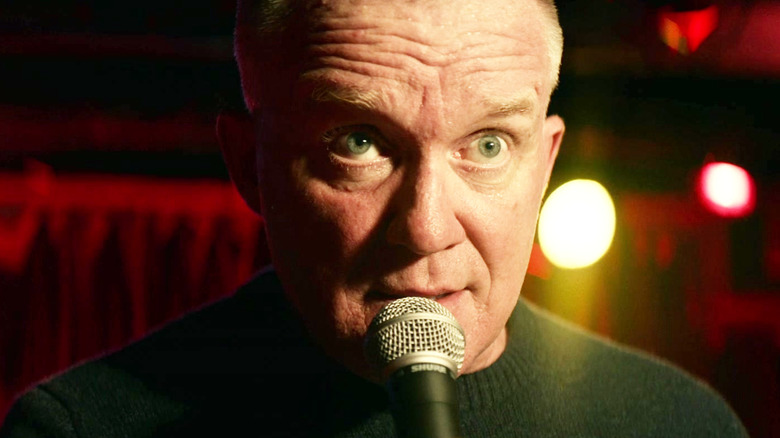
Early on, it appears as though "Halloween Kills" will follow suit by remixing elements of "Halloween II," the no-longer-canonical 1981 sequel where Laurie battles Michael in a hospital. Instead, Green and his co-writers shift their attention to the other survivors of Michael's initial rampage, most notably Tommy Doyle (Anthony Michael Hall, taking over from Paul Rudd in "Halloween: The Curse of Michael Myers"). This is where the trouble begins.
Halloween Kills reveals the cracks in David Gordon Green's Halloween trilogy
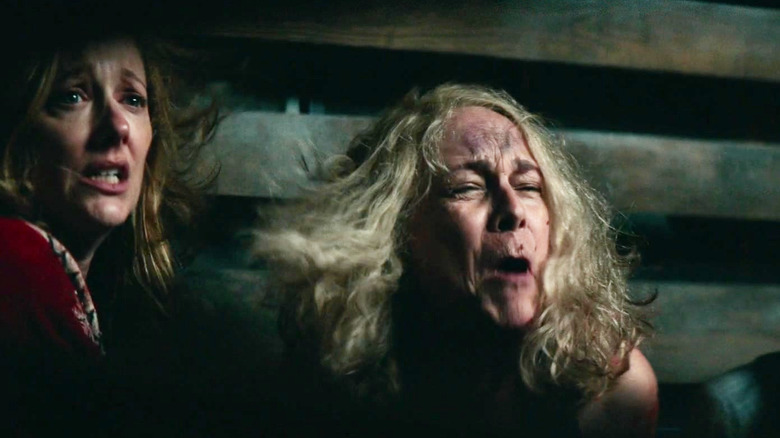
"Halloween Kills" certainly makes good on the "Kills" part (ramping up the twisted, grisly deaths from the first entry in David Gordon Green's trilogy), but it's also barely about the Strode women. Laurie spends virtually the entire film in a hospital bed recovering from her latest showdown with Michael, while poor Karen and Allyson are left scrambling to try and stay relevant to the movie's plot up until the climax. As such, Green's sequel mainly follows Tommy and the other residents of the Strodes' hometown of Haddonfield, Illinois, who've been wronged by Michael as they set forth to enact some vigilante justice on him.
You can see why this approach garnered so much controversy. Thanks to Michael Simmonds' eerie nighttime autumnal cinematography and the creepy synths of John Carpenter, Cody Carpenter, and Daniel Davies' score, "Halloween Kills" has loads of atmosphere to go with its ramped-up carnage. At the same time, it's frustrating to watch Laurie and her family get shoved aside for a story about mob violence and revenge that has little to say beyond, "Oh no, what if we're becoming monsters?!"
The 2022 conclusion to Green's trilogy, "Halloween Ends," takes things even further by introducing Rohan Campbell's Corey Cunningham, a young outsider with a disturbing albeit tragic past who descends into darkness after a chance encounter with Michael. In a vacuum, the movie builds upon "Halloween Kills" in fascinating ways, depicting evil as being like a disease. The issue is that "Halloween Ends" whiffs it when it comes to Laurie, giving her and her kin little to do until it's time to fight Michael (again).
That's the thing about Green's "Halloween" trilogy: Much as you appreciate its high points, it just doesn't fly as a whole.