

Tom Cruise's Digger Is A Surprise Spiritual Sequel To An Oscar-Winning Movie
This article contains spoilers for "Digger."
"Digger," the new film from Alejandro G. Iñárritu, is a movie that contains a surprising, slowly unfolding twist. It's not a "twist movie" a la "The Sixth Sense," to be sure. Yet the moment is clearly constructed as a thought-provoking surprise, meaning that discussing the film can be tricky. I went to pains to avoid giving too much away in my review of "Digger" for Slashfilm, in the hopes that the movie can operate for the readers in the same way that it did for me.
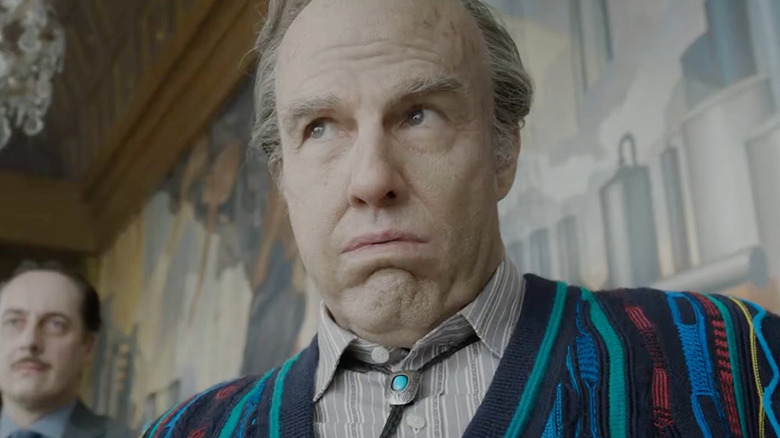
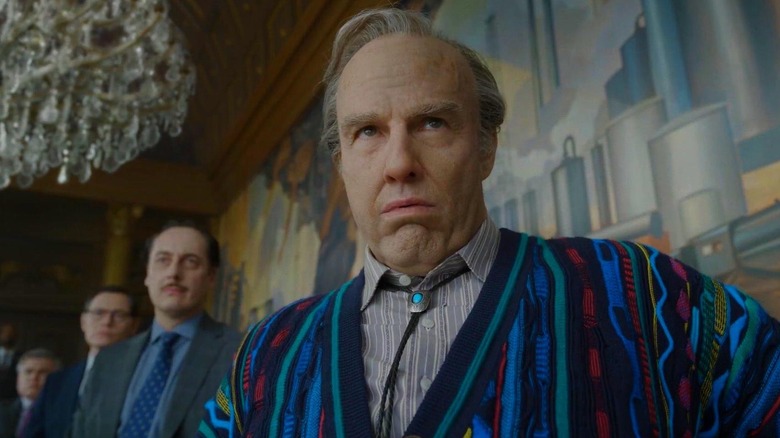
If you're here and you've read that spoiler disclaimer above, however, then you've already seen the film or aren't scared off by knowing its secret premise, so here goes: "Digger" isn't necessarily about Digger Rockwell, the fictional oil tycoon who inadvertently causes an apocalypse. Instead, it turns out that Tom Cruise is playing a fictional actor who's playing Digger Rockwell. This actor, Curtis Markson, is portraying Digger in a play about the man's life entitled "Fossil Fools," which is being produced in New York City in the indeterminate near future. In between scenes from "Fossil Fools," which are purported to be fictionalized dramatizations of real-life past events, Curtis conducts a desperate search for his adult daughter while arguing about the merits of his performance and the play itself with its young, hip director, Hannah (Sophie Wilde). In this manner, "Digger" reveals itself to be a spiritual sequel to Iñárritu's "Birdman or (The Unexpected Virtue of Ignorance)," which won four Academy Awards in 2015, including Best Picture. "Digger" feels like Iñárritu continuing the conversation about art, the artists who make it, and their effect on the world that began in "Birdman," only this time with wider reaching consequences.
Birdman and Digger both pay homage to theatre and John Cassavetes
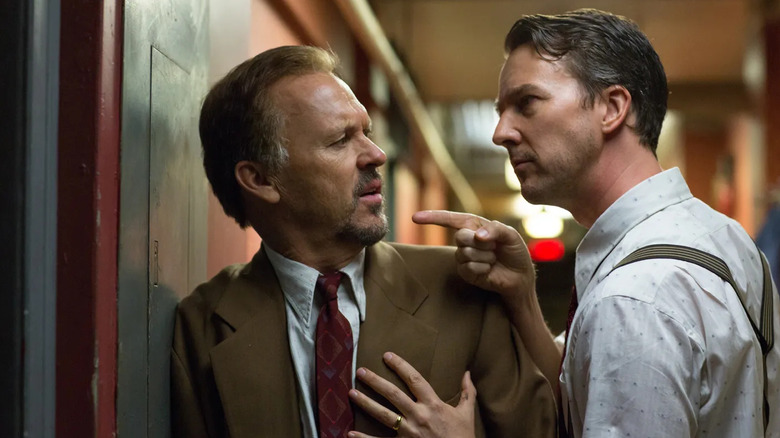
"Birdman" follows Riggan (Michael Keaton), an actor who became famous for playing a superhero called Birdman in a blockbuster franchise years earlier. Riggan has written, directed, and is starring in a Broadway stage adaptation of a Raymond Carver short story, a feat which is a creative passion project as well as an attempt to gain back some respect as an artist after Birdman took over his public reputation. While both "Birdman" and "Digger" feature characters who act as alter egos for their respective fictional actors, the movies are really about the value of art and artists. Iñárritu cleverly chooses live theatre as the medium rather than cinema. There's an immediate relationship in theatre between the art and the work, as opposed to cinema, which is made over several weeks or months and isn't shown to an audience until much later. The choice also allows Iñárritu and his regular cinematographer, Emmanuel Lubezki, to use handheld camera work, long takes, and close-ups as a way of capturing the immediacy of backstage life.
That backstage life depicted in both films is Iñárritu's homage to one of his favorite films, John Cassavetes' "Opening Night," from 1977. That movie stars Gena Rowlands as stage actress Myrtle Gordon, who suffers an emotional breakdown after witnessing a tragedy on the same night as her Broadway premiere. All three films utilize the framework of (fictional) plays as a way of commenting on the importance and value of art when faced with calamitous events. Iñárritu's films depict how the art made by these actors both within the text and metatextually are ultimately worthwhile, and it's the vibrancy and immediacy of theatre that makes these movies feel similarly lively and urgent.
Birdman and Digger continues Iñárritu's debates on art
Each of Alejandro G. Iñárritu's films involve themes and ideas that appear to be intensely personal to him. Riggan in "Birdman" seems to be a thinly-veiled alter ego for Iñárritu, specifically when it comes to Riggan being worried about his public reputation and his value as an artist. Iñárritu brings his most personal touch to bear in the scene in "Birdman" where Riggan has it out with a theatre critic, Tabitha (Lindsay Duncan). It plays like every artist's worst nightmare of an art critic, which is really about having their own insecurities thrust back at them. At it's core, "Birdman" is a study of an artist's self-doubt.
Meanwhile, "Digger" feels like the next step in this theme, moving past merely doubting oneself and tackling the larger uncertainty about art having value as a whole. Curtis is so consumed with the dystopia that the real Digger and other billionaires/politicians/et al helped usher in that he begins to feel that satirizing the man is too easy, reducing Digger's crimes and the horrors he wrought to entertainment. That's when Kenny (Jesse Plemons), the play's benefactor, reveals himself to be the real Digger's nephew, and reassures Curtis and the rest of the cast and crew that what they're doing is vital and, as it happens, not so removed from the reality. Though "Digger" is an angry screed against climate change, billionaire rule and other current issues, the film is ultimately about how important art is in reminding us of our mistakes while uplifting our spirits. Both Riggan and Curtis find a kind of absolution through their experience on their plays, and that's something Iñárritu wishes to share with all of us, too.
"Digger" is in theaters now.