

Elle Fanning's Sci-Fi Miniseries Is A 2000s Gem That's A Must-Watch On Tubi
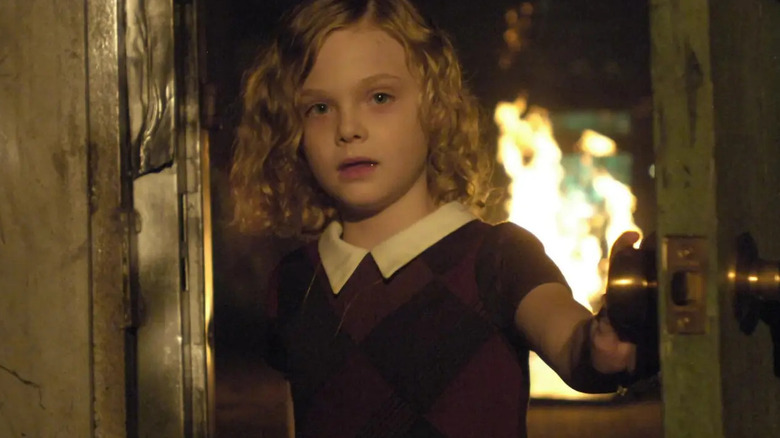
The 2006 Syfy miniseries "The Lost Room" is set in and around a rundown New Mexico motel on Route 66, which exists in its own mysterious pocket dimension, locked there ever since a mysterious event called the Event occurred. The Event took place on May 4, 1961, at exactly 1:20 p.m. (and 44 seconds). In its pocket dimension, the Room has taken on unusual supernatural qualities, as have many of the objects in it. Everything is referred to as proper nouns, and throughout the miniseries, characters encounter the Key, the Quarter, the Radio, the Cufflinks, the Pen, and the Clock, and discover that each one has taken on some kind of unique alchemical ability. The Key, for instance, turns any door with hinges and a keyhole into a portal into the Room. The Pen emits microwave radiation. The Clock can turn brass into gas (!). The Radio can make you grow three inches if tuned to the right station, etc.
Before you ask, no, "The Lost Room" is not based on a video game. Although it clearly took inspiration from video games. The main character of the series is Joe Miller (Peter Krause), a Philly detective whose daughter Anna (Elle Fanning, only eight at the time) disappears into the Room. He is the one who has to find the Key, amass various magical Objects, and find Anna. Retrieving Anna is of double importance, as his ex-wife would otherwise assume that Joe has kidnapped her. A lot of the series involves tracking down the Objects, and a war between two mysterious cabals of magic-worshipers.
Yes, the miniseries is complex and convoluted, just the way a post-"Lost"" crowd would appreciate. It's currently available on Tubi.
The Lost Room is a complex, post-Lost psycho freakout
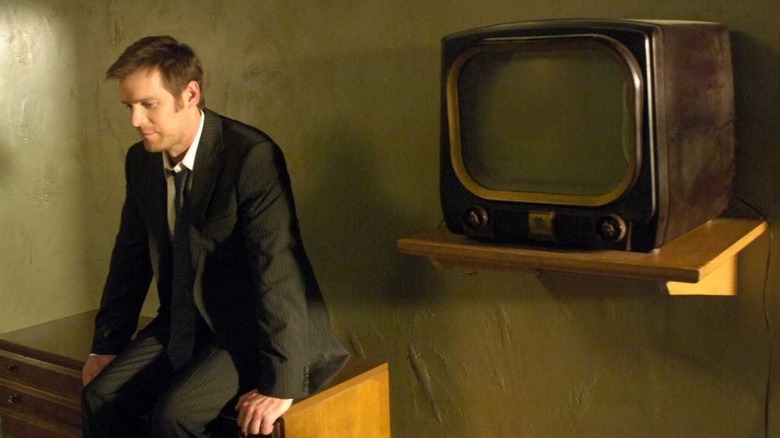
A little more about the magic worshipers. On one side is the Legion, that wants to keep Objects out of human hands. On the other side is the Order of Reunification, who wants to reassemble the Room as it looked during the Event. They feel that if they do so, they will unlock some kind of holy mystery, and see the face of God. They're willing to kill to achieve this goal. The Legion has a code against killing, at least when it comes to Object. There is also a group called, simply, Collectors who amass Objects with the aim of locking them away.
"The Lost Room" boasts an impressive cast. Julianna Margulies plays Jennifer, a member of the Legion, while Kevin Pollak plays a former Legion member and current pawn shop owner who also seeks Objects of his own. Tony winner Roger Bart plays a philosophy professor and Object hoarder who believes that one of the Objects is a Prime Object. It's a little hard to explain what exactly that means, however. Comedian Margaret Cho plays a private detective who specializes in Objects.
"The Lost Room" only consists of three 88-minute episodes, but it appears to be so complicated in its premise, that not a lot of the screentime will be devoted to casual moments, conversation, or disconnected subplots. This is, like "Lost" before it, all mystery all the time. If you like that kind of ultra-aggressive mystery box show wherein characters never find answers, and just keep finding deepening questions, then "The Lost Room" will be up your alley.
You need to watch The Lost Room with a pen and paper
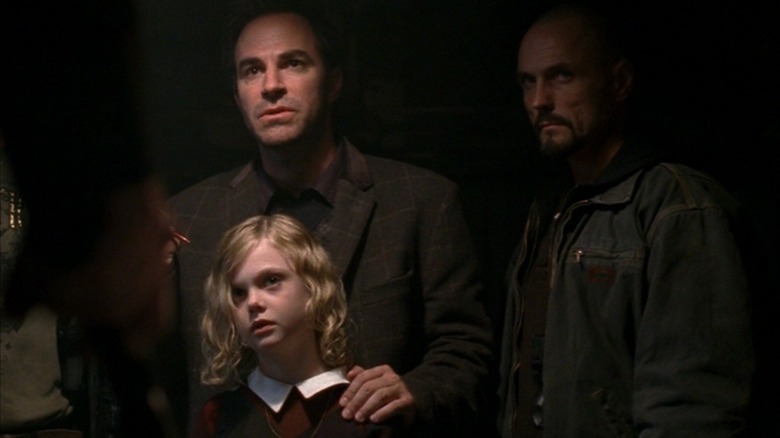
This is the kind of miniseries that demands close study, and you may want to watch with a pen and piece of paper. For instance, the Objects change properties when combined, and the various players in the drama have discovered that holding two Objects can give them unique powers. The Knife and the Watch, for instance, combine to give their owner telepathy. And what happens when you combine the Nail Clippers, the Watch Box, the Ashtray, the Cigarettes, the Clock, the Key, and the Toothbrush? Something terrible, naturally. It might form a rip in the space-time continuum.
Oh yes, and there is an Occupant in the Room who knows about the Objects, and Objects cannot be destroyed outside the Room, and if they're destroyed inside the Room, they are supplanted by other Objects, etc. etc. "The Lost Room" is clearly convoluted by design, keeping audiences intrigued through the constant exploration of a dream dimension that might not be graspable by the human mind.
It sounds frustrating and confusing, but "The Lost Room" was actually well-received by audiences and critics. It might have even been an influence on the 2008 comic book series "Locke & Key," which also features magical knickknacks and a key that can open any door, and which was also adapted into a TV series. The miniseries received a 77% approval rating on Rotten Tomatoes, based on a mere 13 reviews. Variety wrote that the plot of "The Lost Room" is unfollowable, but that it was "a brisk medley of action, mystery, and humor." As David Lynch once said, being lost in a mystery is more satisfying than learning its conclusion.