

Why Tim Curry Was One Of The Most Inspiring Actors To Ever Live
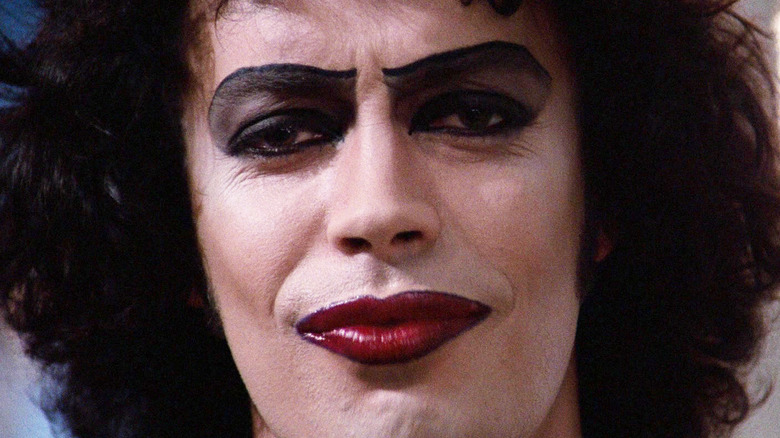
We have lost an icon, as the incomparable Tim Curry has passed away at the age of 80. Indeed, there's a well-established joke that you can learn a lot about a person based on which character they think of first when they hear the name "Tim Curry." Why? Because, despite a career spanning over 50 years, he never once phoned it in, and he tried to elevate every one of his roles to the heights he reached with his inimitable breakthrough as Dr. Frank-N-Furter in "The Rocky Horror Picture Show."
Because Frank-N-Furter looms so large in popular culture, nearly everything Curry subsequently did could be interpreted through that lens. Yet, Curry never merely replicated ol' Frank. Rather, he found the playfulness inherent to the character and imbued other roles with it. As such, Curry dedicated his career to playing larger-than-life personalities and cartoonish villains, allowing himself to be depicted in ways most actors wouldn't dare. He played outsiders, weirdos, monsters, villains, seducers, loving fathers, clowns, and even the Devil himself. (Yeah, yeah, Darkness from "Legend" is just "devil-like.")
Curry was unabashedly loud and knew how to take up space. He always leaned into his most explosive and theatrical instincts, leaving behind a legacy of performances that are impossibly mesmerizing. He also somehow possessed the screen presence of a human being twice his size. This was partly thanks to his trademark deep British baritone, which could make almost anything sound simultaneously sinister, seductive, and silly. There is, after all, something fundamentally Tim Curry about being "too much."
And through it all, he never seemed particularly interested in sanding down his strange edges to become more conventionally palatable. Instead, he made a career out of embracing the gonzo, and, in doing so, he gave generations of viewers permission to embrace it, too.
Everyone was excited to see Tim Curry
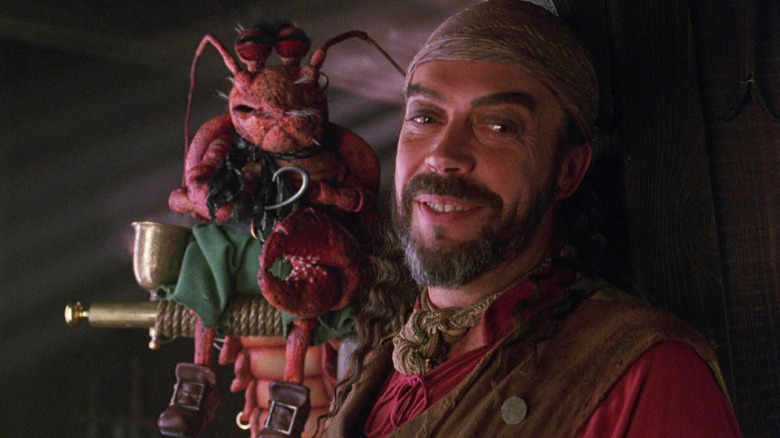
What separated Tim Curry from the countless character actors and "Hey, it's that guy!" types who built careers playing memorable oddballs is that everyone was excited to see Tim Curry and knew him by name. The roles he played weren't necessarily the leads, but the way he brought them to life always solidified them in our cultural memory. And the range he was capable of was almost absurd. The voice Curry used to play Darkness in "Legend" is just a pitched-down version of what he used to play Nigel Thornberry in "The Wild Thornberrys," which is itself a less nasally riff on his wisecracking Pennywise the Clown in the "Stephen King's IT" miniseries.
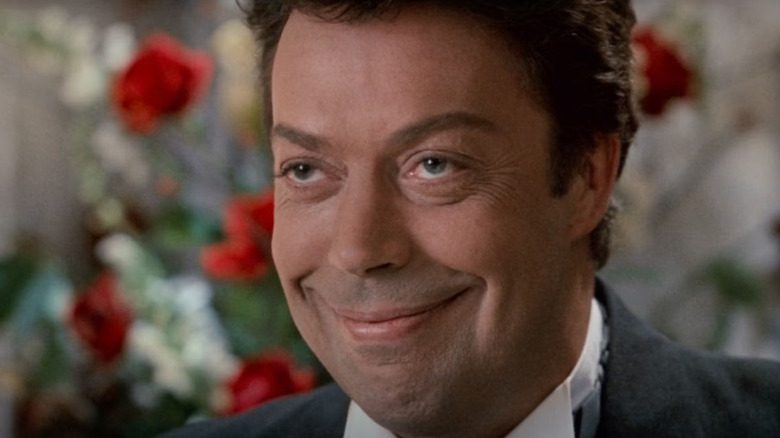
The twisted look in his eye when he kills Eddie in "The Rocky Horror Picture Show" is the same one used to intimidate as Long John Silver in "Muppet Treasure Island." The mysteriously snooty charm of Wadsworth in "Clue" sits right next to Mr. Hector in "Home Alone 2: Lost in New York." Curry never needed to fundamentally reinvent the machinery of his performance, yet, somehow, every character felt distinctly unique. And no matter how villainous or slimy some of his roles could be, the sexual magnetism that exploded out of him as Dr. Frank-N-Furter remained. He's so seductive as Rooster in "Annie" that everyone forgets the climax involves him trying to throw an orphan off of a bridge. Hell, the man made pollution sound sexy as Hexxus in "FernGully: The Last Rainforest!"
Even when he was being serious in a movie or television show, the subtext felt gloriously unserious. You could put Curry in the middle of a completely straight-faced production, and some part of him would still seem to be whispering to the audience, "Isn't this fun?"
Tim Curry proved we can be anything and everything
Tim Curry was, in a very real sense, already a cartoon, so it makes perfect sense that he would become a fixture of animation and children's entertainment. In the wake of his passing, The Muppets recognized him as one of the few humans to earn the title of an honorary Muppet. And it's because his inclusion felt like a long-overdue meeting between two natural forces. The Muppets are creatures of theatrical excess, absurdity, and total commitment to the bit. Curry was all of those things in human form. Of course he belongs there. That's also why his career always felt strangely liberating.
Curry showed that you could be desirable and an evildoer. You could be flamboyant and frightening. You could be a queer menace that everyone aspires to be more like. You could be ridiculous without becoming a cliché. Few performers have ever made that kind of dichotomy feel so natural. And perhaps that's why Curry always remained so cross-generational. The entry point changed, but the sensation was the same: "Who the hell is this guy?" followed immediately by, "I love this guy."
There was no one like Tim Curry, and there never will be again, because he understood something that many performers spend their careers trying to learn: You don't have to diminish yourself to be accepted. You can be louder. Stranger. Sexier. More theatrical. More ridiculous. You can contain contradictions that shouldn't logically fit together and somehow make all of them work. He made a career out of proving that anything was possible if you committed to it completely. You can be a sexy villain, a Muppet, a child-eating clown, or a bizarre weirdo. And everyone will love you for it.