

Jeremy Strong And Jared Leto Have It Wrong: Proper Method Acting Truly Explained
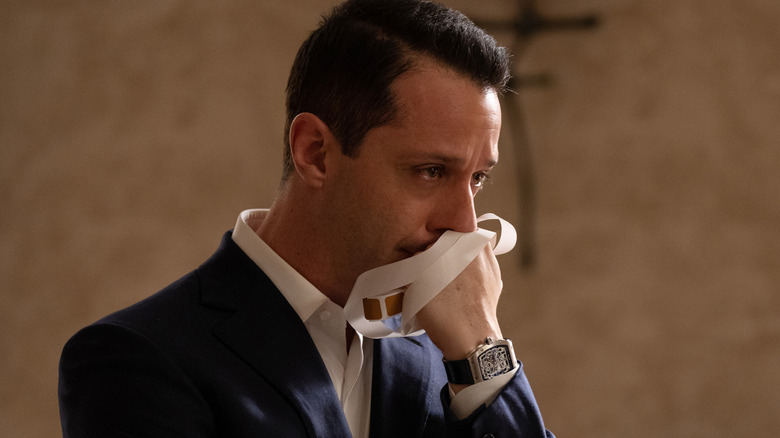
What do we talk about when we talk about Method acting? Well, let's start with an anecdote. Jeremy Strong recently made headlines by saying he lived in character as Mark Zuckerberg while filming "The Social Reckoning," speaking like the tech mogul and Facebook founder, and then immediately thereafter moved on to a Polish accent for his next project. In a GQ profile, Strong, who won an Emmy for playing "eldest boy" Kendall Roy on "Succession" and a Tony for a 2024 production of "An Enemy of the People," explained that he watched hours of Zuckerberg footage to mimic his vocal cadences.
May I be blunt? This sounds hellish, and not just because the real Zuckerberg is one of our more charmless and off-putting public figures. This, however, is the modern interpretation of "Method acting," where actors fully inhabit their characters throughout a filming process or spate of performances.
Not everyone thinks Method is good. As Strong's "Succession" dad Brian Cox once said to The Guardian (and we'll hear more from Cox later), "He was wonderful to act with. I had no argument with Jeremy's acting. He would be an even better actor if he just got rid of that so there would be much more inclusiveness in what he did." Cox went on to say that Strong's practices on set weren't "good for the ensemble" and "creates hostility" but that he never said anything to Strong: "It's a very emotive subject for people who follow the Strasberg line."
Who's Strasberg? That would be Lee Strasberg, a famous acting teacher who studied under the arguable father of modern performance: Konstantin Stanislavski. (It is sometimes spelled Stanislavsky, for all you pedants.) So what's the problem here? Allow me to unpack the Method and how it's been twisted.
The origins of Method acting are complicated
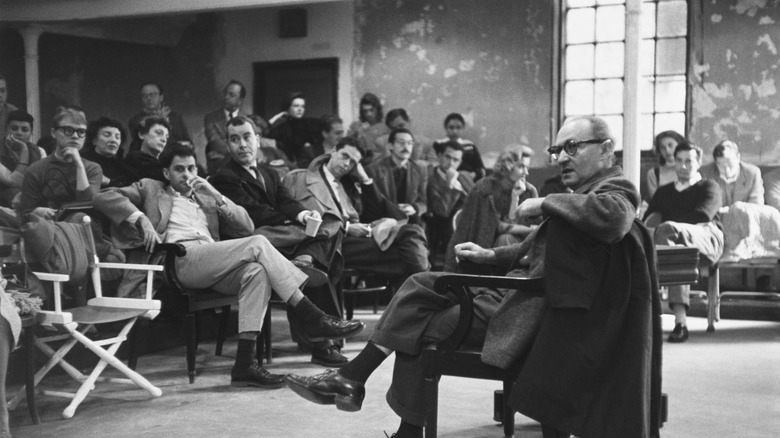
I'll apologize right now for the fact that I don't know where my ancient college copy of "An Actor Prepares" by Konstantin Stanislavski is — honestly, it's probably tucked away in a box in my parents' basement — but the gist of his entire method, so to speak, is to make sure you imbue your performances as an actor with real, true human emotion. Yes, this seems like a pretty obvious approach to performing as a totally different person, but Stanislavski was among the first to spell it out plainly in texts like "An Actor Prepares" — where he encourages actors to figure out the "given circumstances" of their characters and try to understand them fully. The most notable thing about Stanislavski's method, which is often referred to as "Stanislavski's system," is the "magic If," which asks the actor to imagine that their given circumstances are real, making everything feel immersive and authentic.
This is where Lee Strasberg comes in. Strasberg teamed up with Harold Clurman in the 1930s and founded a theater collective called "The Group," where he encouraged his actors and students to draw on their own experiences and live as their characters, fully immersing themselves in the world and story. Some of his contemporaries, including Stella Adler (who trained Marlon Brando personally), rejected Strasberg's direction, as did their fellow influential teacher Sanford Meisner. In a New Yorker article about Method, Alexandra Schwartz half-quotes Adler after the teacher finished working with Stanislavski: "[Adler said] actors didn't need to go rooting around in their own emotional experiences, scaring up old ghosts. They should use their imaginations to build character, taking the play's circumstances, not their own, as a starting point."
So what is Method now? A mess, honestly.
Who are some of the most famous Method actors?
Even though our guy Jeremy Strong tends to demur in interviews about being a "Method actor," that's ... what he is, and not all of his co-stars have felt particularly charmed by it. In a 2021 profile of Strong in The New Yorker, Brian Cox said, "The result that Jeremy gets is always pretty tremendous," he said. "I just worry about what he does to himself. I worry about the crises he puts himself through in order to prepare." (Naturally, Cox also had to get in a dig at his counterparts across the pond: "Actors are funny creatures. I've worked with intense actors before. It's a particularly American disease, I think, this inability to separate yourself off while you're doing the job.")
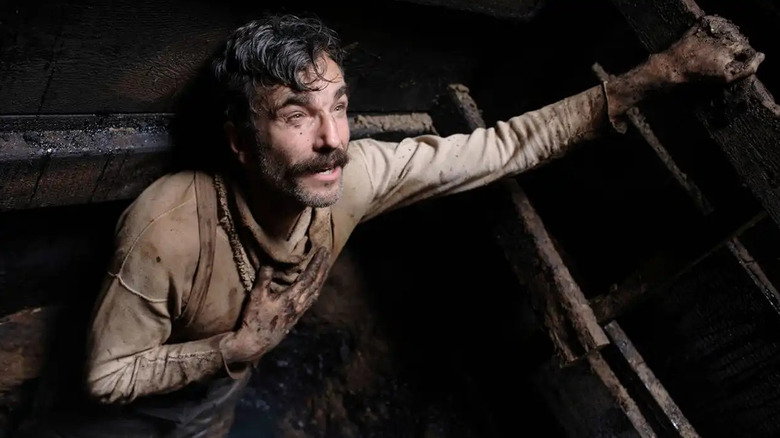
Although Stanislavski was, obviously, super Russian, Lee Strasberg — an American — is the one who pioneered the super-immersive system plaguing today's actors. Daniel Day-Lewis, often referred to as the best actor of all time by people who have only seen five movies, is infamously Method, asking to be escorted around the set of "My Left Foot" and learning to sew for "Phantom Thread." (I like Day-Lewis plenty, but come on, people. Be original.) Other famous examples include Jared Leto, who, while in character as the Joker in the bad "Suicide Squad," did stuff like mail dead rats to his co-star. Method actor Christian Bale's weight ping-ponged so drastically between filming "The Machinist" and "Batman Begins" that I felt genuinely concerned for his well-being, and speaking of famous Jokers, both Heath Ledger and Joaquin Phoenix got lost in the role to various and frightening degrees.
Notice anything here? Are these ... mostly male actors? Yeah, so, that's the thing. Male actors often use the Method, and sometimes it's insidious.
A lot of famous men use Method acting as an excuse to be weird on set

I feel like I sort of glossed over the whole "Jared Leto mailed dead rats to his co-stars while playing the Joker" thing, so let me repeat myself: Jared Leto mailed dead rats to his co-stars while playing the Joker. (Insult to injury? The movie sucks.) I don't think even Lee Strasberg would be cool with stuff like this, and honestly, it's starting to feel like a lot of cruddy men use the Method as an excuse to act like a-holes.
Take Dustin Hoffman — a guy so dedicated to Method acting that, after he stayed awake for multiple days filming "Marathon Man" with Sir Laurence Olivier, the legend said, "My dear boy, why don't you try acting?" Hoffman later said it was a joke, and he was just partying a lot, but I don't believe him based on the way he brutalized Meryl Streep on the set of "Kramer v. Kramer" in the name of the Method (via Vanity Fair). In totally separate incidents, Hoffman, trying to get a rise out of the actress playing his soon-to-be ex-wife, broke a glass on a wall above Streep's head and let it shatter in her hair, delivered an unscripted slap, and even taunted Streep about her deceased husband John Cazale, who died from cancer. (Jesus.)
This points to a problem: Method acting isn't the norm, and co-stars of Method actors don't seem to love their experiences. In Jeremy Strong's New Yorker profile, his co-star and onscreen brother Kieran Culkin said that Strong's process is a "bubble" and quite combative. "That might be something that helps him," Culkin said. "I can tell you that it doesn't help me."
Women don't get the luxury of using Method acting to behave badly
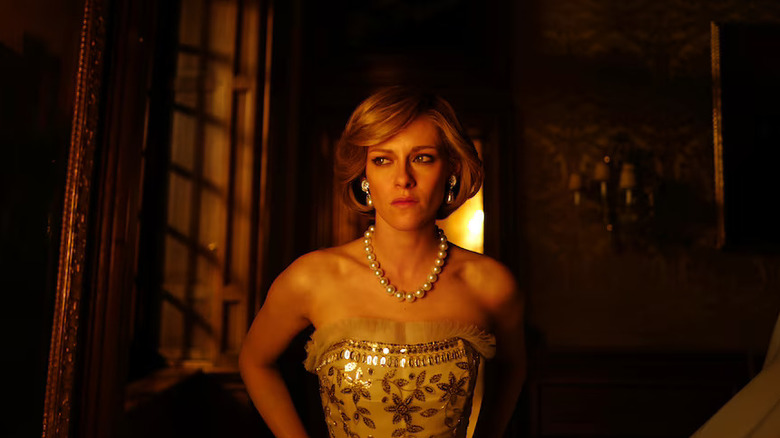
Women do employ the method to some degree, like Anne Hathaway, but they don't make a big deal out of it or mail dead rats, or rats of any kind, to their colleagues. (Lady Gaga went absolutely bonkers playing Patrizia Reggiani in "House of Gucci," but she's committed to her bit across the board.) Thankfully, Kristen Stewart — one of my favorite performers working today — addressed this in 2025 during an interview with The New York Times.
"Performance is inherently vulnerable and therefore quite embarrassing and unmasculine. There's no bravado in suggesting that you're a mouthpiece for someone else's ideas," Stewart told David Marchese. "It's inherently submissive. Have you ever heard of a female actor that was method?" Again, there are a few, but her point is well-made. Stewart basically went on to say that if male actors "can protrude out of the vulnerability and feel like a gorilla pounding their chest before they cry on camera, it's a little less embarrassing."
Anya Taylor-Joy, a massively talented contemporary of Stewart, weighed in on the issue in 2026 during a chat with Complex News (via The Hollywood Reporter). "If you'll notice, women don't method act because we have things to take care of, so we can't completely lose our minds. I see acting as a controlled psychosis in a way," Taylor-Joy explained. "You're pretending to be somebody else and having their thoughts 16 hours a day and moving like them, in their house, in their clothes."
As it stands now, Method acting is simply an excuse to behave horribly and chalk it up to your "process" — and it's something female actors simply can't exploit. Men, stop "Method acting." We get it. Enough.