

Quote Of The Day By Brian De Palma: 'Coverage? That's Like A Bad Word To Me'
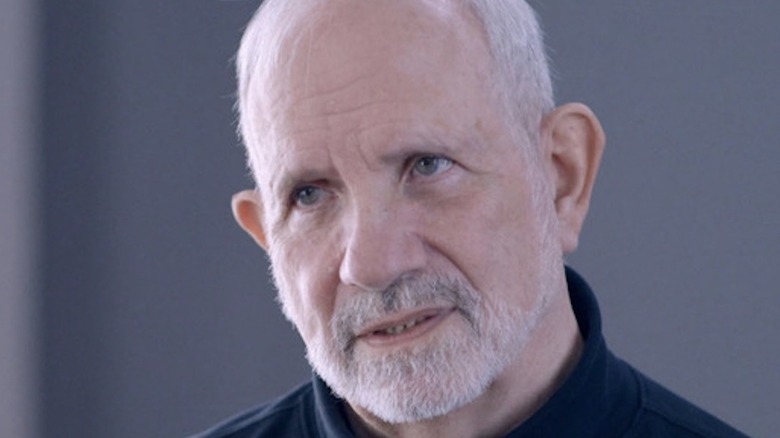
Of the 1970s movie brats who became filmmaking brand names during the height of the New Hollywood revolution, Brian De Palma has always been the most divisive. Born in Newark and raised in Philadelphia, he was, like Keith Gordon's character in "Dressed to Kill," a high school computer whiz with a voyeuristic bent. When he suspected his father of adultery, he surveilled him, à la Gordon's character in "Home Movies." By mining his unhappy childhood for storytelling material, De Palma quickly established himself as a technically brilliant formalist and a powerfully provocative moralist.
De Palma initially presented as a Robert Downey-esque counterculture satirist with "Greetings" and "Hi, Mom!" (which helped launch Robert De Niro's acting career), but he caught Hollywood's attention with the inventively shot 1972 horror film "Sisters." With each subsequent film — "Phantom of the Paradise," "Obsession," "Carrie" — he broadened his visual vocabulary by employing split-screens, split-diopters, slow motion, overhead shots, and masterfully choreographed/composed long-playing shots. From "Carrie" onward, De Palma has been the industry's leading practitioner of pure cinema. Every shot has value.
De Palma is also the greatest filmmaker to have never received an Academy Award nomination for Best Director. Aside from the aforementioned movies, he's given us such ecstatic motion picture experiences as "Blow Out," "Scarface," "Body Double," "The Untouchables," the infuriatingly underrated "Casualties of War," "Carlito's Way," "Mission: Impossible," and "Femme Fatale." And all through this, he's almost always eschewed coverage — i.e. shooting scenes with multiple cameras so as to give one options in the edit. He knows what he wants shot to shot, and gets it. Very few filmmakers work this way today, and no one outside of Alfred Hitchcock has ever done it better than De Palma.
Quote of the Day by Brian De Palma
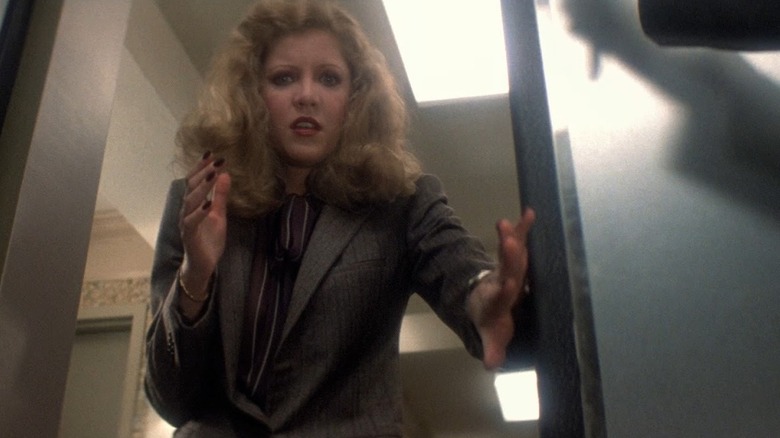
In 2013, I interviewed Brian De Palma for thriller "Passion." I'd spoken to him before, and knew I could get a good smackdown of the shoot-for-the-edit mindset that dominates filmmaking across the board nowadays. He didn't disappoint. Per De Palma:
"Coverage? That's like a bad word to me. I have a very specific idea of where the camera should be, and that's the shot I shoot, and I don't shoot anything else. I truly believe it's what's going on in front of the camera, and the position of the camera in relationship to the action before it. It's critical. The idea of setting up a bunch of cameras and shooting close-ups, over-the-shoulders, master shots, straight down, straight up, and figuring it out in the editing room ... that doesn't ever occur to me."
I had the honor of hosting a Q&A with Paul Hirsch after a New Beverly screening of De Palma's masterful "Blow Out" soon after that interview, and wound up watching the last 20 minutes of the movie at the back of the theater with, y'know, the Oscar-winning editor of the original "Star Wars" (a true pinch-me moment). He immediately noted the lack of coverage. I knew how De Palma operated by this point, but it was striking to hear Hirsch treat this process as a novelty 30-some years later. Shooting a film in this manner makes you an active viewer — or, in a sense, a voyeur. You're watching something to which you maybe shouldn't be privy — primarily because we know John Lithgow's rogue hitman is a malignant observer. It's suspense filmmaking 101, and De Palma learned his trade from Hitchcock.
Deeper meaning of Brian De Palma's quote
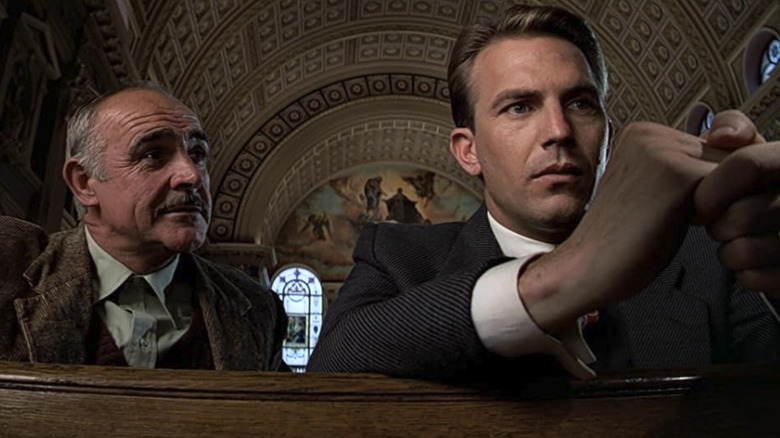
At a certain point, critics viewed De Palma's use of homage as copycat behavior, forgetting that classical composers often worked variations on themes of artists who inspired them. They also discounted the degree of difficulty. Driving an audience into a terrified frenzy like Hitchcock, via his exacting methods, is like landing a Triple Lindy with nary a splash. De Palma did that over and over again, with a sweaty dollop of eroticism. Hitchcock was an allegedly faithful husband who worked out his sexual frustrations through movies like "Vertigo" and "Marnie." De Palma played the field, and his thrillers are suffused with libidinal ambiguity. Do I? Dare I? Every sexual act comes freighted with potentially lethal consequences — and the women are often in control.
Regardless of the genre, De Palma exerts an arresting control over how we view his movies. The shoot-for-the-edit approach isn't an absolute evil; greats like Ridley Scott, Adrian Lyne, and Michael Mann whip up a swirl of imagery that gets hashed out in post-production because they know where to place their cameras to get what they'll eventually need. But De Palma is like a chess master who sees dozens of moves ahead. He sees the entire movie in his head, and, more often than not, he delivers dazzling cinema. There is a Brechtian element to De Palma's movies; his tight grasp makes you aware of the artifice (particularly during the bravura Steadicam shot in "Raising Cain"), but you're in on the gag. And when that gag permeates an unabashedly commercial entertainment like "Carrie," "The Untouchables," or "Mission: Impossible," it's divine. When you have a clear vision, and a fiery desire to work your audience over, you get magic. If you slop it up with coverage because you're coughing up studio product, you get nine-figure white noise.
More quotes from Brian De Palma
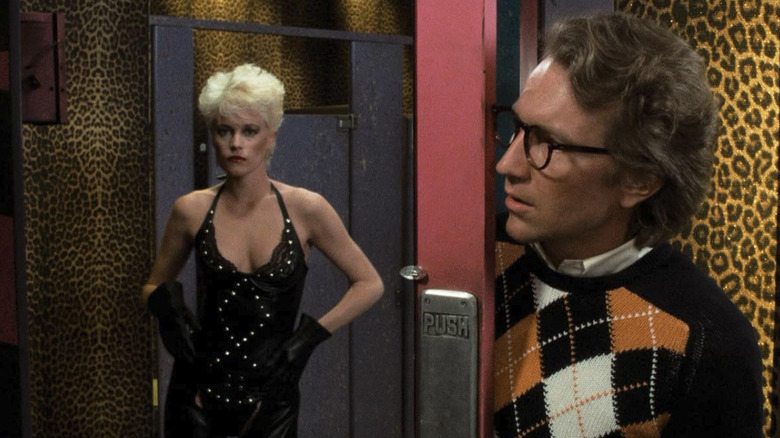
Brian De Palma is one of the most opinionated filmmakers working today. He's also a dedicated moviegoer. It's not unusual to see him at film festivals checking out new work from buzzy directors. He's dispensed a great deal of wisdom on cinema over the years, much of which you can hear if you check out Noah Baumbach's documentary "De Palma." But here are some additional quotes that I enjoy:
- "First of all, I am interested in the medium of film itself, and I am constantly standing outside and making people aware that they are always watching a film."
- "Maybe I'm trying to hammer out a new genre. Somehow. Hitchcock did it. I don't know what people called it before they called it 'Hitchcockian.' They must have some Madison Avenue-type name for what I'm doing. You never know ... 'De Palmian?'"
- "Personally, I think the horror genre is a very filmic form. Certainly it's the closest thing we have today to pure cinema."
- "As you get older, you know more about life. You're emotionally susceptible. For me, I had to develop a skill in order to express what I had to say. And now I'm getting to the point where I'm able to express what I'm feeling, no matter what perverse street it takes me down."
- "I'd hate to live in a world where art is left in the hands of political people. I'd leave the country if it came to that — sounds like Russia."
- "I go to a movie, and I sort of visually fall asleep. Nobody seems to think about the way things look, the locations that they pick, or telling stories with pictures."
- "The big change in the system is that everybody got really rich in the '80s ... It used to be, executives worked for the company. Now, you're dealing with executives who are worth $20 million. That changes how they deal with you. The big hurdle now is getting them interested in what you're doing. They're not very interested in movies out here anymore."
- "Holy mackerel!"