

The Best Psychological Horror Show From The 2010s Is A Must-Watch On Netflix
The Golden Age of TV generally describes the early 2000s to the mid-late 2010s. Television, a very young medium, began to host bolder artistry alongside the simultaneous rise of the internet and online TV recapping. (The A.V. Club is to TV as Cahiers du Cinema was to film.)
The centerpieces of this Golden Age were generally cable networks like HBO. But what if I were to tell you that one of the most formally daring television programs of this era aired on NBC, alongside reality competition TV like "The Voice" and light comedy like "Parks and Recreation?" I'm talking about Bryan Fuller's "Hannibal," first billed as a prequel to the Hannibal Lecter mythos but in truth, more of a full-on reimagining.
Audiences first met Dr. Lecter in Thomas Harris' 1981 novel "Red Dragon," which established him as a highly intelligent, cannibalistic serial killer who'd been caught by FBI profiler Will Graham. Will then turned to the imprisoned Lecter as a "consultant" in a new serial killer case, one book before Clarice Starling would more famously do so in "The Silence of the Lambs."
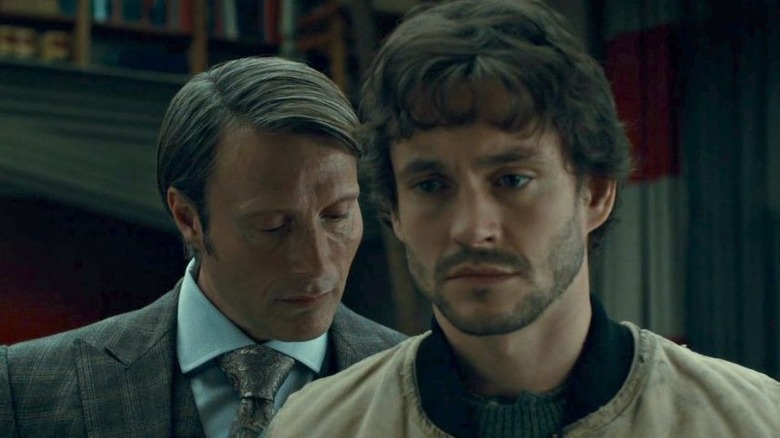
"Hannibal" takes place before all that, when Dr. Lecter (Mads Mikkelsen) is still a respected psychiatrist. Will's (Hugh Dancy) extreme empathy means getting into the mindsets of serial killers leaves him deeply troubled, so he's referred to Hannibal for therapy. Together, the two work on probing Will's mind and catching killers together — the only thing genuine about Hannibal is his interest in his new patient, though helping Will get "better" is not his top priority.
All three "Hannibal" seasons are now streaming on Netflix. That makes this a perfect time for horror fans who've never seen the show to sink their teeth in and enjoy one of the most flavorful offerings that TV has ever produced.
Hannibal has almost no right being as good as it is

The premise of "Hannibal" doesn't scream "prestige TV," sounding more like a concept sprung from a conversation between TV executives that opened with the question: "What IP do we have access to?"
In some showrunners' hands, "Hannibal" could've been a bad, campy-in-all-the-wrong-ways procedural, one step above a "30 Rock" joke about a ridiculous TV show. But Bryan Fuller, who genre fans should recognize as the creator of "Dead Like Me" and "Pushing Daisies," turned fast-food ingredients into a gourmet meal. (Granted, the same could be said of "Silence of the Lambs," which turned a potboiler novel into an unexpected Oscar winner.)
Even with the obvious advantage of having played the character the longest, Mads Mikkelsen is the best Hannibal Lecter actor to date. Compared to Anthony Hopkins' Lecter, subtle as a bright red devil, Mikkelsen's Hannibal is more of a wolf in sheep's clothing. In a 2013 interview with IGN, Fuller explained this was part of the unique hook of the show; audiences were used to seeing a Hannibal Lecter who "had no motivation to hide," so he wanted to trick audiences into liking the character — or hoping he might have a more benevolent side — the way Hannibal tricks everyone around him. Part of that deceit is the show's aesthetics of food.
Throughout the series, there are extended scenes of Hannibal in his kitchen cooking up elaborate, luscious-looking meals that make you want to reach through the TV and take a bite ... at least, until you remember what proteins Hannibal is using. Hannibal first connects with Will in the pilot, "Apéritif," by bringing him a homemade breakfast of eggs, vegetables, and sausage, an ingredient that brings new meaning to the saying "see how the sausage is made."
Hannibal is no ordinary serial killer procedural
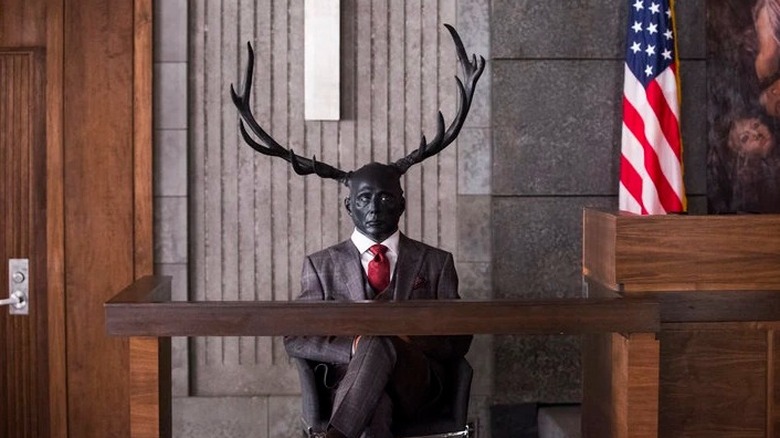
As part of the bait-and-switch, "Hannibal" is at its most basic in the first half of Season 1, when Will hasn't picked up Hannibal's killer scent yet. This stretch is largely episodic, with Will and the FBI catching serial killers. Except the killers on this show aren't the run-of-the-mill kind you'd see in a show like, say, "Criminal Minds." Hannibal turns his butchery into art in the kitchen, and other killers in the show are similarly creative with the corpses they create; one leaves his victims posed as praying angels (by skinning and suspending the flesh from their backs as "wings"), one makes a totem pole of severed body parts, etc.
As "Hannibal" progresses, it starts to move away entirely from case-of-the-week storytelling and transmutes itself into a gothic drama. It's a slow-burn change that feels totally natural, given the show has a penchant for surrealism from the very beginning. If you prefer the crime thriller side, rest assured it returns in Season 3, when the show finally adapted "Red Dragon" itself.
"Hannibal" was canceled in 2015 due to low ratings, something fans still mourn to this day. I'm of the opinion that "Hannibal" Season 3 ends the show in a strong place, but knowing Bryan Fuller eventually (and still does) want to adapt "Silence of the Lambs" with Mads Mikkelsen's Hannibal makes it hard to argue that we didn't miss out. Many, including Mikkelsen, still hold out hope for a "Hannibal" Season 4 — if you're already a Fannibal, watching the series on Netflix is probably the most you can do to make that happen.