

Alan Hale Jr. And Randy Stuart's Adventure TV Show Should Have Been A Classic
We may receive a commission on purchases made from links.
Alan Hale, Jr. is, of course, most recognized for playing Jonas Grumby, a.k.a. The Skipper, on Sherwood Schwartz's 1964 sitcom "Gilligan's Island." It was a role he reportedly loved playing, and was 100% fine with being remembered as a comedian. Looking back over Hale's entire acting career, however, reveals dozens and dozens of credits, stretching all the way back to 1941. He served in the Coast Guard during World War II, but immediately returned to acting thereafter, landing a role on "The Gene Autrey Show" in 1950. It's likely that Hale's famous father had something to do with his success as an actor, but it's more likely that Hale was just talented and reliable; he wouldn't have worked so frequently and in so many different kinds of projects if he was just coasting on his name.
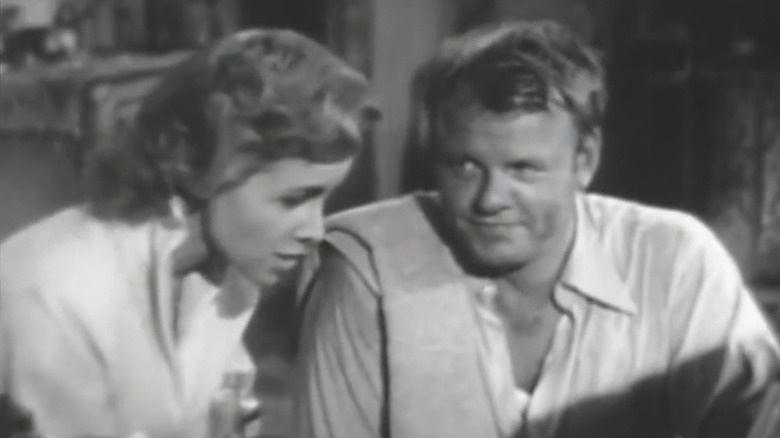
Hale's first regular TV gig was playing the title character in the short-lived 1952 adventure series "Biff Baker, U.S.A." Hale played Biff, an importer who traveled the world looking for art and other items to import. He worked alongside his wife, Louise, who was played by Randy Stuart from "The Incredible Shrinking Man." Although the Bakers were ostensibly just ordinary citizens, their habit for finding international malfeasance might have some viewers believing they were spies.
"Biff Baker, U.S.A." was a 30-minute series that ran on CBS for only one 21-episode season, with six of its episodes going unaired. Finding it is a little spotty. 10 episodes are currently available on the Roku Channel, while Tubi has the same 10, plus Episode 11, "Blue Mosque." There were once some low-rent DVDs out there (and you can still find them on the second-hand market), but the two volumes only had eight episodes in total.
Biff Baker U.S.A. was a spy-inflected post-war adventure series
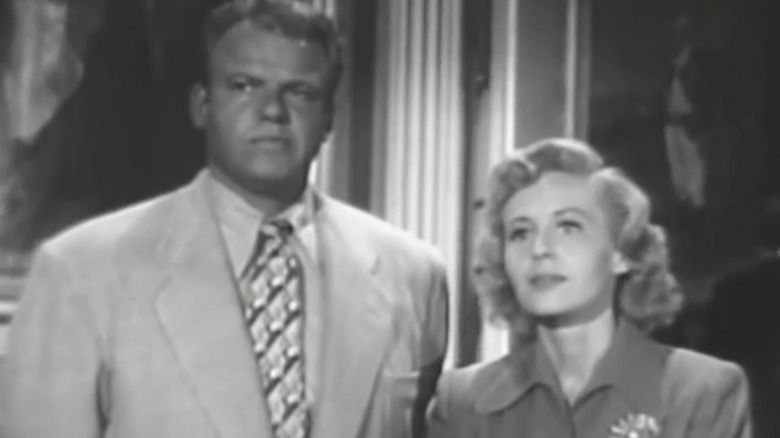
Curiously, one can also find a smattering of "Biff Baker, U.S.A." episodes on YouTube, some of which have been colorized; the series was shot in black and white.
"Biff Baker" comes from an era in TV history that isn't terribly well-preserved. Some shows from the decade survived well and have been incessantly remastered for modern play; "I Love Lucy," "Perry Mason," "Leave It To Beaver," and several other classics come to mind. "Biff Baker," however, wasn't as well-received and didn't last as long, so it's been relegated to the ashheap of time. Luckily, some enterprising archivists have left behind some episode synopses for us to peruse.
For instance, in the first episode of "Biff Baker," Biff and his wife travel behind the Iron Curtain to a small town in Czechoslovakia, acting as actual spies. In the second episode, the Bakers visit Marseilles and have to care for a runaway boy with ties to a local ring of black marketeers. In episode three, they have to face off against villainous plastic surgeons (!). Everything the Bakers encounter involves their smuggling and importing skills. In one episode, they are forced to smuggle famous paintings. Some of their adventures are going to be dated, of course. There is an episode in which the Bakers hoodwink a Chinese spy to help a benevolent farmer in Vietnam.
The Bakers seemed to attract trouble wherever they went, finding evildoers, spies, and enemies of the American way of life. The early 1950s was the perfect time for such a premise, as World War II was over, and the national attitude seemed to be one of "taking out the trash." It's no coincidence that "U.S.A." is in the title.
What did critics think of Biff Baker, U.S.A?
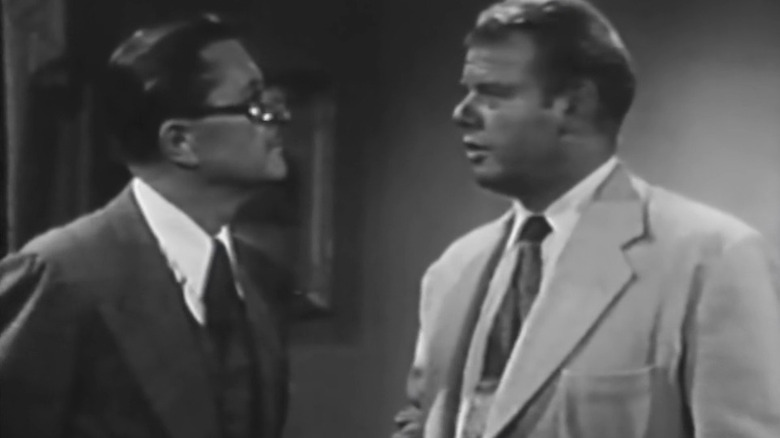
Even though the bulk of the series remains inaccessible, some of the reviews of "Biff Baker U.S.A." have survived, and we can see that critics weren't terribly kind to it. In a 1952 issue of Billboard Magazine, for instance, a critic named Leon Morse wrote that the dialogue was "juvenile," but praised Randy Stuart and Alan Hale as appealing leads. "Appealing" is the perfect word to describe Hale. The review read:
"The pulpy story lacked the necessary suspense to spark interest. The couple was assigned to bring
secret information out of Czechoslovakia, after intelligence agents had failed to cross its frontier. Most of the incidents showed the battle of wits between them and the security police trying to prevent the accomplishment of their mission. Needless to say, they succeeded. The characters and the scenes were written on a juvenile level. Commie agents have become the stock villains of this age and in this program were more than usually stereotyped. Hale is a dead ringer for his famous dad, down to the hearty laugh, the warm smile and theexact tone of voice."
There is also a vintage review from the Pittsburgh Press out there, which seemed a little put off by the declaration that Biff Baker was an importer, but was never depicted doing his actual job, so distracted was he by the spy shenanigans all around him. The critic, Hal Humphrey, called the direction and the acting "sophomoric and rough."
But then, "sophomoric and rough" could be just the sort of pulp one needs on a Saturday afternoon. The premise is solid, and the actors seem perfectly cast. One could easily reboot "Biff Baker" as a steelier period piece in the 2020s. Someone get Paramount+ on the horn.