

This Forgotten '70s British Sci-Fi Show Should Jump To The Top Of Your Watchlist
We may receive a commission on purchases made from links.
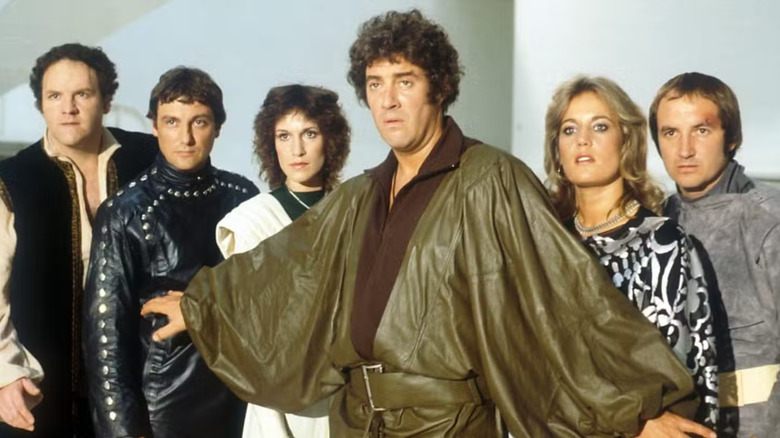
Deep-cut sci-fi nerds likely know about "Blake's 7," the British sci-fi series that ran for 51 episodes over four seasons, from 1978 to 1981. Produced on a low budget and mixing many of the most popular sci-fi tropes of its day, "Blake's 7" starred Gareth Thomas as the titular Roj Blake, a rebel leader who fought the evil totalitarian Terran Empire some seven centuries in the future. His 7 were a group of fellow rebels he freed during his escape from the Empire, and the criminals teamed up to take command of an alien vessel they nicknamed the Liberator. The alien tech aboard the ship was far more advanced than that aboard the Empire vessels, giving Blake and his compatriots a technological advantage. It has transporters, for one. Also a store of precious gems (!) and a fully functioning sickbay.
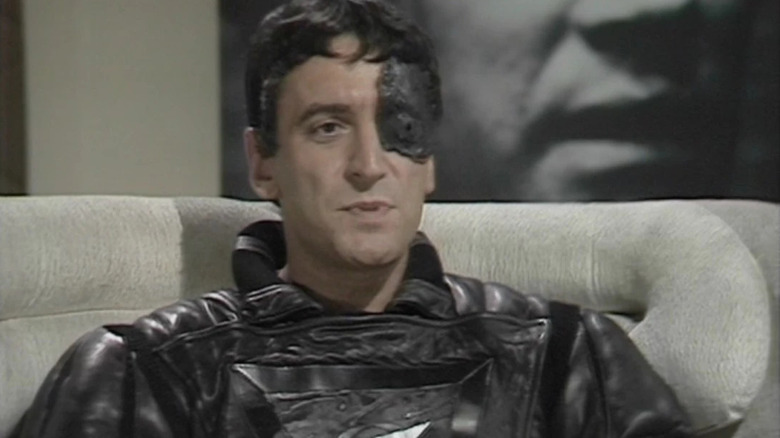
The show's original "seven" consisted of four fellow escaped prisoners, Jenna Stannis (Sally Knyvette), Kerr Avon (Paul Darrow), Vila Restal (Michael Keating), and Olag Gan (David Jackson), as well as Cally (Jan Chappell), an alien telepath from the planet Auron. The ship's talking computer, nicknamed Zen, was voiced by Peter Tuddenham. As the show went into its later seasons, several of these characters were rotated out and replaced by new rebel allies. The show's main villain was Supreme Commander Servalan, played by Jacqueline Pearce, the one that all the young "Blake's 7" viewers had a crush on.
"Blake's 7" is available on Prime Video and certainly has a cult following. One can see from the premise alone that it's a combination of "Star Trek" and "Star Wars," both of which were very much in the public consciousness in the late '70s and early '80s.
Does anyone remember Blake's 7?
"Blake's 7" took the setting from "Star Trek," in that it, too, was based mostly on a high-tech starship and concerned the comings and goings of its crew. The main characters were variously skilled crewmates, and the central starship featured all the high-tech systems they needed, including an intelligent computer system.
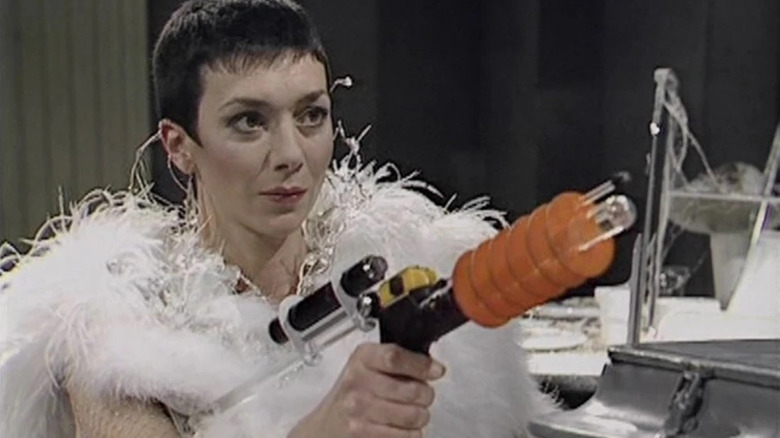
From "Star Wars," obviously, "Blake's 7" borrowed the notions of a brave rebel alliance fighting an evil empire, as well as a very basic "good guys vs. bad guys" plot. It's more or less "The Dirty Dozen" in space, a phrase that series creator Terry Nation used to pitch the series (according to an issue of The Guardian). And while the Empire was clearly evil in "Blake's 7," the rebels, as former prisoners, were all a little violent themselves; there's an episode in which the Paul Darrow character contemplates abandoning his crewmates and absquatulating with the ship. The Darth Vader of this universe was a vicious, snarling, pixie-cut-sporting woman rather than a masked space warlock.
The character of Cally kind of rode the line between "Star Trek" and "Star Wars." The former features psychic and empathic alien characters, while the latter features practitioners of the Force. Also Zeltrons. "Blake's 7," however, featured no spiritual element.
The reviews were a little bland at the time; The Guardian quotes a vintage review that called "Blake's 7" "A mix of olde-worlde space jargon, ray guns, Western-style goodies and baddies, and punch-ups straight out of 'The Sweeney.'" "The Sweeney," of course, being the hit 1975 British cop series. Despite this, "Blake's 7" was a big hit; it was wise to ride the coattails of "Star Wars" and "Star Trek," becoming a mini phenom unto itself.
Whatever happened to Blake's 7?
It should be noted that series creator Terry Nation might be best known for creating the evil fire-hydrant-like Daleks for "Doctor Who," and "Blake's 7" might be seen as an antidote to that earlier show's notoriously low budget. Nation wrote 62 episodes of "Doctor Who," 14 episodes of "The Saint," six episodes of "The Avengers," seven episodes of the awesomely fashionable spy series "The Persuaders!," all before penning 19 episodes of "Blake's 7," including its entire first season. He was a well-trusted figure in British TV, so "Blake's 7" likely experienced few impediments in its production.
"Blake's 7" was considered bold at the time because it allowed regular characters to exit (or be killed) and be replaced; it wasn't fixated on keeping the same ensemble throughout. Although "Doctor Who" regularly replaces its title character to this day, maybe Nation internalized the idea of cast impermanence from his earlier gig.
It's also notable that "Blake's 7" has a general tone of despair. Blake's seven have to work together, and teamwork is generally forthcoming (if reluctantly), but the evil Empire has already taken over everything with its death and its bureaucracy. Even the Servalan character was said to hate her bosses. Even in the future, nothing works.
"Blake's 7" has been dangled above the remake pit multiple times over the years. Most recently, Peter Hoar, a director of "The Last of Us," was said to have put a reboot into preproduction. Time will tell if it gets made.