

The Author Behind Tom Cruise's Hit '80s Movie Hated It At First
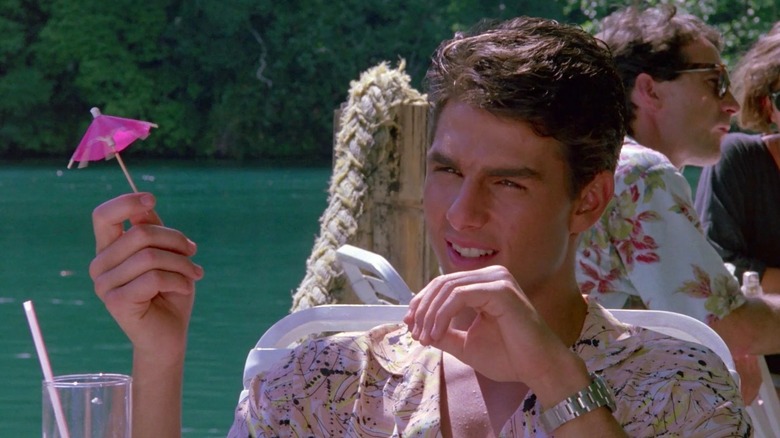
Roger Donaldson's 1988 dramedy "Cocktail" was a gigantic hit in its day. Made for a mere $20 million, the film grossed over $170 million in theaters, largely resting on the bottomless charms of its star, Tom Cruise. Adapted from the 1984 book of the same name (itself written by the film's screenwriter, Haywood Gould), the movie follows the adventures of one Brian (Cruise), a would-be yuppie who dreams of extreme wealth. While attending business school, Brian works as a bartender and finds that he prefers the gig to any potential office job, especially after he's taught by an old-school bartender named Doug (Bryan Brown) how to be flashy and flirty while pouring drinks. Soon, Brian is juggling bottles and dreaming of opening his own bar.
The movie then follows Brian through his various gigs and affairs, most notably with a pretty artist named Jordan (Elisabeth Shue) and a rich older woman named Bonnie (Lisa Banes). Earlier on in the film, he also has a situationship with a photographer named Coral (Gina Gershon), while Doug falls for a woman named Kerry (Kelly Lynch). For his part, Cruise almost broke his nose filming one of the movie's sex scenes.
Critics hated "Cocktail," though. I mean, really hated it. The film only has an 11% critical score on Rotten Tomatoes, and the consensus seems to be that it only has charm and slick production values to coast on, while its characters are shallow and its story is implausible.
The critical spanking really hurt Gould. Speaking with the Chicago Tribune in 2013, Gould admitted that he didn't much like the film when it first came out. At the same time, he said its critical drubbing taught him a few valuable lessons about Hollywood. Namely, he learned he had to grow a thicker skin.
Heywood Gould, the writer of Cocktail, was hurt by the movie's negative reviews
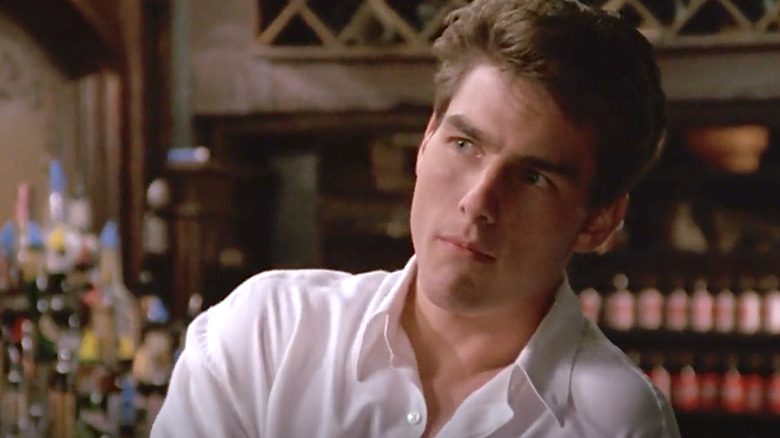
Heywood Gould had written multiple books and screenplays prior to "Cocktail," including the scripts for the downbeat 1977 Vietnam War PTSD drama "Rolling Thunder" and the 1978 sci-fi Nazi thriller "The Boys from Brazil." He also wrote multiple episodes of "N.Y.P.D." and the 1980s TV series version of "The Equalizer." After "Cocktail," Gould even began directing, helming movies like "One Good Cop," "Trial By Jury," "Mistrial," and "Double Bang" (all of which he also wrote). Gould was no neophyte.
Still, the bad reviews for "Cocktail" stung. When asked what he thought of the movie, Gould replied:
"I was not happy with the final product. It got so savaged by the critics — and I mean, it got creamed. [...] I can't think of a good review. All the major people whacked it; and whacked me too, personally. I was accused of betraying my own work, which is stupid. So, I was pretty devastated. I literally couldn't get out of bed for a day. The good thing about that experience is that it toughened me up. It was like basic training. This movie got killed, and then after that I was okay with getting killed; I got killed a few more times since then, but it hasn't bothered me."
Gould recalled a few instances in public when he felt attacked. Specifically, he remembered listening to a call-in radio show one evening and hearing a casual viewer, a professional bartender, call in to complain that Gould's original "Cocktail" novel was great but that the movie was his empty "sell-out" moment. Gould was very hurt by the comments.
Luckily, as he noted, he eventually learned to take such criticism in stride.
Heywood Gould learned not to take himself too seriously after Cocktail
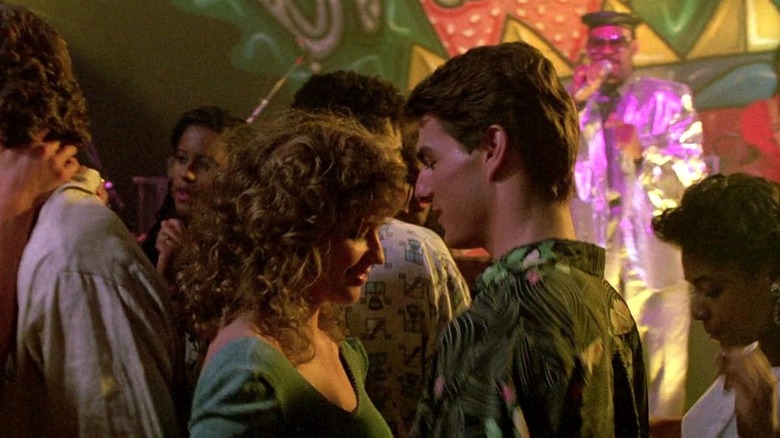
Continuing, Heywood Gould admitted he no longer minded that "Cocktail" had become such a critical punchline. Even now, the film remains an object of widespread mockery, even inspiring Rifftrax to make a commentary track. Gould, however, said that he actually didn't take himself too seriously prior to the release of "Cocktail" and felt even less self-important afterwards. If people want to mock and satirize "Cocktail," he's fine with it.
Besides, he argued that time has been kind to the movie. Not that it's rising in critical estimation, but a lot of what was once considered "cheesy," he noted, are now elements of admiration:
"[T]he parts of the movie I found cheesy I find endearing now. I was at a screening and somebody got up, like a really huffy-tweedy kind of guy, and he said, 'Well, it has a certain Reagan-era charm to it.' Whatever that means. So, people are a little more forgiving toward it. I guess the passage of time kind of mellows it and puts it in its proper context. It's probably the same reason we like those old Cagney movies from the '30s; because if you go back and read the reviews of those classics we love? They got creamed too."
Will "Cocktail" ever be hailed as a cinematic classic? Perhaps not. But the random audience member Gould overheard might be right in that the film could represent the era in which it was made. That would make "Cocktail" into an interesting time capsule, sketching out the politics of its day. And for that reason alone, it may still have some cultural value.
It also remains Tom Cruise's worst-reviewed movie, which isn't nothing.