

The Absurdly Dark Pandemic Comedy That Hollywood Wouldn't Touch
When a screenwriter knocks out a 178-page spec script, they're imploring studios and financiers to stay the hell away from their project. Even if it's action-packed or promises loads of eye candy, there's a legitimate concern that you won't be able to get enough showtimes a day to recoup on what's sure to be a massive budget.
And if it's a dark comedy set during the Great Plague of London, which wiped out hundreds of thousands of Brits, you better have a Billy Wilder-esque reputation or an 800 lb. gorilla of a director attached to make the damn thing.
Walter Newman should've been viewed as a screenwriting titan, but he managed to get his name scrubbed from two of the best scripts he ever worked on: "The Magnificent Seven" and "The Great Escape." He did earn an Academy Award nomination for co-writing the masterful "Ace in the Hole" with Wilder and Lesser Samuels, and would later receive nods for "Cat Ballou" and "Bloodbrothers," but the industry viewed Newman as too precious with his words. If he could refuse credit on those John Sturges classics, how could you trust him to make adjustments to "Harrow Alley"?
No adjustments were necessary. Word for word, "Harrow Alley" is one of the greatest screenplays ever written. Newman deftly plunges us into a plague-ridden parish where people cope with the harsh reality and dictates of surviving a sickness that no one, given the state of medical science at the time, truly understands. Newman's script takes all of this in, presents us with two colorful protagonists, and keeps us laughing through one wretched heartbreak after another. Humanity will pull through, but many of the characters in this screenplay will not. And yet we laugh because death's going to win one way or the other.
Harrow Alley's pitch-dark premise came from a very real place
Walter Newman began writing "Harrow Alley" in 1962, but the germ of the idea began to sprout around 1956 when he turned 40. "I suddenly became conscious of mortality," he told The New York Times in 1978. "It's about that age that people do realize they're not going to live forever. But in our society, we sweep death under the rug. I wanted to examine my feelings about it, to see how people get along knowing death exists."
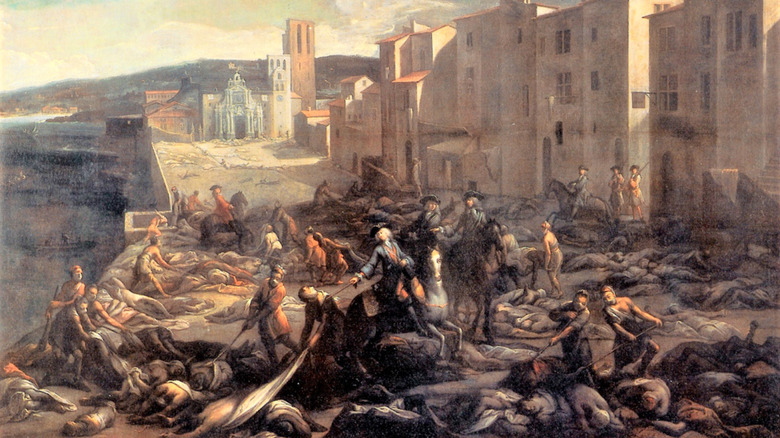
Before Newman began writing, he did a deep research dive into the Great Plague of 1665 to 1666. He was determined to nail every detail, which included learning manners of speech, behaviors, and thoughts of the time. One vital discovery was that doctors and aldermen of heavily hit parishes agreed to stay behind and tend to their neighbors. The probability of contracting the incurable disease was incredibly high, so this commitment to an imperiled community was downright heroic.
After compiling 4,000 index cards worth of research, Newman wrote the screenplay. His preparation was so thorough that it only took him only six weeks to complete an over 170-page draft. And this is all the more impressive when you read it. Though screenplays at this time were written with greater attention to scenic detail and the inner thoughts of characters than they are now, Newman's script is nearly novelistic. His prose is fluid and expressive, and his dialogue is both witty and profound. The turns of phrases feel authentic rather than the kinds of hackneyed 17th-century speak you get in a random period movie. This gets the reader invested in the plight of the characters, and leaves you emotionally spent by the final page.
Here's what Harrow Alley would've been about
"Harrow Alley" opens with the near-death of one of our protagonists. Ratsey, a condemned highwayman, is rousted from his cell and taken on a cruelly long journey to the gallows, where he is to be hanged. Along the way, we learn that Ratsey is a savvy, resourceful man. Unfortunately, he lacks the amount of resources it'll take to slip the noose. There's a good deal of overlapping dialogue here as Ratsey bargains while defiantly responding to jeering convicts (at one point he dances on his own coffin). He even tries to delay his execution by confessing his sins in minute detail. But just when he's about to dangle, Alderman Harry Poyntz arrives to offer Ratsey the chance to cart dead bodies to mass graves. This could easily mean certain death as well, but Ratsey (wrongly) believes he has an ace up his sleeve: He's already survived the plague.
Nevertheless, this gives him the confidence to dive into his work, which allows Newman to shift his focus for a bit to Harry, a hard-working alderman doing his best to protect his constituents and maintain a sense of normalcy in the face of unremitting death. He is particularly concerned because his wife, Jem, is six months pregnant. And while we admire Harry for his selflessness, his character is seriously marred because Jem, whom he does sincerely love, is only 15.
As the mortality bill keeps mounting, Newman's characters surprise us by taking care of their neighbors. There's a non-verbal character who assembles a makeshift orphanage for parentless children, and Harry sees to it that they remain well fed. And, again, there is humor.
But when the script initially made the studio rounds, executives weren't exactly laughing.
Hollywood studios were appalled by a dark comedy about the Great Plague
Walter Newman couldn't have been happier with "Harrow Alley." "It was the high point of my professional life, a creative frenzy for nearly 12 wonderful months," he told the New York Times. "I found out I didn't fear death, that I could grin at it. I found out it didn't really matter — this sounds so ordinary — as long as you do not have an unlived life every day."
Many in the industry weren't grinning at all.
"People said they were depressed by it, which puzzled me," Mr. Newman said. "I got one letter from a lady, a producer, and it went on for about six lines, saying, 'You're crazy! How dare you!' I guess I struck a nerve of some kind."
Reading "Harrow Alley" does require a strong stomach. The vivid descriptions of the ill, who bear hideous swellings and "tokens," which the parish doctor describes as "mortified flesh, hard as a bunion," was not something 1960s entertainment types were used to reading. At one point, the doctor performs an autopsy on a dead plague victim to examine what the disease does to the organs. It's not pretty. There's also no shortage of gallows humor that comes from Newman's characters contending with the grim absurdity of their predicament. When a little boy frets that worms will eat him when he dies, his dad tries to cheer him up by promising to build him a worm-proof coffin. You either find that funny or you don't.
John Huston, a tough son-of-a-gun filmmaker who was always on the lookout for original writing talent, was tickled, but he couldn't get the financing together. George C. Scott subsequently optioned the script, and fought hard to get it made.
Legendary actor George C. Scott tried to rescue Harrow Alley
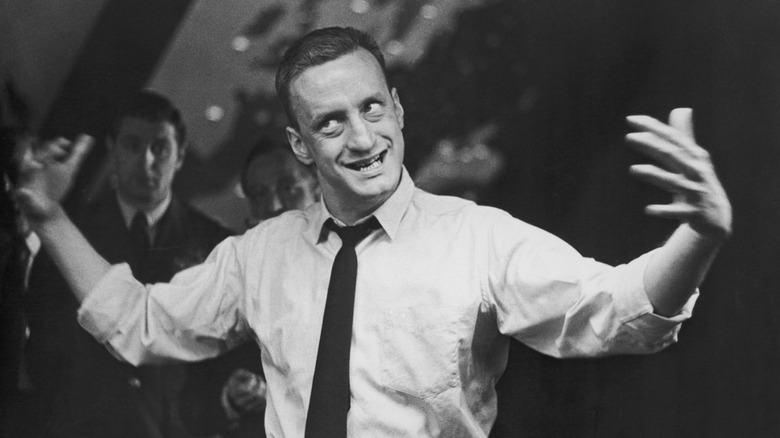
Scott first learned of "Harrow Alley" while making Huston's "The List of Adrian Messenger," and optioned the screenplay in 1968. "I thought it was the finest original screenplay I'd ever read in my life," he said, "and my attitude has not changed. It seems to me to be a kind of everyman's script. It encompasses everyone's desires, everyone's ambitions, everyone's pain. It has scope and presence, magnificent characters. It's a large canvas, you see, and maybe that's what frightens people about it." As for worries about the depressing subject matter, Scott countered that it was "the most up kind of story."
Scott renewed his option the following year before straight-up buying the screenplay for $150,000. Scott relentlessly pursued every studio and producer in town, but even after he won Best Actor for his commanding performance in "Patton," there were no takers. Scott hurt his cause with his first two directorial efforts, "Rage" (1972) and "The Savage Is Loose" (1974), both of which were met with critical and commercial indifference. His fierce devotion to Newman's script was also a problem. Scott, to his credit, wouldn't strike a deal unless producers agreed to not change a single word of the screenplay (even Newman was open to whittling it down in order to get a greenlight). A TV movie was a possibility at one point, but Scott thought a movie of the week budget would "strangle" the material.
When Scott's efforts cooled in the 1980s (even though he had a red-hot Mel Gibson attached), screenwriter Robert J. Elisberg pitched it to Universal. He led with the script's acclaim, and had the exec on the hook. Then he delved into the specifics of the story and setting, and got the hardest of passes.
Emma Thompson gave Harrow Alley one last gasp
We live in troubled times for many reasons, but one of the biggest challenges facing humanity is fighting ill-informed public health hysteria. This makes "Harrow Alley" startlingly relevant. Medical science was practically primitive in the 17th century, so the characters' only choice is to live with uncertainty and make the most of whatever time they have left. Harry and Ratsey see the worst of it from different perspectives, and the former pays time and again for his optimism. Ratsey loses his brave zeal when he discovers he's not immune from the plague, but he soldiers on and enters an unlikely (age-appropriate) romance. I wouldn't dare spoil their fates, but they both wind up in places you'd never expect.
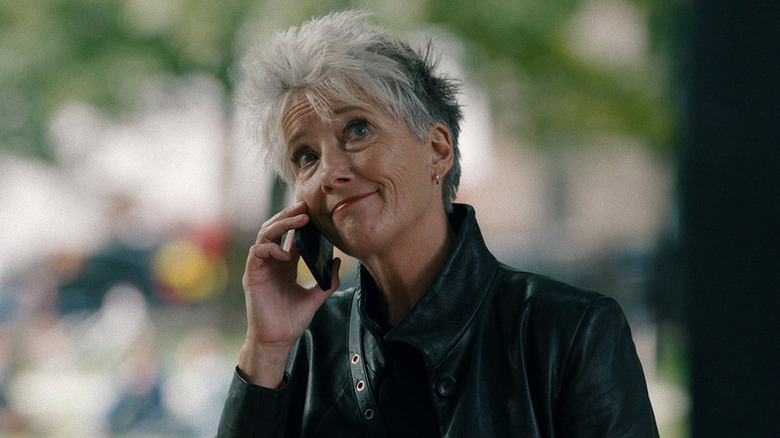
It's difficult to convey the beauty of "Harrow Alley" without giving away its surprising twists. Fortunately, the script is available to read online. And there is yet hope for an adaptation. Emma Thompson set up a miniseries rendition at HBO in 2018, and, per a 2023 interview with MovieMaker Magazine, she's still with the project. The interviewer read Thompson's 2007 revision of Newman's script, which she said included more exposition and a happy ending. She makes it sound like she's moved on from that draft, so hopefully her additions are purely cosmetic.
I don't know how you make the conclusion of "Harrow Alley" happier than it is without destroying its thematic integrity. The ending is earned, and it is realistically hopeful. Hundreds of thousands have perished, but the survivors will endure until death comes for them one day. All we can do is live every day like it matters and take care of each other, even when — especially when — the darkness and the worst people of the world threaten to engulf us.