

The Lord Of The Rings Author J.R.R. Tolkien's Darkest Book Is Disturbing On A Serious Level
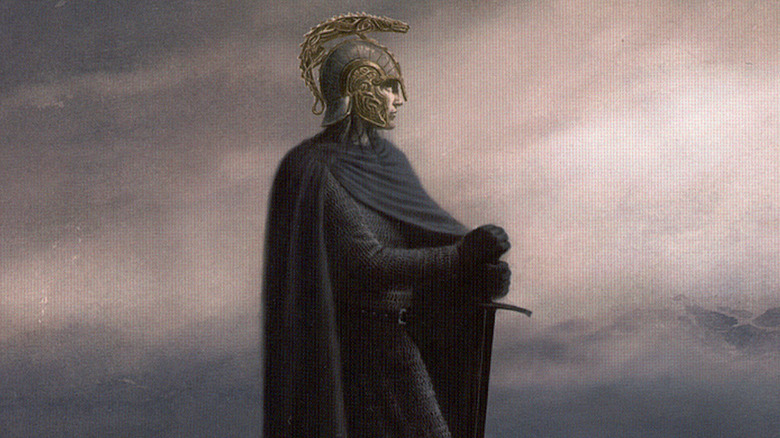
When Middle-earth comes up, most people get warm and fuzzy feelings. They think of Hobbits, the Shire, adventurous quests, heroic last stands, and the triumph of good over evil. And I get it. "The Hobbit" is fun. "The Lord of the Rings" is epic. Even "The Silmarillion" has many great stories. While the ultimate victory of good is a theme throughout J.R.R. Tolkien's works, the author was anything but black-and-white in his storytelling. There are several stories that the Oxford professor penned that are as dark as they get — and the darkest one of all? You can find it in a little posthumously published book called "The Children of Húrin."
Tolkien wrote various portions of the "Children of Húrin" narrative at different times. You can find parts of it in "The Silmarillion" and "Unfinished Tales," for instance. But it wasn't until 2007 that Tolkien's son, Christopher, gathered all of his father's notes and versions of the tale and published them in a relatively continuous narrative book called "The Children of Húrin."
That story is a triumph. It is Tolkien's ultimate story of the tragic hero — i.e., a protagonist who embodies a fundamental sense of nobility and ethical integrity but has weaknesses that lead to grave errors in judgment. The hero of this particular book is Túrin Turamabar, son of Húrin Thalion. (Turamabar ironically means "Master of Fate" — a title that Túrin does not live up to in any way whatsoever.) The book is by far Tolkien's darkest and most distressing work of fantasy fiction. Let's take a closer look at what makes this one such a disturbingly unique and compelling entry in the Middle-earth legendarium, shall we?
What is The Children of Húrin about?
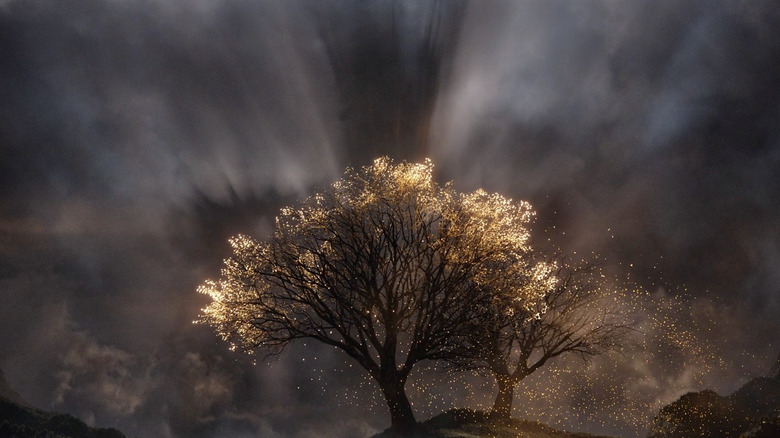
"The Children of Húrin" follows the family of Húrin, a human warrior who defies the Dark Lord Morgoth (Sauron's original, more powerful master). When Húrin is captured in battle, Morgoth tortures him but cannot break his spirit or get him to reveal the important information he knows about the hidden Elven city of Gondolin. To punish his lack of cooperation, Morgoth keeps him alive, bound to a chair on a mountaintop, where he is forced to watch the fate of his family through his enemy's far-seeing eyes as the Dark Lord relentlessly manipulates and destroys the lives of his wife, Morwen, and his son and surviving daughter, Túrin and Nienor.
The bulk of the book is seen through Túrin's eyes as the boy grows into a young man worthy of his father's heroic heritage. But Túrin is a tragic hero. He is unstoppable on the battlefield, and his will is stronger than most others — and yet, he is prideful, skeptical, and so scarred by his youth that he consistently makes poor decisions that lead to horrible outcomes.
This starts early, when he gets into a quarrel with a jerk-of-an-elf named Saeros, who insults his family and then tries to kill Túrin in the woods. When Túrin overpowers him, Saeros runs and ends up dying by falling off a cliff. Rather than seek pardon, Túrin leaves to start over.
This starts a cycle of destruction and running from his fate that dogs Túrin for years. First, he joins a group of outlaws and befriends an endangered group called the Petty Dwarves. He leads them heroically against Morgoth's minions, but eventually they are betrayed, and all of them are destroyed — except Túrin.
Túrin's story gets really, really dark
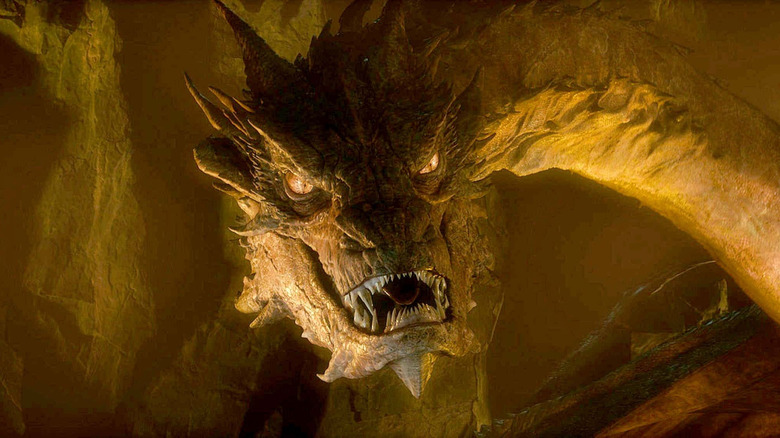
As the book progresses, increasingly horrifying events happen. Túrin is captured, and when his best friend, an Elven warrior named Beleg, rescues him in the dark, he accidentally kills his rescuer. At another point, he helps one of the strongest Elven kingdoms in Middle-earth fight Morgoth, only for his advice to lead to the complete destruction of their kingdom. This catastrophe comes at the hands of the wingless dragon Glaurung, who Morgoth specifically tasks with tormenting Húrin's family.
Glaurung puts Túrin and his sister Nienor under a spell, poisoning their minds and putting them in a state of semi-amnesia. At this point, they haven't seen each other for years, and when they meet, they fall in love and get married. I told you. It's dark stuff. Nienor becomes pregnant, just as Glaurung invades the human kingdom they're living in. Túrin heads off to fight the dragon, and we get one of the more awesome one-on-one duels in Tolkien's legendarium.
Túrin wins, but even as Glaurung is dying, he reveals to him and his sister the truth. Traumatized and horror-stricken, they end their lives. Morgoth releases Húrin in old age, and he accidentally reveals the location of the hidden Elven kingdom of Gondolin (leading to its fall in another sad Tolkien book). He finds his wife by his children's graves; she dies, and he buries her. He wanders in pain and eventually throws himself into the Great Sea.
See what I'm talking about? "The Children of Húrin" is a wildly depressing story, and not at all like what most people expect when they read Tolkien's writings. Even so, this is one of his best stories and is well worth the read. Just brace yourself.