

The Lord Of The Rings: The One Ring's Powers Explained
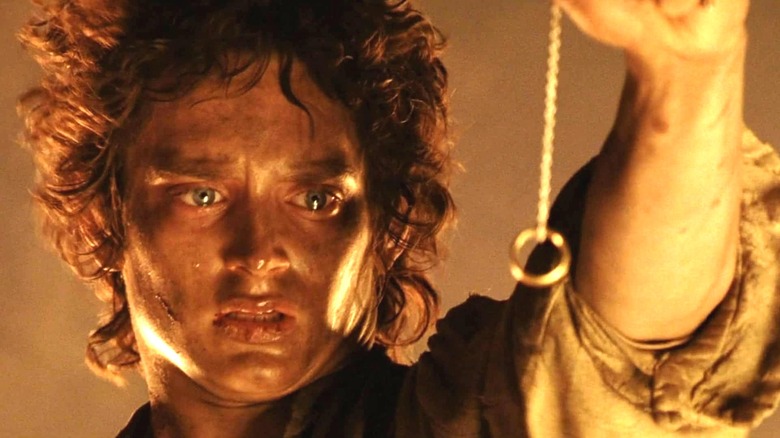
The One Ring is an important part of "The Lord of the Rings." The story is literally named after its master, and everything hinges on whether the overpowered bauble will ultimately be destroyed in the Cracks of Doom or recovered by its tyrannical creator. Based on the progression of Season 2 of Amazon Studios' "The Lord of the Rings: The Rings of Power" series (where all of the Lesser Rings are forged and in play now), one of the things that will likely happen when Season 3 releases later in 2026 is that we'll get to see the One Ring.
But while everyone and their mother knows about this all-important Ring and may be familiar with its accompanying verse ("One Ring to rule them all, One Ring to find them, One Ring to bring them all and in the darkness bind them"), it's kind of hard to pin down what exactly the One Ring does. Why is it so important? Why does everyone want it? What powers does it give you? There are a few factors at play here, but really, the One Ring's biggest power is, well, power.
In "The Fellowship of the Ring" book, we get an explanation from Gandalf, who says Sauron lost the One Ring "to the great weakening of his power." When Frodo offers the Ring to the Wizard, he also says, "With that power I should have power too great and terrible. And over me the Ring would gain a power still greater and more deadly." See a repeating theme here?
The Ring is described almost like an entity in and of itself. It can change size, abandon masters, and above all, can giveth and taketh away power. But what kind of power?
The Ring amplifies control issues
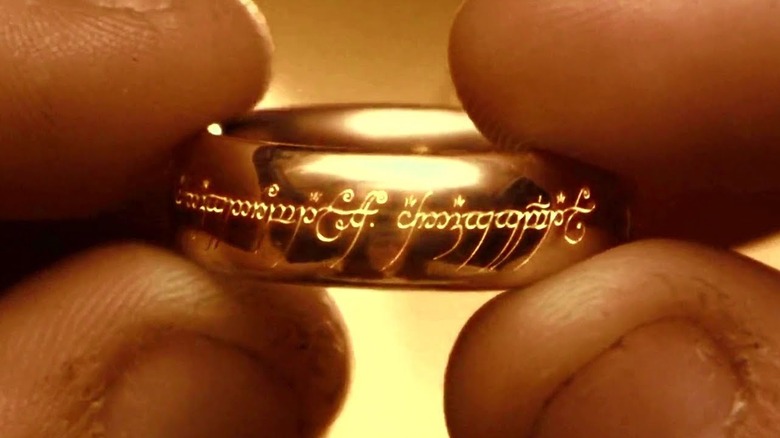
When Gandalf describes the Ring to Frodo in "The Fellowship of the Ring" book, he explains some of the power dynamic at play. For instance, Sauron made the One Ring himself and let a lot of his own power go into the piece of jewelry, giving it literal spiritual power from a god-like being. The book says he did this "so that he could rule all the others" and adds, "If he recovers it, then he will command [the wearers of the lesser Rings of Power] all again, wherever they be, even the Three, and all that has been wrought with them will be laid bare, and he will be stronger than ever."
We see similar powerful attributes in all of the lesser Rings of Power, which amplify a wearer's abilities and desires, albeit in different ways. With the Elven Rings, that power helps to preserve and protect. With the Dwarves, it inflames their desire for gold and wealth. With Men, it similarly stokes ambitions and desires. But the One Ring? It is the ultimate control mechanism. And to fully understand it, you need to think about its maker.
Sauron isn't a villain who wants to corrupt, pervert, and destroy. That's more of his master, Morgoth's, schtick. Instead, Sauron's desire is to control. He's the ultimate optimizer. Even when he thinks the men of Gondor and Rohan are about to lose in "The Return of the King," he offers them terms of enslavement, not annihilation. The One Ring is an extension of that desire — to control other wills and micromanage everyone else in Middle-earth through the domination of a pure power play.
The One Ring has other powers, too
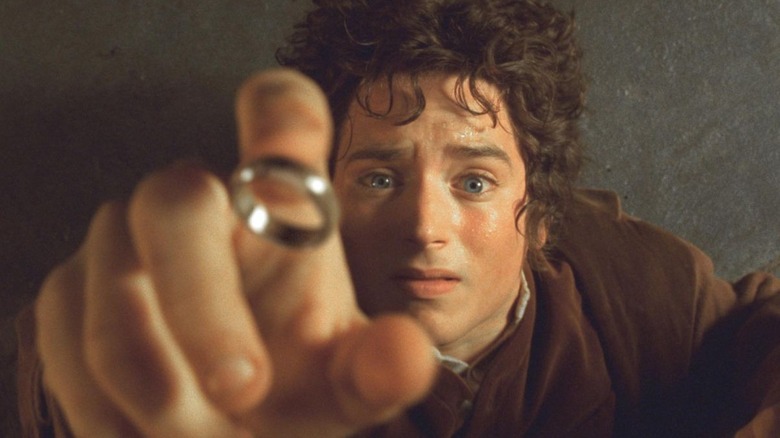
While amplifying control and power are the core functions of the One Ring, it has some fun power perks that come along with the main package, too. The obvious one? It makes you invisible. However, this "invisibility" is like a wraith in the unseen world, not just a removal of physical visibility. The One Ring also prolongs life. It doesn't add to it, but extends it — hence Bilbo Baggins' "like butter scraped over too much bread" concept. The Ring also helps understand other languages.
A great example of all of this comes at the end of "The Two Towers," when Sam puts on the One Ring. One line that stands out as it pertains to the Ring's influence on time is when it says, "The world changed, and a single moment of time was filled with an hour of thought." For the invisibility part, it adds, "At once [Sam] was aware that hearing was sharpened while sight was dimmed ... All things about him now were not dark but vague." It adds, "He did not feel invisible at all, but horribly and uniquely visible."
For the language part, Sam overhears some Orcs and can understand them in their own speech, prompting this line: "He heard them both clearly, and he understood what they said. Perhaps the Ring gave understanding of tongues, or simply understanding, especially of the servants of Sauron its maker, so that if he gave heed, he understood and translated the thought to himself."
The keyword there is "perhaps." Tolkien is cryptic about the One Ring's powers. And yet, despite its mundane appearance, it's one of the most powerful items in Middle-earth and deserves its central role in the larger story.