

Robert De Niro And Martin Scorsese Considered Remaking This Underseen '60s Crime Thriller
The 1960s were a golden age for Italian cinema. Heavy hitters like Vittorio De Sica ("Bicycle Thieves") and Federico Fellini ("La Dolce Vita") cemented their enduring legacies during this time, while emerging talents like Pier Paolo Pasolini, Marco Ferreri, and Bernardo Bertolucci began to make their mark. A wide variety of Italian genre films emerged during the 1960s and beyond, including historical epics, westerns, horror, and drama.
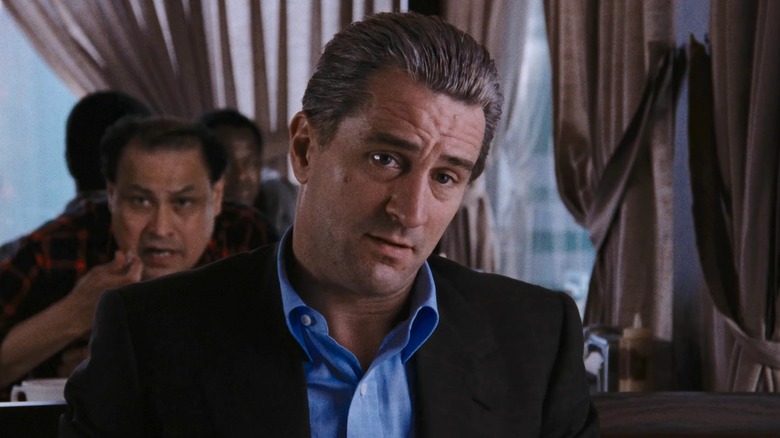
Mafia- and mob-centered storylines became grittier, laying the foundation for contemporary crime thrillers like the "The Godfather" saga, "Goodfellas," and "Once Upon a Time in America." The connective tissue between these examples is veteran actor Robert De Niro, who recently picked out a bunch of wonderful films while inside the Criterion Closet.
De Niro kicked off his Closet picks with "Big Deal on Madonna Street," Mario Monicelli's brilliant Italian comedy caper. Once he moves on to Alberto Lattuada's "Mafioso," De Niro reveals that he and frequent collaborator Martin Scorsese wanted to work on a remake at one point:
"'Big Deal on Madonna Street.' Terrific movie. I mean, it's been so many years since I saw it, but it was just terrific. There's another Italian movie, 'Mafioso.' And that was also terrific, with [actor] Alberto Sordi. Marty and I also talked about doing a remake of that."
As De Niro's comment is more of a passing anecdote, the actor didn't specify any details about the intended remake. That said, Scorsese included "Mafioso" in his 2010 list of 15 gangster movies that had "a profound effect" on him (via Far Out Magazine). "They excited me, provoked me, and in one way or another, they had the ring of truth," Scorsese concluded. With this ringing endorsement in mind, let's take a closer look at the deeply underrated "Mafioso."
Mafioso is a dark mafia comedy that was ahead of its time
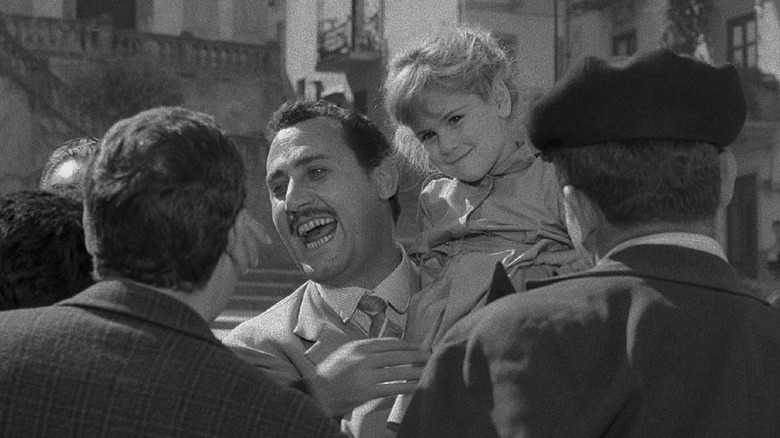
The plot of "Mafioso" unfolds across three locations — Milan, Sicily, and New York — wherein Lattuada uses abrupt tonal shifts to weave an engaging dark comedy. The film centers on "Nino" Badalamenti (Sordi), who decides to visit his childhood village in Sicily and introduce his wife, Marta (Norma Bengell), to his family. This adjustment period is rough for Marta, who was born and raised in urban Northern Italy, but Nino uses the opportunity to reconnect with old friends and the local don, Vincenzo (Ugo Attanasio). After Don Vincenzo does Nino a favor, he becomes indebted to the mafia — a sentiment he must navigate with a sense of duty instead of unwitting obligation.
"Mafioso" underlines class and cultural disparity through whip-smart comedy that isn't afraid to morph into more dramatic genres as the film progresses. As a factory foreman in Milan, Nino considers himself shrewd and calculating, but these self-proclaimed traits fall short once he has to carry out orders for the local Sicilian don. While Nino attempts to romanticize rural Sicily as an idyllic paradise, the hostile criminal underbelly demands that certain rules and codes of honor be upheld. This could be seen as a clash between tradition and modernity, but it's a tad more complicated because the ways of life aren't at all compatible.
A remake of "Mafioso," especially one with Scorsese and De Niro's involvement, could've been a thing of beauty. Our hyper-capitalized world would grant a sharper contrast between Milan and Sicily, affecting how these varied attitudes define Italian identity from a contemporary perspective. While a "Mafioso" remake can still happen, now is the best time to watch this gem of a mafia movie that still remains underappreciated.