

A Company Now Banned From TV Advertising Helped Save Gilligan's Island From CBS' Meddling
We may receive a commission on purchases made from links.
Many "Gilligan's Island" fans will likely know that the show had a questionable sponsor. The sitcom featured promotions for everything from cereal and soap to toothpaste and ... cigarettes. Yes, beloved family-friendly sitcom "Gilligan's Island" was sponsored by tobacco giant Philip Morris, which gleefully urged viewers to "call for Philip Morris" in promotional clips that bookended Gilligan and his pals' misadventures. But while the company might have been responsible for contaminating the lungs of a generation, the Philip Morris executives did at least help prevent CBS from tampering with that winning "Gilligan's Island" formula.
In the mid-20th century, marketing cigarettes to the masses was a widely accepted feature of pop culture. This was a time when brands like Marlboro and Lucky Strike were publishing ads featuring physicians enthusiastically advising consumers to puff a pack a day. As such, witnessing a commercial promoting Philip Morris cigarettes between installments of "Gilligan's Island" was hardly the most egregious thing. In fact, it was quite tame by the standards of the time.
Of course, in retrospect it's sort of horrifying to say the least. But we can at least thank Philip Morris for ensuring the castaways' story was allowed to play out as creator Sherwood Schwartz intended.
A tobacco giant faced off against CBS behind the scenes of Gilligan's Island
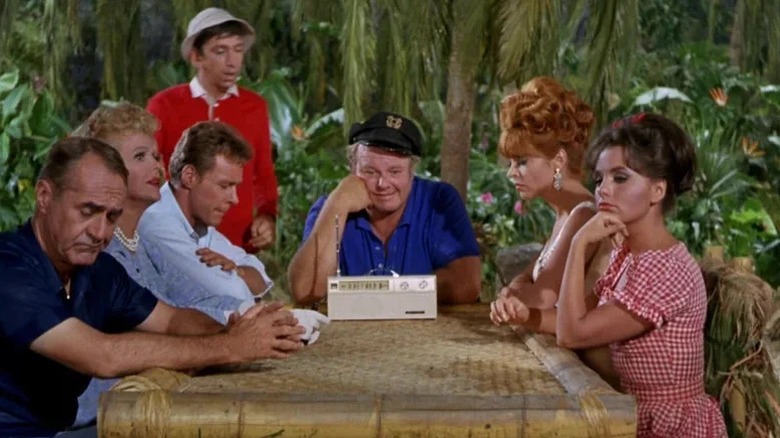
"Gilligan's Island" didn't have the easiest road to success. Not only were the critics merciless upon its 1964 debut, but studio executives almost ruined the "Gilligan's Island" pilot episode, which ultimately ensured it didn't see the light of day until the mid-'90s. At the time, CBS execs felt that Sherwood Schwartz's sitcom needed a complete overhaul and set about producing their own cut of the pilot full of extraneous scenes that bogged down the lighthearted shenanigans. The restructured pilot did not test well in early screenings. Luckily, Schwartz was shrewd and bold enough to make his own cut of the episode, which tested much better, ensuring the show made it to series.
But it seems that was only part of the story. As detailed in "TV Treasures: A Companion Guide to Gilligan's Island," the show's sponsors in 1964 were consumer goods giant Procter & Gamble and lung-cancer purveyors Phillip Morris. Author Sylvia Stoddard points out that tobacco companies were "extremely active in television" at the time and, as such, had significant behind-the-scenes influence. Indeed, "I Love Lucy" signed a smoky deal and wound up with a deadly sponsor, and that was just one of multiple examples.
It was amid this vast tobacco-backed mediascape of the early 1960s that "Gilligan's Island" took shape. According to Stoddard, CBS was still contemplating creative changes to the "Gilligan's Island" characters and storylines even after the pilot debacle. Luckily, the sponsors stepped in and "demanded the show be left just as it was." After Schwartz's sitcom debuted to excellent ratings, CBS agreed to back down.
A tobacco company did one thing right with Gilligan's Island
Just what CBS was planning when the "Gilligan's Island" sponsors threw their weight around remains unclear. Perhaps Sherwood Schwartz's recut actually wasn't enough to convince the network suits that his show could be a hit after all. Regardless, it seems the same company responsible for filling the nation's lungs with carcinogens could at least claim to have preserved the "Gilligan's Island" that multiple generations came to love — not that that makes up for anything.
It's incredible to think about in retrospect, but even back in the late 30s there were studies that demonstrated a clear link between cigarette smoking and higher rates of cancer and heart disease. Yet for several decades after that point, Hollywood and tobacco companies cultivated very close ties. The year "Gilligan's Island" debuted, however, was when things started to change. In 1964, the US Surgeon General delivered a report (via the National Institute of Health) confirming cigarette smoking as a cause of lung cancer and marking the beginning of the end for widespread tobacco company sponsorship. Just six years later, President Richard Nixon signed a bill into law that outright banned companies from advertising cigarettes on radio and TV.
Had "Gilligan's Island" debuted even a couple of years after it actually did, then it might have been a completely different show. Philip Morris' sway would surely have waned by that point, and the company might not have been able to convince CBS to leave Schwartz and his castaways alone. Considering these sorts of sponsorships typically resulted in ridiculous requirements for shows like "Star Trek" to omit the word "camel" from scripts, this was at least one time when a tobacco company did something helpful, which is barely even the least they could do.