

This Cult '70s Action Thriller Got A Glossy Hollywood Remake With Nicolas Cage
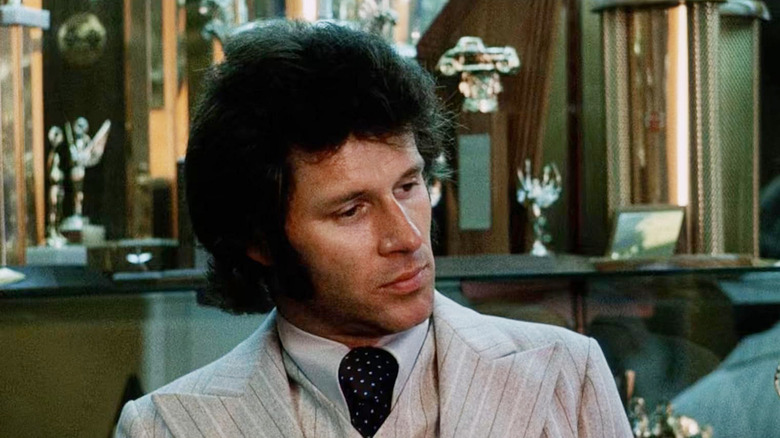
Peter Yates' "Bullitt" is many things: a terrific cop thriller, a high-style celebration of swinging 1960s San Francisco, and a shrine to the turtlenecked cool of Steve McQueen. But its primary legacy is that it ushered in the era of the bravura car chase. It's curious that it took Hollywood decades to exploit the United States' obsession with automobiles that go vroom, but once filmmakers understood the ticket-selling appeal of vehicular mayhem, they went out of their way to shoehorn tire-squealing set pieces into all types of movies.
This opened up an opportunity for low-budget and regional filmmakers to hit up car auctions, stockpile wreckable cars, and knock out smash-em-up B movies. And no one did it with more brazen elan than H.B. Halicki with 1974's semi-improvised "Gone in 60 Seconds." Halicki was more daredevil than director, but that harkens back to the silent era of movies where spectacle mattered more than artistry — and if you had to kill some extras and a whole lotta horses to get jaws dropping, that was the depressingly low cost of doing business.
There are so many great car chase movies from this era (which generally double as outlaw flicks): "Vanishing Point," "Dirty Mary, Crazy Larry," and "Freebie and the Bean" are exemplary of the genre. But "Gone in 60 Seconds" stands out because Halicki never made another film of genuine merit. He poured his gearhead mayhem into this one movie, and made it count. Then, for reasons that only make sense in Hollywood, Touchstone Pictures remade his sui generis car chase film into a disposable Jerry Bruckheimer-produced 2000 blockbuster starring Nicolas Cage and Angelina Jolie.
How Gone in 60 Seconds went from scrappy indie action flick to a bank-breaking studio blockbuster
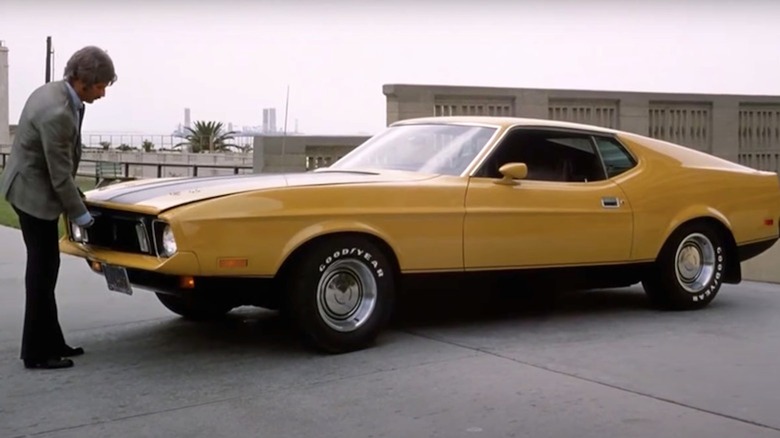
1974's "Gone in 60 Seconds" has a fun hook. In H.B. Halicki's film, it's a challenge to steal 48 different cars to satiate the automotive pique of a South American drug lord. The honey car is a 1973 yellow, fastback Ford Mustang called "Eleanor." When Jerry Bruckheimer and the immensely underrated director Dominic Sena worked their variation in 2000, they upped the car count to a nifty 50, with the yellow Mustang still being the prize.
The low-rent, unaffected charm of Halicki's film gets blasted away by the star power of Cage (who, to his credit, really got behind the wheel), Jolie, Delroy Lindo, and da god Robert Duvall in Sena's remake. That movie's quippy Scott Rosenberg screenplay is agreeable, and pro-lenser Paul Cameron (who shot Tony Scott's magnificent Denzel Washington team-up "Deja Vu") gives the whole thing a slick Hollywood sheen, but this is all wrong from the get-go. There's no danger. In Halicki's "Gone in 60 Seconds," you're legitimately worried about the well-being of the drivers behind the wheel, while Sena's film is a glorified car commercial. It's got all the thrill of zipping a straight-out-of-the-factory car around a race track.
Nevertheless, the absurdly expensive "Gone in 60 Seconds" remake grossed $237 million worldwide at the box office against a $90 million budget. If watching a studio light money on fire to remake a film that cost $150,000 to produce in 1974 sounds like your jam, then 2000's "Gone in 60 Seconds" might be your speed. Otherwise, stick to the original.