

James Cameron Wrote A Criminally Underseen '90s Sci-Fi Classic Finally Streaming On Hulu
There's something special about Kathryn Bigelow's 1995 cyberpunk thriller, "Strange Days." It's a sharp, disorienting story about technological anxieties and social injustice at the cusp of the millennium — one which James Cameron penned a decade after conceiving the idea for Bigelow's film. It also opens with a unique POV shot of a tense, exhilarating robbery gone wrong, which took six months to set up to capture the voyeuristic nature of the experience. Despite being a complex, visually stunning film, "Strange Days" bombed at the box office and earned polarized reviews, contributing to its cult classic status over the years. Save for a brief window when Bigelow's film was added to HBO Max in 2023, it was nearly impossible to stream or rent "Strange Days" on online platforms. Thankfully, this isn't the case any longer, as you can now watch this astonishing fever dream of a film on Hulu.
Cameron's grungy view of the future in "Strange Days" was colored by the horrific reality of racial violence and police brutality, which feels heightened due to the film's apocalyptic atmosphere. Technology plays a seminal role in enabling targeted violence, which is now a virtual-reality commodity sold as part of the SQUID (Superconducting QUantum Interference Device) experience. Those acquainted with "Cyberpunk 2077" will understand it as the precursor to Braindance (BD), a neural technology that allows users to viscerally experience someone else's recorded memories.
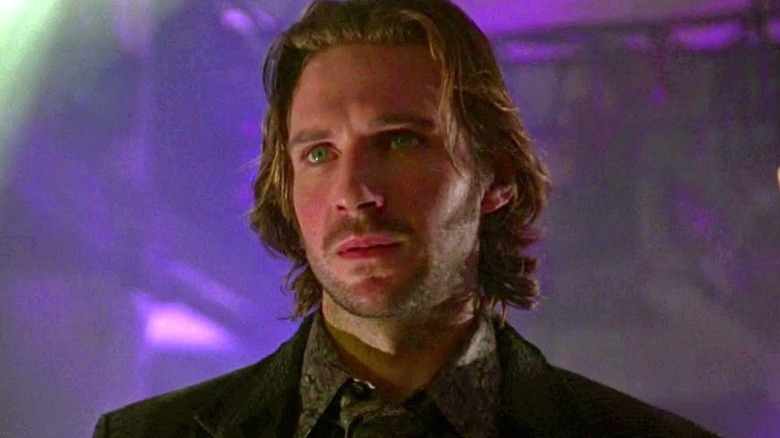
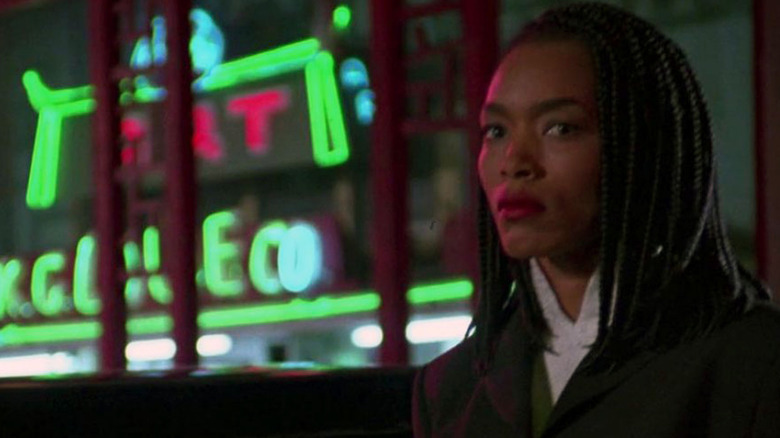
"Strange Days" follows ex-LAPD cop Lenny Nero (Ralph Fiennes), who sells SQUID recordings on the black market. Bodyguard and limousine driver Mace (Angela Bassett) is one of Lenny's closest friends, and the two get embroiled in a surreal adventure on the night 1999 ends. There's a nihilistic streak to these events, but "Strange Days" refuses to let go of hope at the end.
Strange Days is a prescient look at a future built on intrusive technology
Spoilers for "Strange Days" ahead.
A key criticism of Bigelow's film can be boiled down to its myriad storylines, which overlap into a dizzying experience that some deemed confusing. One can argue that this convoluted energy is one of the film's many merits, as it is a window to a chaotic postmodern setting where overstimulation is the name of the game.
"Strange Days" might not indulge in the most obvious cyberpunk tropes, but its exploration of social injustice (and how technology can aid ideological rot) can be traced back to William Gibson's 1984 novel, "Neuromancer." Cameron's story treats surveillance as a product, which is an unfortunate aspect of our current reality, given the rise of easily accessible eyewear that doubles as spyware. Although cyberpunk media has dabbled in these themes to some extent, "Strange Days" authentically captures the scummy motivations that drive the creation of such intrusive technology.
While SQUID dominates black markets and offers customers their next hit, this isn't an escape from reality, as these real-world videos tend to be disturbing and violent. When someone's trauma is peddled as entertainment, a disconnect occurs between fantasy and reality, blurring the line between the two. When Black musician and activist (Glenn Plummer) is killed due to police brutality, the tragedy is recorded on a SQUID disc, which quickly becomes the source of conflict in the film. Much of Lenny and Mace's moral dilemma stems from this crucial piece of evidence and from how it should be handled without inciting a citywide riot.
"Strange Days" is for those who appreciate dystopian storylines and experimental techno-thrillers. Despite the bleak overtones that drive the film forward, it looks at the future with an optimistic eye and the promise of revolution.