

George R. R. Martin Had Nothing But Hatred For Lost's Ending
There are some writers who insist that you should know your ending before you begin writing your story. Obviously, like all writing advice, there is no one-size-fits-all approach. For many, having a fixed destination in mind, or even just a vague notion of the terminus, snuffs out the sense of discovery and surprise that makes writing so meaningful.
Nevertheless, when you set out to tell a (hopefully) popular, long-form tale, it's probably not a terrible idea to know where you're going to leave your readers/viewers when it's all over. Not that this makes it easier to get there! If you're too successful, and you're writing a series of novels or several seasons of television, you might have to accordion that sucker out for the pleasure of your publisher/network. That'll send your story down strange paths and blind alleys, so, again, having an eye on the prize is important.
And even if you've got a crack writing staff or a fiery surfeit of individual imagination, chances are, at least nowadays, your loyal viewers/readers will turn on you when you hit them with that long-planned ending. Hard.
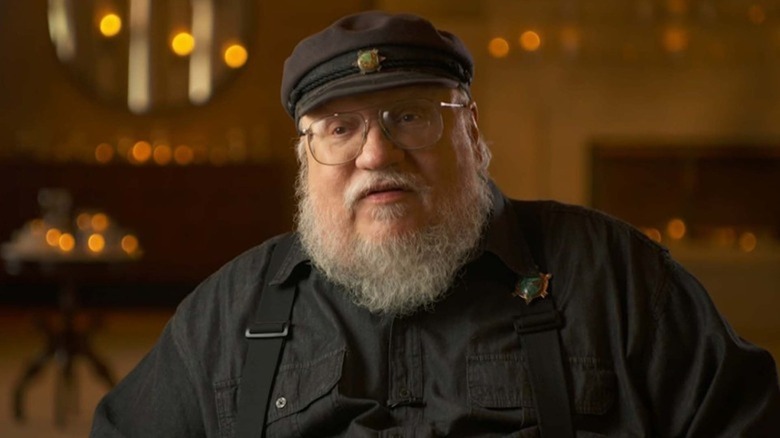
No one knows this better than Damon Lindelof, who played too much narrative jazz over six seasons of "Lost" before concluding the series with a very simple (and deeply moving) final shot. Lindelof and company have said they always had that final shot, but the extraneous action along the way left viewers asking too many questions. Plot lines dangled. Relationships were left unresolved. And no one was more furious than George R.R. Martin, who still can't figure out how to end "A Song of Ice and Fire" and probably never will.
George R.R. Martin thinks endings are important — as long as he's not writing them
When George R.R. Martin sounded off on the finale of "Lost" to The New Yorker in 2011, he could afford the swagger. "A Dance with Dragons," the fifth installment in his high fantasy series, had just been published amid the popularity of HBO's "Game of Thrones" live-action adaptation.
Martin initially admitted to being a fan of "Lost." "I kept watching it, and I was fascinated," he said. "They'd introduce these things, and I thought that I knew where it was going. Then they'd introduce some other thing, and I'd rethink it." That's good storytelling! I think it's perilous to get too far afield in a series that might last a season or two longer than you expected because it's so popular, but these are pros at the wheel.
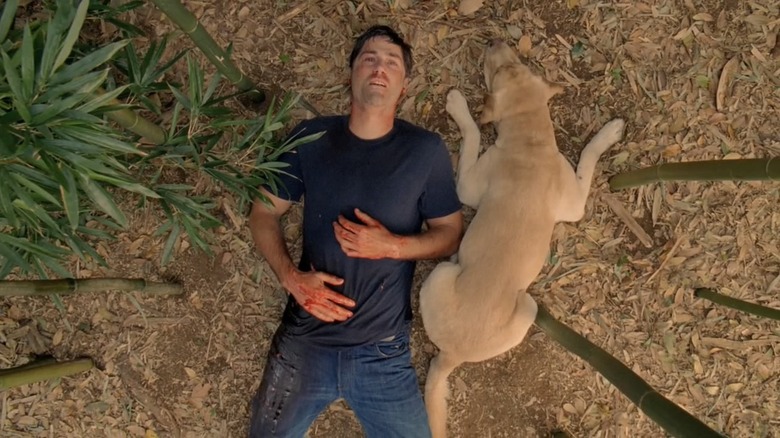
Alas, when "Lost" alit on a beach with Jack drawing his last breath on the beach with the dog at his side, Martin was incensed. As he told The New Yorker:
"We watched it every week trying to figure it out, and as it got deeper and deeper I kept saying, 'They better have something good in mind for the end. This end better pay off here.' And then I felt so cheated when we got to the conclusion."