

The Star Wars Business Decision That Quietly Changed Hollywood Forever
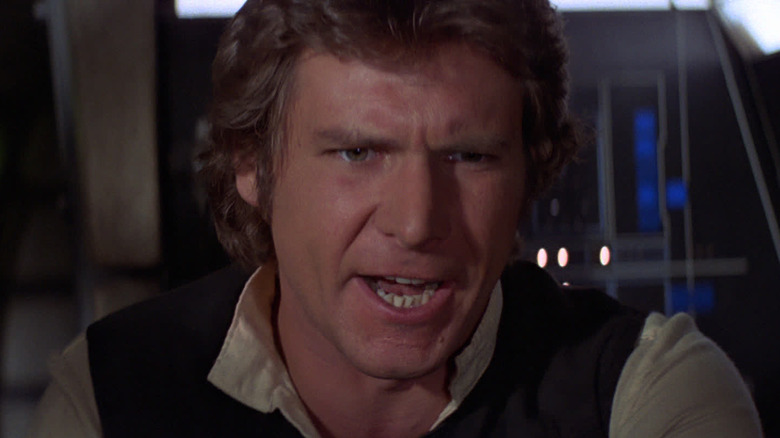
There is nobody quite like George Lucas in Hollywood history. The man took the good will he had built up from directing "THX 1138" and, more importantly, "American Graffiti" and parlayed it into making 1977's "Star Wars: Episode IV — A New Hope." The result? One of the biggest movies in history, one that spawned one of the biggest multimedia franchises in history along with it. It's all pretty remarkable considering that Lucas literally couldn't afford to make mistakes on "Star Wars" because the budget was so tight.
Lucas became a billionaire thanks to a galaxy far, far away, but what you may not know is that, yes, a large chunk of his empire was built thanks to the movies themselves. However, a much larger portion of the filmmaker's bank account was padded out thanks to the merchandising that resulted from the "Star Wars" saga. It's frankly not even close.
As explained in a February 2012 article from The Hollywood Reporter, 20th Century Fox, the studio that reluctantly made "Star Wars" in the first place, let Lucas keep the licensing and merchandising rights in exchange for taking $500,000 less as a director's fee. The end result was a multi-billion-dollar decision that would serve as a lesson for every studio in Hollywood in the future.
The thing is, Fox had serious doubts that "Star Wars" would succeed. However, Lucas' space opera was a cultural moment, the likes of which the world had never seen. "Star Wars" literally created a crisis on Halloween in 1977 because there simply weren't enough "Star Wars" character costumes made to meet demand. That goes double for Kenner's "Star Wars" action figures at the time. That was all just the tip of the iceberg, though, as merchandise connected to this franchise has generated billions over the decades.
George Lucas made his fortune through Star Wars merch - not the movies
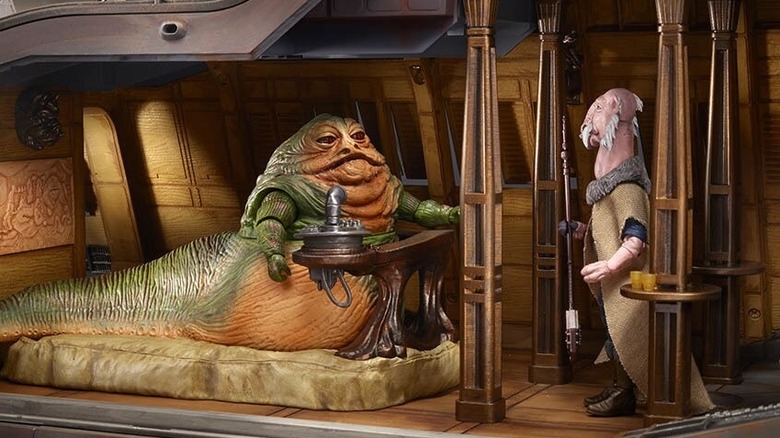
The THR article from 2012 explained that "Star Wars" was still "consistently among the top five licensed toy brands" at that time, generating more than $3 billion in retail sales in 2011. That's a single year. Over the lifetime of the franchise up to that point, $20 billion worth of licensed goods has been sold, compared to $4.4 billion in ticket sales at the box office and $3.8 billion in home entertainment products, such as VHS, DVD, etc.
From releasing the "Star Wars" Special Editions in 1997 and turning generational nostalgia into gold to developing "Clone Wars" for Cartoon Network, George Lucas made the most of what he had. He, in turn, reaped untold billions and helped build Lucasfilm into a mighty company. Meanwhile, Fox lost out on many of those billions. $500,000 in 1977 could've instead translated into what is, in effect, a license to print money.
Howard Roffman, the former head of licensing at Lucasfilm who got his job at the company in 1986, explained that Lucas, for the entire time he owned the company, had the final say over any decisions involving "Star Wars" and the merchandise connected to it. Per Roffman:
"We don't put out anything there is not a consumer demand for. George doesn't want to damage the reputation of 'Star Wars' in any way in the retail marketplace."
When the prequel trilogy kicked off in 1999 with "Star Wars: Episode I — The Phantom Menace," that created a new generation of "Star Wars" fans — ones who would go on to spend billions more on toy lightsabers, LEGO sets, and much, much more. Lucas built his empire and his legacy thanks in large part to those fans and that merch money.
Disney's purchase of Lucasfilm was predicated on more than Star Wars movies
Mere months after that THR article was published, it was announced that Disney had bought Lucasfilm in October 2012, with "Star Wars" Episode VII coming in 2015. That would ultimately arrive in the form of "Star Wars: The Force Awakens." The purchase price? $4 billion. What's remarkable is that number represents a relatively small fraction of what George Lucas made over the life of the franchise before the sale.
But the fact of the matter is that the sale price of Lucasfilm was, yes, predicated on the notion of making new movies in the franchise. That included spin-off films such as the $1 billion dollar hit "Rogue One: A Star Wars Story." But it was also predicated largely on the fact that merchandising in a galaxy far, far away was then and remains now incredibly lucrative. Disney currently makes a fortune annually from books, comics, toys, shirts, theme parks, etc. thanks to "Star Wars." The movies are just part of the equation. For Disney, that $4 billion has been money well spent.
There's a reason this deal that Lucas made nearly 50 years ago is brought up so frequently in an almost folklorish way. There are some incidents in Hollywood history that are so profoundly impactful that they become tales of triumph for one party and cautionary tales for another. For Lucas, it was an example of a filmmaker truly getting the better of the studio system, allowing him to make "Star Wars" his way and only his way until the day he sold Lucasfilm.
For Fox, with the benefit of hindsight, it was one of the worst business decisions ever made. Nobody else in such a position of power has ever made the same mistake again.