

This Star-Studded '90s Show About Fishing Might Be The Most Bizarre Series Ever Made
We may receive a commission on purchases made from links.
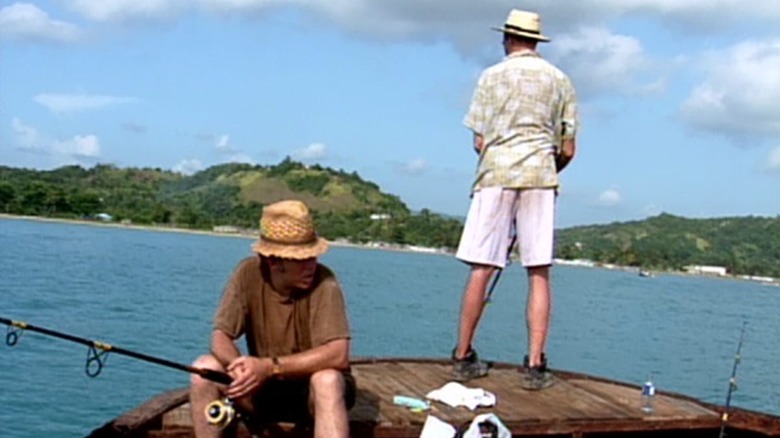
In 1991, Bravo ran all six episodes of this odd, aggressively snappy TV phenom that baffles people to this day. The series was called "Fishing with John" and followed artist and musician John Lurie as he contacted various celebrity friends to go on fishing trips. The joke was that neither Lurie nor any of his guests knew the first thing about fishing, so every episode was basically a stalled argument over how they should go about it.
The series, in concept, sells itself as an opening for deep conversations about life and art, with Lurie being able to spend several quiet, uninterrupted hours with the likes of Tom Waits (the best Renfield ever), Jim Jarmusch, Dennis Hopper, Willem Dafoe, and Matt Dillon. The problem was that Lurie had little to no rapport with his celebrity friends, and their conversations came out as halted and directionless. "Fishing with John" isn't a fishing show, nor is it an interview program. It's not about showbiz, and it's definitely not about outdoor sports.
Instead, "Fishing with John" serves as an anti-television, a confrontation with Marshall McLuhan's notion of television as a "cool" medium. If a "cool" medium demanded more cognitive audience participation than a "hot" one (as McLuhan wrote in "Understanding Media"), then "Fishing with John" was downright arctic. The series feels more like a media experiment than an honest means to engage and entertain. It helps that Lurie knows celebrities like Tom Waits and Jim Jarmusch, who are not known for being warm, social, and talkative. Luris is laconic, his guests are laconic, and they got in front of a camera to engage in an activity that involves sitting still in a quiet place for hours on end.
"Fishing with John" is so great that one can watch it on the Criterion Channel.
Fishing with John is a comedy ... I think
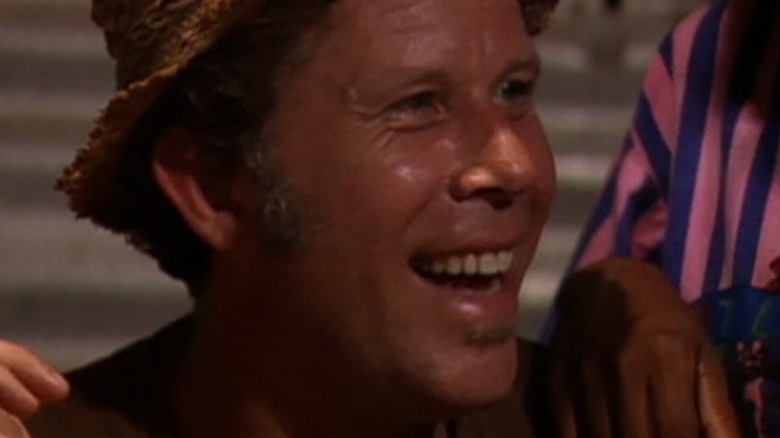
Lohn Lurie was something of a celebrated artist when he created "Fishing with John" in 1991. He had already appeared in underground movies like "Underground U.S.A." and in several Jim Jarmusch movies, including "Stranger than Paradise," "Down By Law," and "Mystery Train" (for which he also composed the score). He was in Martin Scorsese's "The Last Temptation of Christ" and Wim Wenders' "Paris, Texas" (one of the best films ever to be set in Texas). David Lynch fans might recognize him from "Wild at Heart." Lurie was in the middle of the hippest cinema scene in generations.
Fans of 1990s cinema might also recognize Lurie's musical work from films like "Get Shorty," "Manny & Lo," and "Clay Pigeons." Fans of the TV series "Oz" will recognize him as Greg Penders.
"Fishing with John," though, proves that Lurie had few ambitions toward conventional mainstream success. And the series doesn't flatter him, or anyone he talks to. Matt Dillon and Willem Dafoe both seem articulate, but the others kind of ramble. And none of these men has the first clue how to catch fish. In the first episode, Lurie and Jarmusch go fishing, which involves one of them holding food out over the water, and the other pointing a gun at the food, ready to shoot in case an ocean beast leaps up and eats it.
In the Willem Dafoe episode, the pair go ice fishing, run out of food, and seemingly starve to death. Luckily, at the beginning of the following episode, Lurie gleefully announces that they survived and that the net fishing trip can commence forthwith. It's easiest to describe "Fishing with John" as a comedy, but it's unlike any comedy you've ever seen.
Fishing with John is, more than anything, anti-television
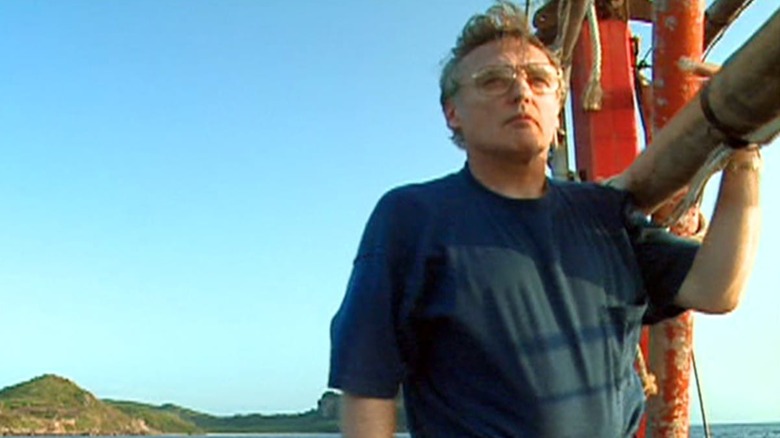
The show lasted only six episodes, but it received something of an artistic blessing in 1999 when it was released on DVD by the Criterion Collection. Its spine number (that is, the order in which Cirterion released it) was only 42, so it came early in the company's celebrated DVD/Blu-ray run. The right people have found it, and it has something of a cult following.
Indeed, "Fishing with John" was semi-kinda-sorta rebooted in 2021 on HBO as "Painting with John." That series, however, was a little more directed, with Lurie, an actual painter, exploring his techniques and telling anecdotes. He talks with his brother and shares childhood memories, all while looking at the quality of his painting. Lurie has lived a fascinating life, so his anecdotes are all worth listening to. For instance, he once bunked with Jean-Michel Basquiat. "Painting with John" is not so much an instructional series as a hang-out series. It lasted 18 episodes over three seasons. Lurie stepped away from acting in the early 2000s, as he was diagnosed with chronic Lyme disease.
"Fishing with John," meanwhile, remains a confrontation about casual TV narratives, stretching the limits of what counts as a story. Like many of Jim Jarmusch's films, it's infused with long pauses and awkward silences. Unlike mainstream TV, which aims to grip the audience with drama, "Fishing with John" lets us drift gently away. It may be one of the best TV projects of its decade. It's bizarre, but it's also weirdly hypnotic. Nothing is happening, and yet audiences will be enthralled. It's something of a relic of the '90s, but also a reminder that the art scene of the '90s was pretty wild.