

Survivor Star Parvati Shallow Knows Exactly Why The New Era Isn't Working
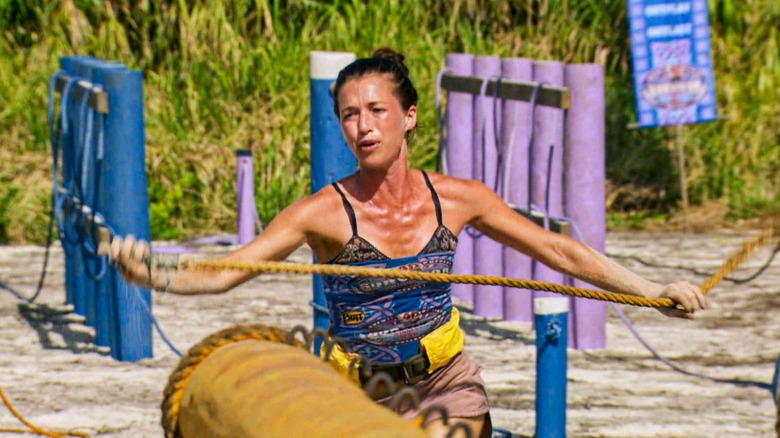
As of this writing, "Survivor 50," the all-star landmark season of the long-running reality competition show, is set to conclude soon (on May 20, specifically). For reasons I don't really understand, legendary player Parvati Shallow — who won "Survivor: Micronesia" and took home the grand prize in the 2025 crossover event "Survivor Australia v the World" — wasn't included in the cast. Shallow did, however, speak to Variety for a cover story about the 50th season of "Survivor," and she had a pretty solid critique of the "new era."
When I say "new era" in the context of "Survivor," I mean anything after the 40th season, subtitled "Winners at War" (in which Shallow competed). The reason for that is that since Season 40, there haven't been any seasons that included returning players until "Survivor 50," so host Jeff Probst put his weight behind this "new era" of players hoping to become unforgettable "Survivor" figures. This, Shallow says, is exactly the problem.
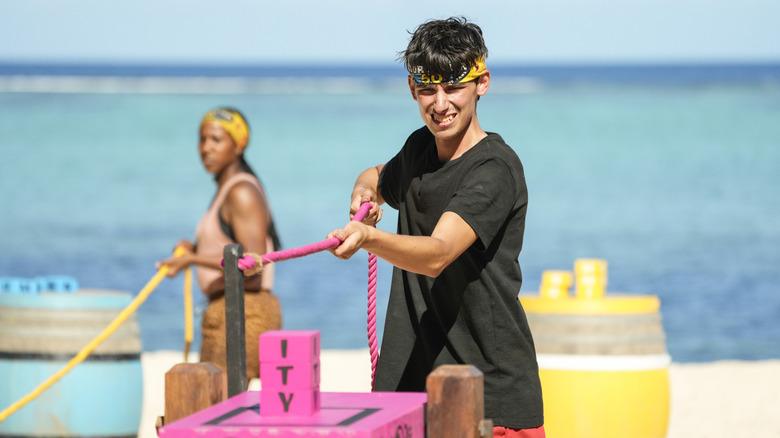
"We're seeing new era players like Rizo say over and over again how much he wants to be a legacy player. He wants to make his mark," Shallow said, referring to Rizo Velovic, a 26-year-old player and "Survivor" superfan who first appeared in Season 49 of "Survivor" before returning for the 50th. "But I think it's kind of sad for the new era players," Shallow said. So why is that? As she put it:
"There was a time when 'Survivor' players became legends and had legacies, and it was in the old era. Because we kept getting invited back over decades. People recognized us through our evolutions and multiple decades of gameplay. A new era player can't compete with that."
Parvati Shallow says that new Survivor players can't work too hard to craft a legacy
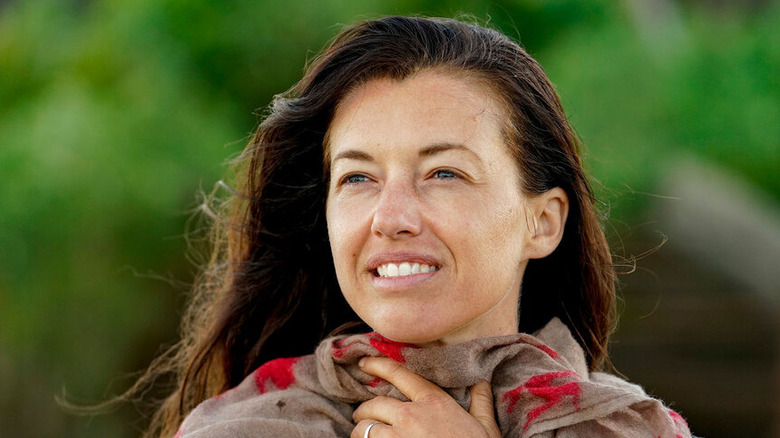
The point Parvati Shallow is trying to make here — and it's well-taken — is that players in the "new era" of "Survivor" talk a lot about "making moves" and "being on 'Survivor,'" but actions speak louder than words ... and their actions are often lacking. (The near-constant proclamations about "playing 'Survivor'" always make me feel particularly nuts because, like, we know! We're watching it!) Trying too hard to capture the moment or "create a legacy" — or, in fact, pre-emptively being aware of your legacy — doesn't make for compelling reality television. That tactic may have worked in, say, the musical "Hamilton," but watching a guy from Yonkers proclaim that he wants to become a "'Survivor' legend" just gets really annoying after it happens a whole bunch of times. (Sorry to keep the heat on Rizo Velovic, but I picked his hometown on purpose.)
That's basically what Shallow told Variety. "So I think it's funny that a lot of them talk about how they're gonna be these historic players, when in the past, with players that did become legendary, we weren't thinking, 'Oh, I want to solidify my [...] legacy,'" Shallow remarked. "It was just, 'I'm gonna play this game to win. However I have to do that is the way I do it.' Then the moves we made became historic because we were in the moment, versus performing for some kind of award."
Throughout her four rounds on the original American version of "Survivor" and her winning turn on "Survivor Australia v the World," Shallow knows a thing or two about creating extremely memorable and legendary moments. (Black Widow Brigade, anyone?!) Still, she did concede that the "new era" is doing one thing right.
Parvati Shallow made one concession about modern Survivor
There is at least one dynamic in the "new era" of "Survivor" that Parvati Shallow mentioned and praised, and I have to agree with her. Again, let me provide some context. When Shallow made her debut at just 23-years-old in the 13th season of "Survivor," set in the Cook Islands, she immediately established herself as "the flirt" and used that archetype to her advantage. She kept this dynamic going through "Micronesia" — during which she established the aforementioned Black Widow Brigade, an all-female alliance that systematically took down male opponents with a devastating combination of sheer charm and sharp strategy — and because the older generations of "Survivor" relied on stereotypes, Shallow remained "the flirt" forever. Now, she says, the show gives its players more nuance.
"Now, people are less one-dimensional archetypes and more of a fuller human being. I grew up in a very high-control environment as a child in a commune in Florida, and producers have been like, 'God, if you played now, we would weave that into your storyline,'" Shallow said to the outlet. "They do a more nuanced approach these days." This is, notably, in response to Jeff Probst's explanation of why he thinks "Survivor" has survived this long. "I think the reason 'Survivor' lasts is because we are telling stories that are generally positive," he said. "It's a vicious game. But it doesn't mean you have to be an a**hole to play it."
Shallow is, unsurprisingly, right about all of this: while "Survivor" is a more layered show in its modern era, it still has its pitfalls. You can watch the "Survivor 50" finale at 8 P.M. EST on May 20, 2026, and see if a "new era" or "old generation" player takes home $2 million.