

Hollywood Needs To Learn A Lesson About AI From This Hit HBO Series
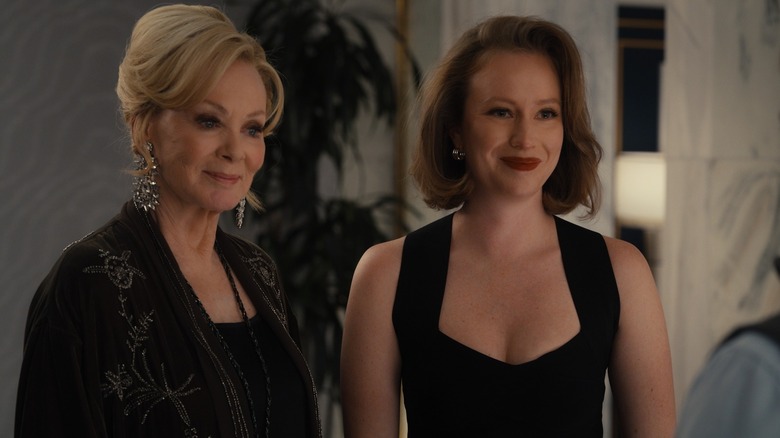
During an appearance at the Cannes Film Festival, Oscar nominee and Golden Globe winner Demi Moore made a pretty striking declaration about how the arts should handle the advance of artificial intelligence. Like some of her peers, Moore inexplicably told people they need to start accepting the rise of A.I., because it's here to stay. Far be it from me to impugn Moore, but she should watch the May 7 episode of "Hacks" to see the other side of this argument — the correct side, actually.
I'm not putting words in Moore's mouth, so let me quote her directly here. Speaking to Variety at Cannes, Moore was asked about how people in creative fields should regard AI. "Wow, that's a big question. I think the reality is that to resist — I always feel that against-ness breeds against-ness," Moore said, kicking things off with a statement that really says nothing at all. That's when she gets to her point:
"AI is here. And so to fight it is to fight something that is a battle that we will lose. So to find ways in which we can work with it, I think, is a more valuable path to take."
Again, with all due respect to Moore, no. Unfortunately, she's not alone in this; Reese Witherspoon, an Oscar-winning actress who's produced so many great projects through Hello Sunshine, also decided she needed to tell the world that we need to get on board with AI or be left behind. I know a lot of people, including people in Hollywood, watch "Hacks," the comedy starring Jean Smart and Hannah Einbinder that's currently airing its final season on HBO Max ... and I know that because it routinely wins armloads of Emmys, so Moore and Witherspoon should too. Why? It recently addressed this exact argument.
Here's how Season 3, Episode 6 of Hacks handles the issue of AI in creative fields
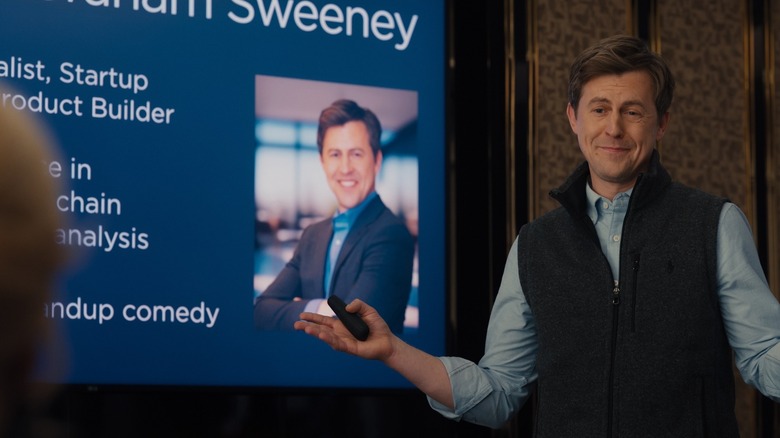
In the sixth episode of Season 5 of "Hacks," Jean Smart's comedian Deborah Vance and her head writer Ava Daniels (real-life AI hater Hannah Einbinder) agree to take a meeting with venture capitalist Graham Sweeney ("Saturday Night Live" veteran Alex Moffatt), hoping he'll help fund The Diva — a new casino helmed by Deborah and her loyal lieutenant Marcus (Carl Clemon Hopkins). Unfortunately for Ava, Graham wants to use Deborah's body of work and voice for QuickScribbl, an app he says is like "Photoshopping your brain" and will make anyone funnier and cooler. When Ava protests, he says AI is "here to stay" and that she needs to "get on board." Here, I'll let Carolyn Lipka & Joe Mande's script speak for itself:
"See, that is a big part of why I hate it. This forced inevitability. People like you are always saying that it's happening whether you like it or not, but you're the ones making it happen, okay? And you could easily stop it if people could say they didn't want it, but you don't want to give people a choice. So you just say, 'Oh, the train's already on the tracks,' and you don't let people decide for themselves."
To really drive the point home, Ava continues. "Now, why should we believe that this app is this amazing thing that's going to change the world?" she yells. "Obviously, you want us to believe that because you stand to profit from it, so of course you're going to tell us it's happening no matter what and it's inevitable, okay?" This is all extremely on the nose, but it also needed to be said. AI isn't actually "inevitable," nor should we let it become inevitable.
AI isn't inevitable, and it doesn't need to be — especially when it comes to the arts
To be fair to Demi Moore, there's more to her quote — she tried to say that AI can never fully replace artists. "The truth is there really isn't anything to fear because what it can never replace is what true art comes from, which is not the physical, it comes from the soul," Moore told Variety in Cannes. "It comes from the spirit of each and every one of us sitting here, to each and every one of us who creates every day. And that they can never recreate through something that is technical."
That's a nice thought, and I want to agree with her, but it's genuinely foolish to think that AI advocates — and studio heads who prioritize profit over artistic merit — won't replace writers and even actors with artificial intelligence if it's prudent to do so. (Another HBO comedy, "The Comeback," addressed this during its own final season, which concluded on May 10.) We're already seeing the rise of "Netflix movies" — movies that over-explain every plot beat, assuming the viewer is probably on their phone — and it's a real concern for me that worthwhile creative pursuits will be shelved for easily digestible slop that can and will be made with AI.
I also shouldn't stand alone with this concern. Anyone reading this, presumably, likes good movies and good television. Why would you want AI to "inevitably" affect the quality of the next season of your favorite show or a movie you've been excited about for months? Who wants art to get worse?! That's the only outcome if we accept AI and "learn to live" with it. We must keep protesting AI in creative spaces, no matter what — like Ava.