

The Fast And The Furious' Original Title Was Scrapped Because Of A Popular Anime
We may receive a commission on purchases made from links.
The title of Rob Cohen's 2001 film "The Fast and the Furious" was, as the film's fans likely know, taken from a 1954 action flick directed by Edward Sampson and John Ireland. The legendary Roger Corman produced the original, and he came up with its story. The 1954 film was about a criminal (Ireland), on the run from the law, who kidnaps a professional car racer (Dorothy Malone) and enters her car into a race as a means to flee to Mexico.
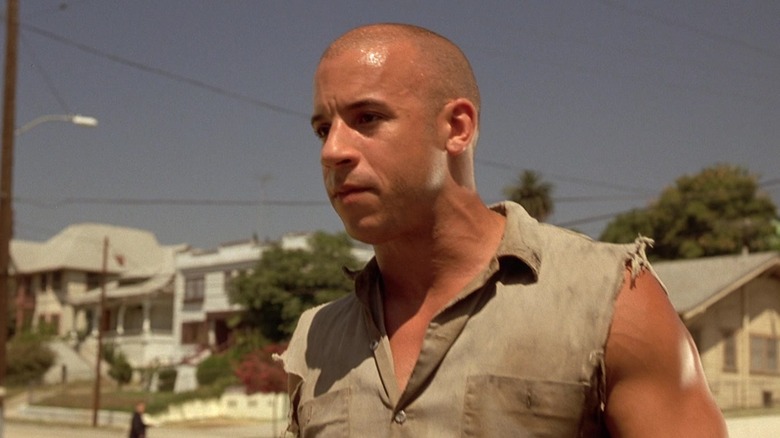
Cohen's film, in contrast, is a "Point Break" knockoff about a federal agent named Brian (Paul Walker) who infiltrates an ultra-cool, superskilled cadre of professional thieves. The thieves all have souped-up supercars and race on the streets at night. They are led by the tough and awesome Dom (Vin Diesel). Naturally, Brian will become sympathetic to Dom while undercover.
The title of Cohen's "The Fast and the Furious" was a sticking point during its production, and its connection to Corman has been discussed openly by producer Neal Moritz. Moritz admitted that he was watching some old Corman flicks when he figured that his movie needed something as evocative and salacious as "The Fast and the Furious." Moritz said he was able to license the title from Corman in exchange for some high-quality stock footage. Corman, however, noted on a podcast that Moritz's father, a former AIP exec, was the one who put Corman and Moritz in contact.
The original screenplay was inspired by a Vibe Magazine article, written by Ken Li, entitled "Racer X." According to Barry Hertz's 2025 film history book "Welcome to the Family," however, they couldn't use the title "Racer X" as that was the name of the central villain character from Fuji TV's 1967 anime series "Speed Racer."
The Fast and the Furious was originally going to be called Racer X, after a character from Speed Racer
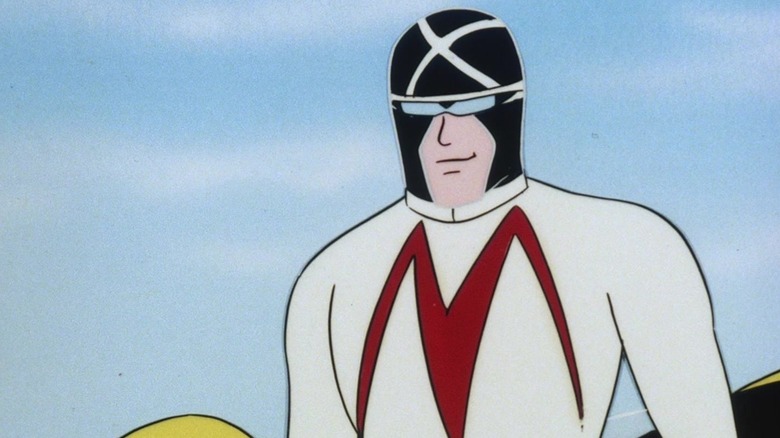
According to Barry Hertz's book, "The Fast and the Furious" actually had several working titles during production. It seemed logical to call the film "Racer X," of course, since it was already the title of Ken Li's article, and it sounded cool. Sadly, the film's producers — who were working for Universal — learned that the name "Racer X" had already been licensed by Warner Bros. for use in a potential "Speed Racer" feature film.
"Speed Racer" was, of course, one of the first major anime series to become a phenomenon in the United States. The original series aired in Japan in 1967 and 1968, and a poorly dubbed version of the show reached American syndication around the same time. Fans of the show will tell you that the title character, a pure-hearted car racer, had a rival in the form of Racer X, a mysterious, brooding figure in a mask. It would eventually be revealed that Racer X was Speed's presumed-dead brother. Matthew Fox played Racer X in the eventual 2008 feature film adaptation of "Speed Racer" directed by the Wachowskis.
After that, the producers of "The Fast and the Furious" decided to call their film "Redline," which was a nickname for a car race's finish line and for the limit a car's engine can reach in terms of energy output. Neal Moritz didn't like that title, however, as it seemed a little vague. Incidentally, the title "Redline" was later used for an Andy Cheng car-racing movie in 2007. "Redline" featured Eddie Griffin and Angus Macfadyen.
The Fast and the Furious also considered Street Wars and, uh, Race Wars as titles
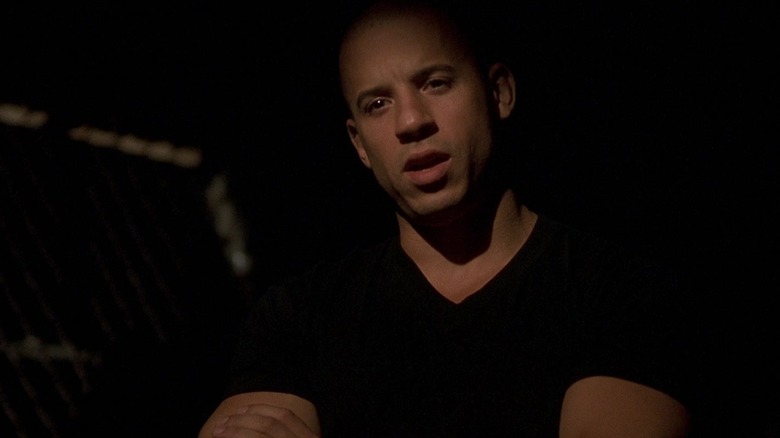
In Barry Hertz's book, producer Marc Schmuger recalled that — prior to Neal Moritz coming in with "The Fast and the Furious" — the film might have been released with the boring title of "Street Wars." Mortiz admitted in an EW interview that they had also considered the ill-advised title "Race Wars," which would have been a terrible idea. One can hope they didn't come up with the title "Race Wars" in response to screenwriter David Ayer rewriting the screenplay to set it in Los Angeles and feature a more racially diverse cast. Ayer takes credit for those changes, by the way.
Eventually, they settled on "The Fast and the Furious," and it stuck. Schmuger cited serendipity. "The title change [...] was just precisely the right thing occurring at the right time to take this tiny movie and make it this cultural imperative. Was 'The Fast and the Furious' just too cheesy, or just so cheesy as to be great?" It seemed to have worked. "The Fast and the Furious" was an enormous hit and spawned one of the biggest film franchises of the 2010s.
Of course, because they had to license the title from Roger Corman, it explains why so few of the many "Furious" sequels have such strange titles. Only the third film — "The Fast and the Furious: Tokyo Drift" — reused the original title. Otherwise, they have titles like "2 Fast 2 Furious," "Furious 7," and "F9." This was likely done to avoid paying Roger Corman another fee for permission to use the title again. The final film in the series will be called "Fast Forever," which would have been a fine title for the first movie.