

Martin Scorsese Hated Making The Only Movie That Earned Him A Best Director Oscar
We may receive a commission on purchases made from links.
Martin Scorsese made four films in the 2000s, and each one is something of a mixed bag. In 2002, he made "Gangs of New York," a project he had been fantasizing about since at least 1970, when he discovered the book it's based on, "The Gangs of New York: An Informal History of the Underworld." The film was overwrought and bloated, feeling like it had been gestating for decades. Only Daniel Day-Lewis — overacting his heart out — seemed comfortable.
Scorsese chased "Gangs of New York" with 2004's "The Aviator," an ambitious biopic of Howard Hughes. Scorsese did a good job of capturing the glitzy excess of early Hollywood, but Leonardo DiCaprio was entirely miscast as Hughes, playing the role like a confused child rather than a resolute titan of industry. The best part of "The Aviator" was Scorsese's depiction of Hughes' obsessive-compulsive disorder. It should be noted that the Academy loved both of these movies, giving 10 Oscar nominations to "Gangs of New York" and 11 to "The Aviator," both of which got Best Picture and Best Director nominations.
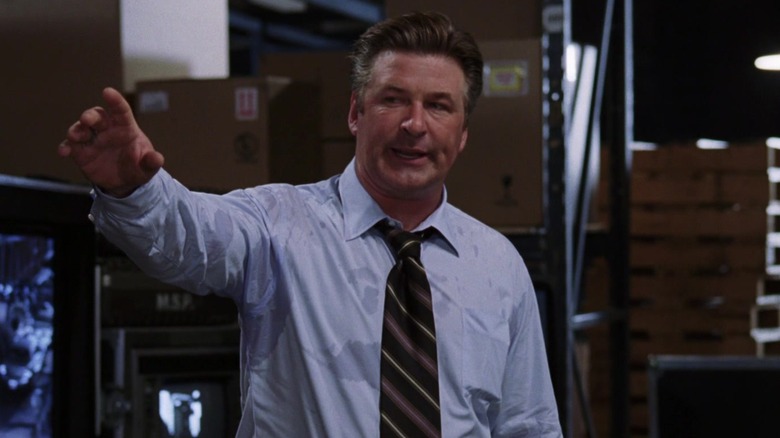
In 2006, Scorsese would finally be given his due with "The Departed," a remake of Andrew Lau's and Alan Mak's 2002 Hong Kong crime movie "Infernal Affairs." "The Departed" starred DiCaprio, along with Matt Damon, Jack Nicholson, Alec Baldwin, and Mark Wahlberg. It also got Academy attention. "The Departed" was nominated for five Oscars, winning four, including Best Picture and Best Director. Weirdly, that was the first time Scorsese had won Best Director.
He also hated working on "The Departed." In a 2016 interview with Culture Magazine (quoted by the Spec), the director noted that completing "The Departed" was draining, and that he refused to do any press for it.
Martin Scorsese wasn't pleased with the way The Departed turned out
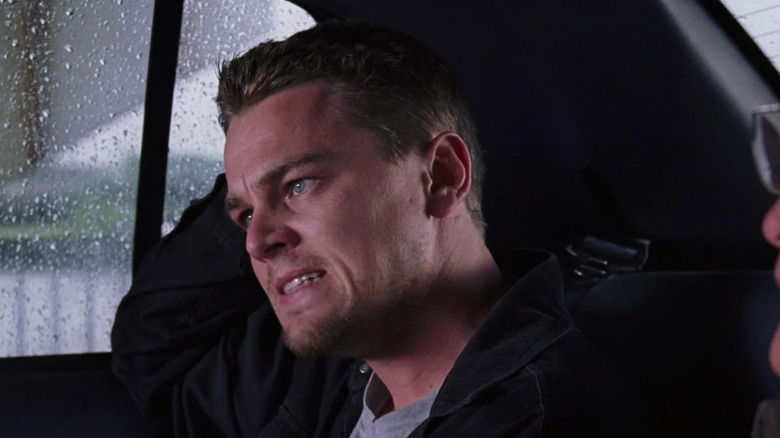
"The Departed" is about a cop and a criminal who were both undercover in each other's worlds. Leonardo DiCaprio played Billy Costigan, a detective who had been assigned to infiltrate the criminal underworld of Boston, led by the wicked Frank Costello (Jack Nicholson). Meanwhile, Colin Sullivan (Matt Damon) has been groomed by Frank since childhood to infiltrate the Massachusetts State Police, and has finally become Frank's man on the inside. Neither knows the other's identity. The bulk of the drama lies in its "mole vs. mole" dynamics and the relative moral sliding scale each man operates on. Alec Baldwin, Martin Sheen, and Mark Wahlberg play tough-as-nails cops who oversee Costigan's secret operation.
Scorsese hated making "The Departed." He felt that it didn't have a very strong message and that the editing process was a chore. Like with most of his films, he worked with his star editor, Thelma Schoonmaker, but this time, Scorsese said it was "unpleasant." He also hated the ending of his movie, disliking that most of the key characters die (this isn't a spoiler; many of Scorsese's crime movies end with multiple deaths). In the director's words:
"Moral Ground Zero, I call it. All the characters killed at the end, basically everyone, and there was no place to go, after that. You know, I hardly did any press for that film. I was tired of it. I felt it was maddening. [...] mean, I like the picture, but the process of making it, particularly in the post-production, was highly unpleasant. I said, I don't care how much I'm being paid, it'll kill me. I'll die. Very simply."
Not only did Scorsese win Best Director for his efforts, but Schoonmaker won her third Best Editing Oscar.
Why did Scorsese think that The Departed was morally empty?
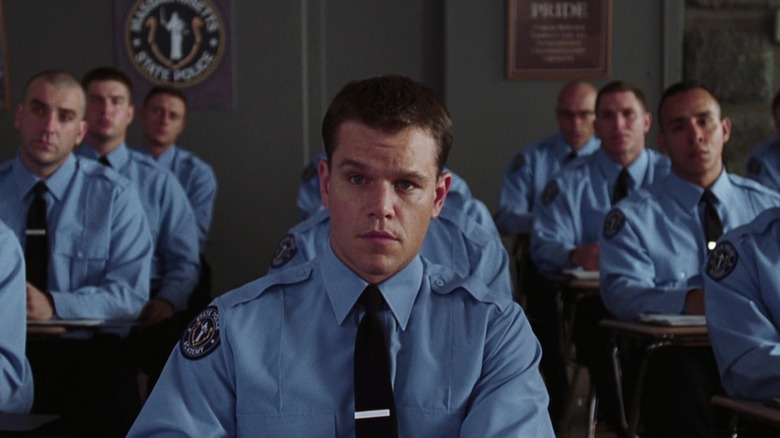
It should be noted that many critics like "The Departed," and that it is an exhilarating crime drama. It was also a huge hit, something Scorsese didn't expect, making $291.5 million on its $90 million budget. It was a lengthy 151 minutes, but Scorsese isn't exactly known for his brevity, and the pace is always brisk.
So why did Scorsese feel like it was "Moral Ground Zero?" Probably because its tragic, multi-death ending didn't leave audiences with a good message. If everyone dies, and no one learns a lesson, then why did the audience have to sit through all that? What's the message of "The Departed?" Is crime stronger than justice? That when criminality and justice meet face-to-face, they'll destroy each other, like matter and antimatter? If that's the point, it's not very uplifting or sophisticated.
Scorsese has made many films about criminals and the criminal lifestyle, all throughout his career. He has always been skilled in depicting why a life in organized crime is so appealing. Scorsese usually shows many scenes of money and excess, depicting the kind of party-time riches that a life of crime can provide. He also, just as often, shows the downfall, violence, horror, drugs, and weakness that tear down those same criminals. Some have accused Scorsese of advocating for the criminals. Those who make these criticisms probably haven't seen the second half of any of Scorsese's movies.
There's little party-time fun in "The Departed," but there's also not much in the way of downfall. At least not the same way as it is depicted in films like "GoodFellas," "Casino," or "The Wolf of Wall Street." Perhaps Scorsese felt that the absence of a moral stance left "The Departed" feeling frustrated.