

We Asked A Real-Life Doctor: How Realistic Is The Pitt?
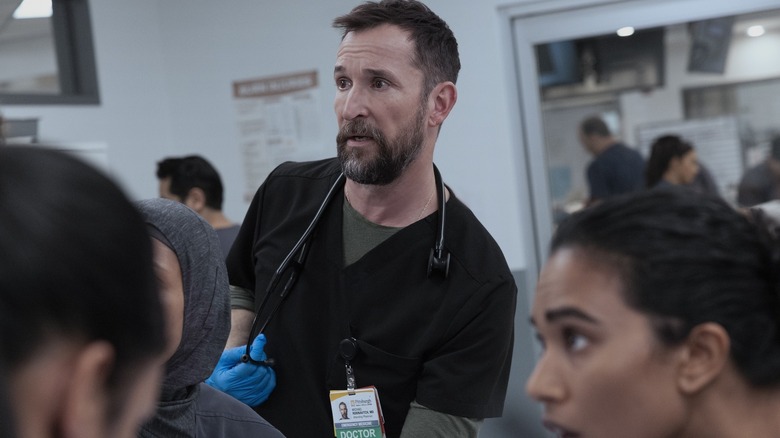
"The Pitt," the massively successful HBO Max series that premiered in 2025, strives for medical accuracy. So does it succeed? We asked a doctor, and she had a lot to say about it.
While we were trying to figure out precisely how accurate "The Pitt" is in its depiction of medicine, I had the bright idea to call up Dr. Mary Siki, who's currently living and working as a surgical resident in St. Louis, Missouri. Dr. Siki has been a licensed physician for three years and graduated from Tulane University School of Medicine in 2023, subsequently starting her general surgery residency at Washington University in St. Louis.
Dr. Siki — who has a personal connection to "The Pitt" since she received her undergraduate degree from the University of Pittsburgh — can really connect to the series, especially since the show focuses on a teaching hospital like the one she works at every day. (Full disclosure: Dr. Siki is one of my closest friends in the world, and we met at Pitt.) Through her seven years of residency, which combine research and clinical time, Dr. Siki will spend years honing her surgical skills, and she'll also spend quite a lot of time charting (like Isa Briones' Dr. Trinity Santos does throughout season 2 of "The Pitt").
Dr. Siki answered a whole bunch of questions about "The Pitt" and whether or not it really represents the medical community — and though her focus is on general surgery, she's still spent plenty of time in the emergency department, or the ED. Here's what Dr. Siki had to say about "The Pitt" — the good and the bad.
A typical day on The Pitt does have its basis in reality, according to Dr. Mary Siki
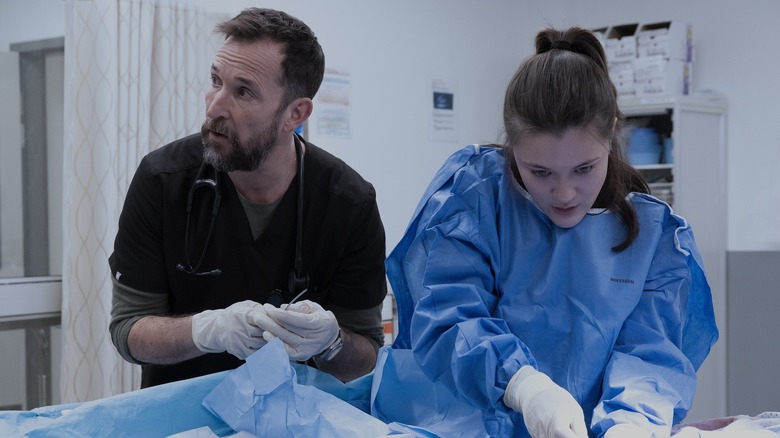
Throughout her interview, Dr. Mary Siki frequently pointed to Dr. Yolanda Garcia (Alexandra Metz), a surgical resident who visits the emergency department throughout her own day — which makes sense. According to Dr. Siki, a lot of what Dr. Garcia does on the show is pretty spot-on. "As general surgery residents, we are consultants in the ED," she told me. "Meaning, just like Dr. Garcia, we are not the primary provider for patients but get called to evaluate the patients for surgical diseases or traumas."
Much like we see on "The Pitt," though, nothing is typical about a 12-hour shift in the ED. "We work at a very busy Level 1 trauma center at one of the largest hospitals in the country so we see a wide variety of disease," Dr. Siki said. "We are present on arrival for all Level 1 and Level 2 traumas and participate in the initial evaluation and resuscitation of patients, performing certain procedures as indicated like chest tubes and central venous and arterial lines." (We see a lot of stuff like this on "The Pitt," and because it's an HBO series, they never shy away from blood or gore — whether doctors are delivering a baby in season 1 or hoping they can reattach a leg lost in a freak water-slide accident in season 2.)
As far as the hectic pace we see on "The Pitt," Dr. Siki says that's also pretty correct ... as is the fact that characters like Noah Wyle's Dr. Michael "Robby" Robinavitch often stay late."It's not uncommon for us to remain 1-2 hours after our shift is over to complete this process and ensure the handoff to the next team is smooth without compromise in patient care," she said, bringing to mind the switch-off between day and night shifts on "The Pitt."
The Pitt's representation of a day in the emergency department is pretty spot-on
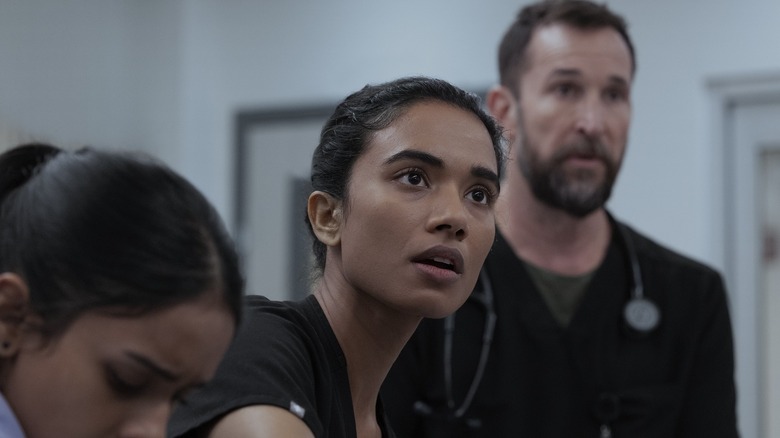
Generally, Dr. Mary Siki thinks the show represents the hectic experience of medical professionals pretty well, especially the mental wear on physicians throughout each shift. As she put it:
"They highlight the emotional toll the job takes on you and the degree of compartmentalization needed to care for patients. You often meet patients on one of the worst days of their life. They are expecting you at your best, so no matter what is going on outside of the hospital in your personal life, you have to show up as if that is not happening. You also have to keep moving from patient to patient and often do not have the time needed to process the events of one patient (be it a poor outcome, mistake, death, difficult interaction) before needing to pivot to the next one."
This sort of thing brings to mind Dr. Samira Mohan's (Supriya Ganesh) panic attack during season 2, where an issue with her mom leads to a breakdown in the middle of the emergency department — or Taylor Dearden's Dr. Mel King, who spends a significant part of her day worrying about her sister Becca (Tal Anderson). What else is accurate about "The Pitt?"
Well, good news for the series' medical consultants; our expert definitely thinks a lot of the procedures she sees on-screen are correct. "The medical accuracy is also quite good and the procedures they perform really do happen in the ED," she said before addressing one of the show's most honest approaches. "Additionally, the continuous ask to do more with fewer resources is very well portrayed," Dr. Siki continued. "The system is so broken."
Still, there are some unrealistic things about The Pitt (that make for better television)
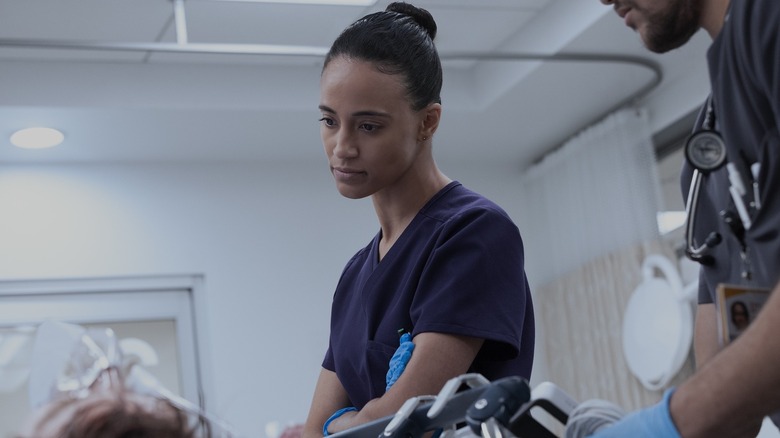
Still, at the end of the day, "The Pitt" is a fictional television show; it's not a documentary. Which means it's not going to be 100% accurate. So where does Dr. Mary Siki think the show stumbles in terms of accuracy? Unsurprisingly, she had to go to bat for her fictional counterpart.
"First and foremost, justice for Dr. Garcia. Surgeons are not as callous or mean as they are often portrayed on the show," she said. Her second point feels obvious, but still need to be said. "Secondly, as with many medical dramas, all of these events are probably never happening over the course of one shift," Dr. Siki clarified. "Some of the wild procedures and cases are once in a career events."
Dr. Siki's biggest quibble, though, is the power that medical students like Victoria Javadi (Shabana Azeez) seem to wield in the ED. "Medical students, at least where I have trained, are not allowed to put in orders, manage patients independently, or go rogue with procedures," Dr. Siki said. "They are very well supervised by a resident or attending and at most are independently taking a history and physical."
One can imagine that, if Dr. Siki worked in this fictional Pittsburgh hospital, maybe student doctor James Ogilvie (Lucas Iverson) would have had someone to remind him to check his kidney patient's aorta, and the patient might not have died during an emergency surgery to fix an aortic rupture (especially when you consider her focus in aortic dissections). Not only that, but a lot of procedures Javadi performs probably would be done by someone with a higher rank — and more experience.
Dr. Mary Siki hopes that The Pitt can shine a light on the very real struggles of doctors and nurses
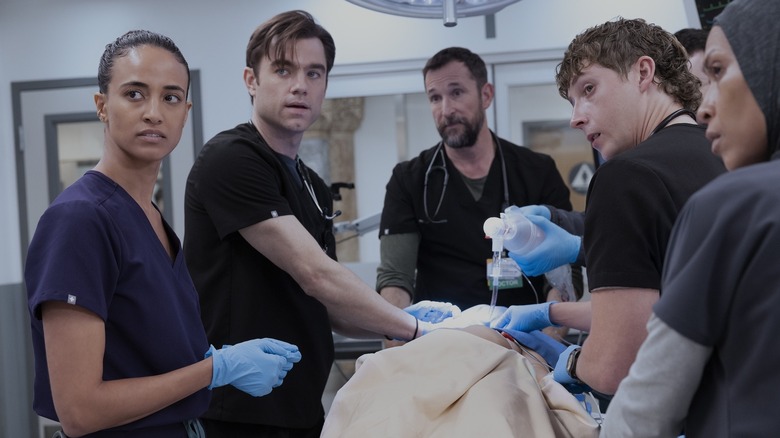
At the end of the day, though, what I wanted to know from Dr. Mary Siki was whether or not she felt represented by "The Pitt" — because showrunner R. Scott Gemmill, star Noah Wyle, and executive producer John Wells have been extremely transparent about hoping that this show serves as a love letter to physicians, nurses, and frontline workers. The answer was yes. "I do [feel represented]!" Dr. Siki said, even saying that she initially avoided it: "I had trouble watching it while I was in my clinical years because of how accurate it was and how much I felt like I was still at work."
That's why Dr. Siki said she hopes that audience members can watch a show as based in reality as "The Pitt" and gain a fuller understanding of the intensity and difficulty of this career path. "Your doctors and nurses are humans too and are trying to act within evidence based medical guidelines to provide you with excellent care," Dr. Siki said. "We want to spend more time with you, explaining things to you, hearing your concerns, but often are constrained by the demands of the system to see more patients."
The system, Dr. Siki said, can affect patient care in surprising ways ... especially if the patient is, ironically, impatient. "If you ask me for shorter wait times to see me, that means I will spend less time with other patients and likely means a shorter time with you," she said. This puts things into perspective for all the patients we've seen freaking out about long wait times on "The Pitt," like Drew Powell's abusive Doug Driscoll from season 1 — you know, the guy who punches Katherine LaNasa's charge nurse Dana Evans in the face after being in the waiting room for too long.
Which characters on The Pitt are the most relatable to Dr. Mary Siki?
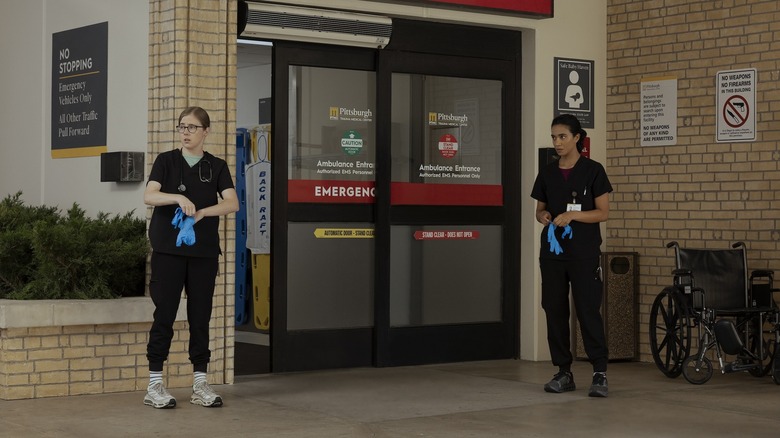
As I mentioned, Dr. Mary Siki is one of my dearest friends, so I wanted to have a little fun with this interview. What that means is instead of asking her to identify with one character from "The Pitt," I asked her to pick characters as her "zodiac" — sun, moon, and rising characters, specifically. (For the astrology averse, your "sun" sign is your "core self," your "moon" sign is your inner self, and your "rising" sign is how others see you.) Dr. Siki decided to go with three female doctors from "The Pitt," and her sun sign probably won't surprise you: it's surgeon Dr. Yolanda Garcia. "I think this one is self-explanatory," she said. "Surgery and sarcasm are strongly intertwined in my core identity."
So what about her inner self? Dr. Siki's "moon" character from "The Pitt" is Taylor Dearden's empathetic and neurodivergent resident Dr. Melissa "Mel" King. "Her emotions are her superpower! I also feel the emotional rollercoaster of the work quite strongly," Dr. Siki said of the fan-favorite character. "But at the end of the day, she's silly and goofy and lifts peoples spirits. I try to bring humor and levity into the workplace because it can get very heavy."
Finally, her "rising" character is Dr. Samira Mohan — who, sadly, is leaving the series ahead of its third season. Still, Dr. Siki relates to her thoroughly: "Her empathy and care for the whole person is something I value in my practice and I strive to engage in shared decision making with my patients to determine how our goals can align to treat their health concern."
"The Pitt" is streaming now on HBO Max.