

5 Beloved '70s Sci-Fi Movies That Don't Hold Up Today

If an observational viewer were to watch enough sci-fi films from the 1970s, one would be able to see the anxieties that were hanging over humanity's heads at the time. "Star Wars" and kid-friend Disney movies notwithstanding, 1970s sci-fi was a little bleak, often presenting dark, dystopian futures racked by world-ending problems. Many 1970s sci-fi movies took place in a post-apocalyptic nuclear wasteland (including "The Omega Man," "A Boy and His Dog," and at least two of the films on the list below), implying that nuclear holocaust was inevitable.
Several 1970s movies, like "Soylent Green," dealt with the plight of overpopulation. (Incidentally, author Harry Harrison, who wrote the book it was based on, hated the script for the "Soylent Green" movie adaptation.) Others, like "Silent Running," examined dwindling natural resources. If the sci-fi movies of the 1970s were any indication, the world was in a very pessimistic place. Everything felt apocalyptic, like we were at the end of history. Even films like "Mad Max" featured a world in decay. Violence was on the rise, and entropy was active. The future wasn't something anyone was looking forward to. Sci-fi didn't become broadly optimistic until films like "Star Wars" came along, turning the genre into a mainstream, audience-pleasing one. It may be telling, though, that even "Star Wars" is set in the distant past.
And while a lot of the bleak themes of 1970s sci-fi still resonate with modern audiences, some of these movies have aged like mayonnaise in the sun, be it due to their dated fashions, ideas, or style. Indeed, the five films listed below are hard to watch without doing a little bit of a deep dive into their decade. Some of these movies have fans, but even they would admit these films are a product of their time.
Beneath the Planet of the Apes (1970)
The follow-up to Franklin Schaffner's 1968 blockbuster "Planet of the Apes" took its premise to an absurd extreme. That film, as we all know, saw an astronaut named Taylor (Charlton Heston) landing on a distant planet where humans were mute brutes, and apes spoke English and wore clothes. The twist at the end revealed that Taylor had actually landed on Earth in the very distant future and that the talking apes evolved to dominance after humanity destroyed itself in a nuclear holocaust.
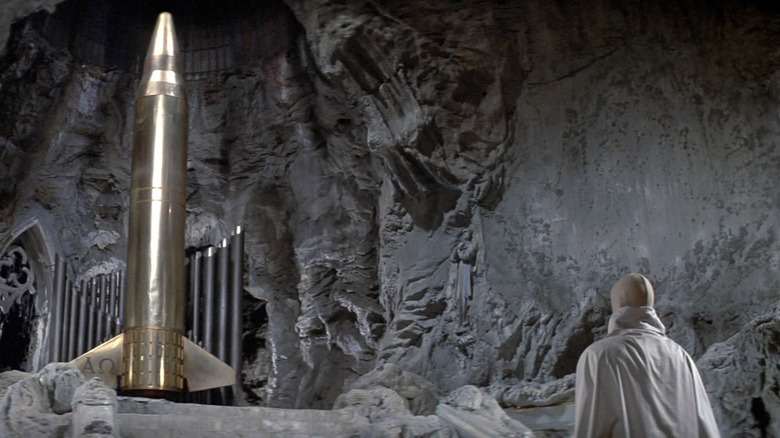
From there, its 1970 sequel, "Beneath the Planet of the Apes" follows Brent (James Franciscus), a human astronaut who travels to the same future in search of Taylor. He finds that apes are upping their human-hunting efforts in a clear allusion to the U.S.' increased military presence around the world. Meanwhile, Taylor uncovers a portal leading to an underground civilization of psychic human ghouls (!). These psychics have passed down the idea that nuclear bombs are powerful and even worship one in their church. What's more, they can psychically project illusions into people's heads and control their minds. The climax of the movie involves an ape force invading this underground mutant enclave.
This image of mutants worshiping an unexploded bomb is certainly heavy-handed, as are the allusions to overpowered military bluster. Indeed, "Beneath the Planet of the Apes" isn't ham-fisted so much as it's made of ham entirely. It also has a bleak ending it doesn't earn — one that would have put a nail in the franchise's coffin if Heston had gotten his way. (He didn't, obviously.)
"Beneath the Planet of the Apes" is certainly campy, psychedelic fun, and one can have a great time drinking and watching it with friends. But on its own terms, it's quite bad.
Sleeper (1973)
Anything having to do with Woody Allen now comes with an asterisk. Allen was one of the most important filmmakers of his time, having turned a certain kind of urbane, self-effacing introspection into the stuff of blockbusters. He won four Oscars and was nominated for many more in the prime of his career. However, between the allegations of sexual assault (some of which were detailed in the documentary series "Allen v. Farrow") and a marriage that strikes many as unsavory, Allen has become persona non grata among modern audiences. As such, it's hard to watch his movies anymore, despite their massive importance to the American cinema scene for decades.
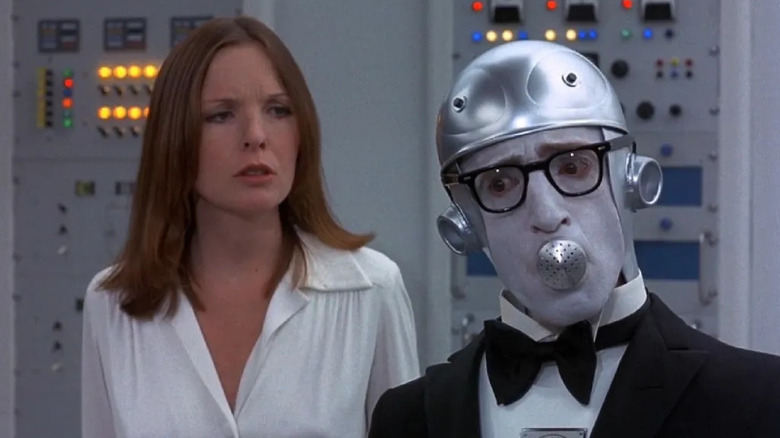
1973's "Sleeper" is no different. In the film, Allen plays Miles Monroe, the owner of a health food store in 1970s New York. Thanks to a cryogenics mix-up at a hospital, though, Miles is frozen for 200 years and awakens in 2173, at which point the U.S. has become a tech dystopia ruled by a dictator known as the Leader and overseen by a militant police. Dissidents have their brains "simplified," while folks have pleasure booths in their homes called orgasmatrons.
This vision of the future could have been expanded and explored, but the crux of Allen's sci-fi comedy comes from juxtaposing his well-known "neurotic guy" persona against a stern dystopian backdrop. A lot of the film is devoted to Miles trying to wrangle a relationship with a future denizen, Luna (Diane Keaton), and the fate of a revolutionary group they join. Putting Allen in a dark sci-fi thriller setting is a funny enough notion, but the film's sci-fi concepts aren't rich enough. And if you already hated Allen or are tired of his schtick, then "Sleeper" will fall flat.
Zardoz (1974)
Drugs and LSD-inspired psychedelic imagery became mainstream sometime in the late 1960s thanks to a general shift in cultural mores. Sci-fi movies were well-suited to this new psychedelic movement, as their future settings or high-tech devices could organically look like swirling, incomprehensible dreams. The future was going to be heeeeavy. See also: "Phase IV."
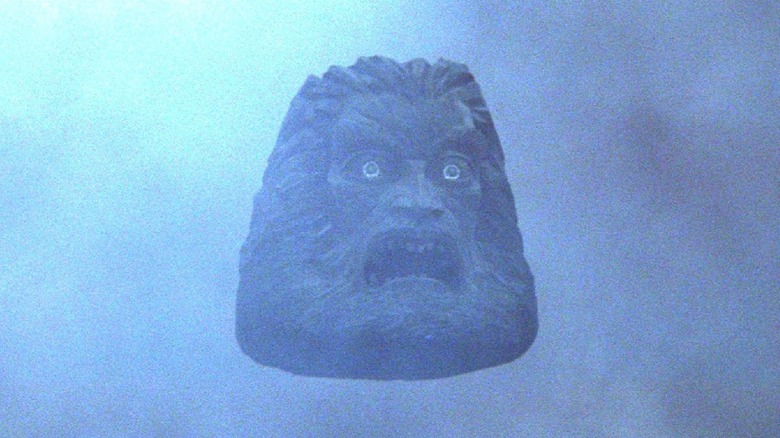
John Boorman's "Zardoz" is one of the strangest films you might ever see. Released in 1974, it's set in the distant future of 2293. By this point, Earth's surface is now only populated by "Brutals," i.e. tribes of masked, mankini-clad barbarians who freely murder and assault women at their whims. They receive guns from a massive floating stone head — which they call Zardoz — that floats through the clouds, puking the weapons out of its frozen-frown mouth. One day, however, Sean Connery's Brutal Zed manages to climb into the Zardoz ship and is carried back to its home base, a previously unknown enclave city of wispy, gentle immortals.
Zed finds that these immortals are all bored. It seems that immortality robs one of the need to get anything done. They meditate instead of sleep and feel no need for physical intimacy. Living forever would certainly rob one of the need to stick to a schedule (or do anything, really). There are further twists in the plot of "Zardoz," but they're all very strange, and the film's drugged-up, disjointed style makes them nearly incomprehensible.
The ideas in "Zardoz" are a little too wild and cerebral to serve as the basis for any kind of modern parable. I'm not sure what "Zardoz" is supposed to be warning us about. Many people love how gonzo it is, but "Zardoz," to many modern eyes, is unwatchable.
Logan's Run (1976)
Another post-nuclear-apocalypse movie, Michael Anderson's "Logan's Run," based on the novel by William F. Nolan and George Clayton Johnson, is set in 2274 after the landscape has been atomically devastated and the survivors have moved into well-protected, domed cities. Inside those domes, humans have constructed a strange utopia wherein life is devoted to hedonism. Citizens, dressed in 1976's finest future fashions, thumb through high-tech hook-up devices, teleporting potential romantic partners directly into their apartments. Babies are only born in test tubes. In order to maintain this utopia, however, all citizens must report to Carrousel when they turn 30. Carrousel is more or less an elaborate execution device where everyone watches as 30-year-olds are incinerated.
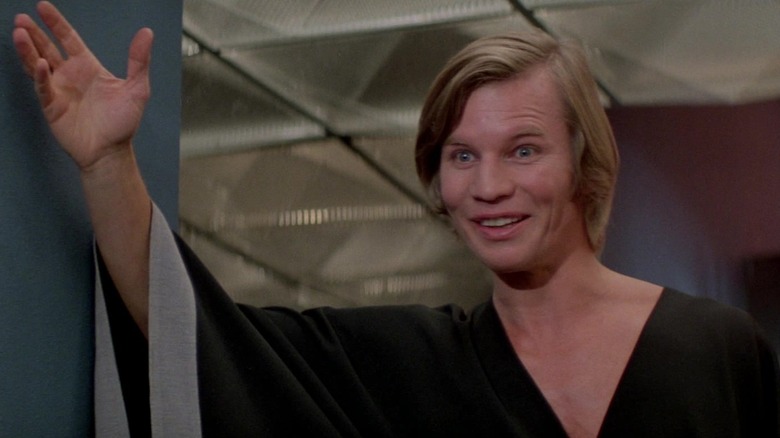
Michael York plays the titular Logan 5, a futuristic cop — a Sandman — who hunts down any 30-year-olds who try to run away instead of reporting to Carrousel. The plot of the movie begins when Logan's 30-year clock is jumpstarted, forcing him to go on the run himself.
"Logan's Run" is clearly inspired by the famous Jack Weinberg quote, "You can't trust anyone over 30." The film argues that if the youths get their way, everyone over 30 will be killed and the world will descend into meaningless pleasures. There's a strange conservative underpinning to "Logan's Run," arguing that being old is great and that youth is suspect. The movie doesn't really pay off that notion, though, as the only old person it depicts is a chuckling, semi-senile fellow played by Peter Ustinov.
Additionally, the costume and set designs of "Logan's Run" are solidly 1970s. York's hair is particularly distracting throughout the movie, as is every single costume for that matter. At least York and his co-star, Jenny Agutter, are gorgeous to look at.
Moonraker (1979)
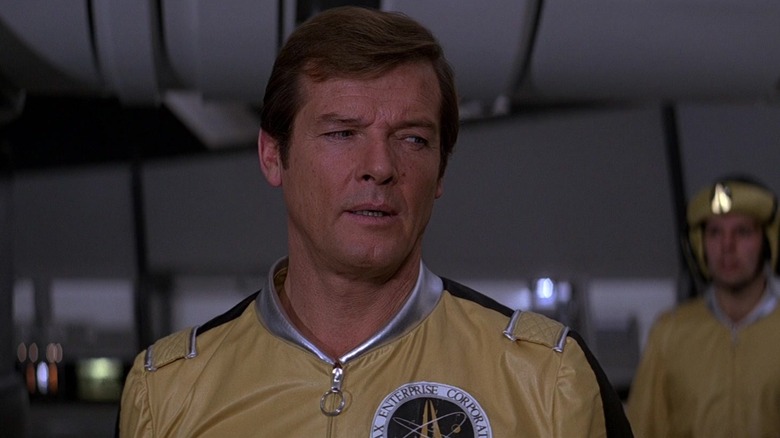
At the end of 1977's "The Spy Who Loved Me," the credits announce that James Bond will return in his next spy adventure, "For Your Eyes Only." What the makers of the movie couldn't have predicted, however, was the ultra-success of George Lucas' "Star Wars," released a few months earlier. It seems that sci-fi was now the "in" thing, so the 007 franchise producers decided to make a more space-centric film instead. They came up with 1979's "Moonraker," a massively expensive movie (it had a then-sizable budget that was well above those for previous Bond films) that wasn't deeply loved by critics. Its reputation hasn't improved since then, as evidenced by its low placement on /Film's own James Bond movie ranking.
The James Bond film franchise has always been singular in its presentation. 007 movies are a genre unto themselves, possessed of tropes, plot points, and archetypes that are unique to the property. It's a film series that other movies are constantly imitating. It's weird, then, to see "Moonraker" jumping on board the "Star Wars" bandwagon so shamelessly. Its climax takes place in space, and characters are armed with "Star Wars"-like blaster rifles that are farfetched, even in the fantasy universe of MI-6's greatest spy. "Moonraker" proved to be a commercial success, but golly is it ever derivative.
The James Bond franchise then went back to "For Your Eyes Only," which is, for my money, one of the best entries in the property. So, it didn't take much to get back on track. Still, "Moonraker" feels like a digression, playing like a whimsical fan film that blends James Bond with "Star Wars." Most of all, it's just not very good, in addition to being bloated and silly. You can skip it.