

Men In Black's Forgotten '90s Animated Series Is Way Better Than The Sequels
Comedy sequels are notoriously difficult to execute, but sequels that blend comedy with other genres aren't much easier. Maybe that's why the "Men in Black" movie franchise has never quite worked overall. You can only crack so many jokes involving eccentric public figures and celebrities being extra-terrestrials in disguise before folks begin rolling their eyes (Steven Spielberg aside).
It doesn't help that the first "Men in Black" film set the bar as high as it did. Loosely based on the comic book series "The Men in Black," director Barry Sonnenfeld's 1997 sci-fi action comedy flick, which was executive produced by Spielberg (like I said ...), remains a precisely structured crowd-pleaser. But beyond its quotable zingers and relentlessly catchy Danny Elfman theme song, it's a blockbuster that combines an all-time great physical performance by Vincent D'Onofrio as Edgar, the other-worldly Bug, with some remarkably profound observations about human nature. Its sequels on the other hand, range from adequate to 2019's "Men in Black: International," a movie whose behind-the-scenes problems led to a whole lot of finger-pointing in the trades after it flopped.
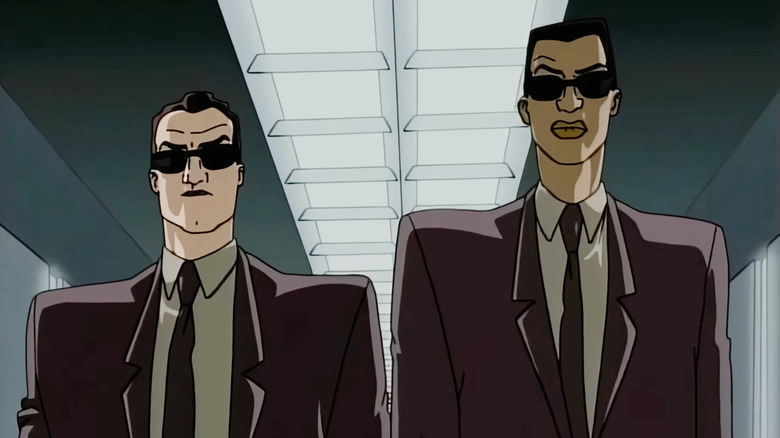
In fact, the best thing to come out of this property since the original film might be the less-discussed "Men in Black: The Series," a cartoon show that ran for four seasons from 1997-2001. Premiering three months after the first movie hit theaters, the "Men in Black" animated TV series adaptation actually expands upon the story and lore of Sonnenfeld's 1997 feature, unlike its sequels. At the same time, it serves up appropriately zany, self-contained weekly adventures that its young target audience can enjoy without having to worry about tuning in for every single episode (plus some wry humor for any adults watching, too). Then again, that's not so surprising, given the creatives who worked on the show.
Men in Black: The Series has a clear advantage over the sequels
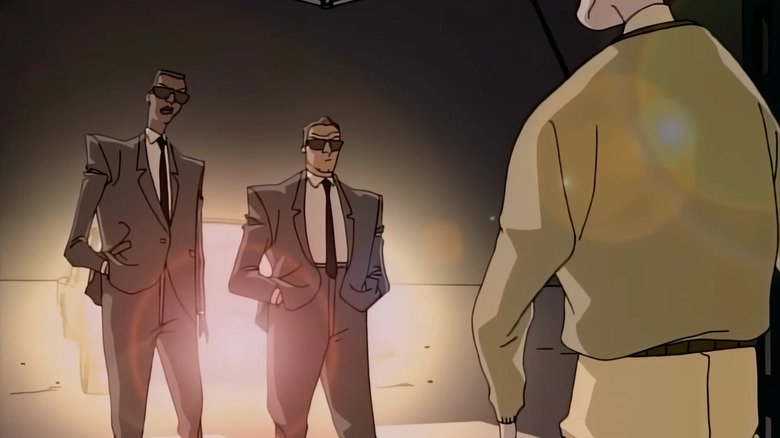
"Men in Black: The Series" creators Duane Capizzi, Jeff Kline, and Richard Raynis might not be household names, but their collective body of work includes the Daytime Emmy-winning "Transformers: Prime" and the millennial/Gen Z favorite celebrity cartoon series "Jackie Chan Adventures." They also spent years working for Adelaide Productions, a Sony division with a legitimately strong track record when it came to producing cartoon series based on the company's biggest live-action franchises in the 1990s and 2000s. It even made a comeback with the mostly well-liked animated anthology miniseries "The Boys Presents: Diabolical" in 2022.
This brings us back to "Men in Black: The Series." One of Adelaide's earlier successes, the show takes place in a timeline where Tommy Lee Jones' gruff Agent K didn't retire after recruiting Will Smith's rebellious Agent J in the first "Men in Black" film. This, in particular, gives the series a clear advantage over 2002's "Men in Black II," which is forced to contrive an excuse to bring back Jones' stick-in-the-mud ex-agent after J wipes his memories in the first movie using his handy dandy neuralyzer (aka that "little flashy-thing memory-messer-upper," as J eloquently puts it). Because of this, "Men in Black: The Series" doesn't suffer from the ungainly narrative retconning and reshashed humor that plagues so much of "Men in Black II," either.
Eventually, "Men in Black: The Series" adds an additional wrinkle to its premise with the episode "The Star System Syndrome." There, the show gets cleverly meta by implying that the "Men in Black" films are in-universe works of fiction inspired by the real Men in Black's antics, which are themselves depicted in the series. Thus, the cartoon may represent the true canon, and that's a comforting thought.
The Men in Black cartoon does more with the franchise
The shortcomings of "Men in Black II" continue to ripple throughout 2012's "Men in Black 3," which engineers a somewhat elaborate time-travel plotline in order to pair J with a much younger K (Josh Brolin). And while the movie itself is a step up from "Men in Black II," it nevertheless makes it plain that the K and J oil-and-water dynamic has run its course. Unfortunately, the creative issues on "Men in Black: International" clearly foiled its efforts to rejuvenate the franchise by focusing on a whole different duo in the form of Agents H and M ("Thor: Rangarok" co-stars Chris Hemsworth and Tessa Thompson).
By comparison, "Men in Black: The Series" simply has J accidentally neuralize K in the episode "The Neuralyzer Syndrome," and the outcome is just as amusing, if not more so. On top of that, the show's versions of J and K (nicely voiced by Keith Diamond and Ed O'Ross & Gregg Berger, respectively) constantly find themselves in fun new scenarios on the show, be they involving non-Earthlings or, yes, time-travel. So, there's less need to change up their relationship to begin with.
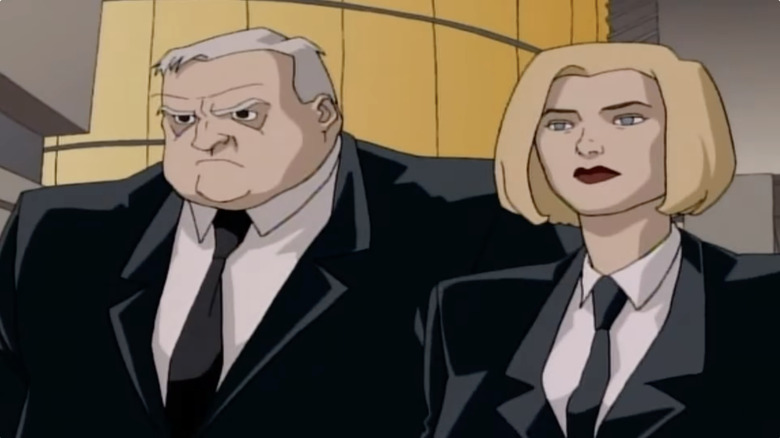
Most importantly, "Men in Black: The Series" doesn't abandon the best part of the first "Men in Black" film. Instead, it reveals more about the Bugs and their empire (with Vincent D'Onofrio even voicing other members of the species) while showing Laurel Weaver in action as Agent L (Jennifer Lien & Jennifer Martin) — as opposed to "Men in Black II" writing the character (originally played by Linda Fiorentino) out in a decidedly insulting manner.
The result? A much more satisfying spin on the "Men in Black" universe overall. Stream "Men in Black: The Series" for free on Tubi, and see for yourself.