

William Shatner's Kirk Would Have Died In A Sci-Fi Director's Failed Star Trek Pitch
We may receive a commission on purchases made from links.
"Star Trek" had to get canceled to become a pop cultural phenomenon. Though the original series had a devoted fanbase over its three seasons on NBC, the network believed its appeal was limited and, thus, dry-docked the USS Enterprise in 1969. They soon discovered how wrong they were when the Gene Roddenberry-created show became a hit in syndication. In 1975, rights-holders Paramount officially hired Roddenberry to develop a "Star Trek" movie, which involved Captain James T. Kirk and the crew of the Enterprise tangling with a cheesed-off God. Paramount rather promptly opted to go in a different direction.
The studio heard pitches from numerous writers, but didn't spark to anything until Chris Bryant and Allan Scott (who'd written the brilliant "Don't Look Now" for Nicholas Roeg) brought them "Star Trek: Planet of the Titans. "Their treatment opened with the Enterprise investigating the disappearance of the USS DaVinci. They fail to find the vessel, but when Kirk is knocked for a loop by an electromagnetic wave, he hops into a shuttle and vanishes into the vast of space. Spock eventually finds Kirk on a mysterious planet that used to be home to the Titans, who were wiped out by the Cygnans. Ultimately, the Enterprise and the Cygnans planet are sucked through a black hole. The latter are eradicated, but the Enterprise emerges relatively unscathed and sets down on Earth during the Paleolithic era, where the crew plays Prometheus and teaches early man how to make fire. Take your Prime Directive and shove it!
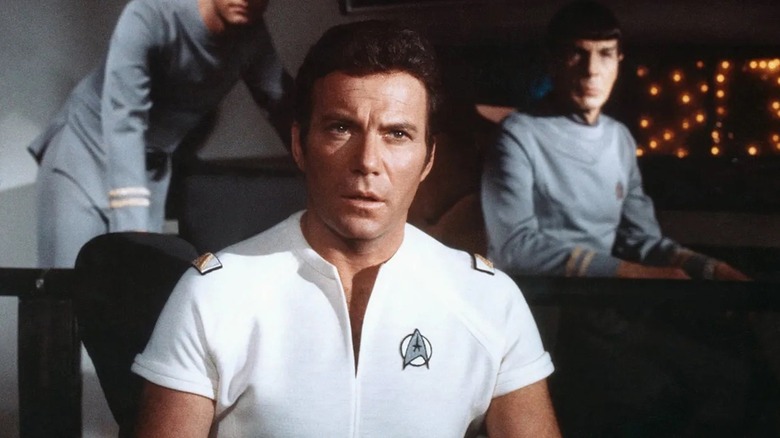
In-demand writer-director Philip Kaufman was brought in to work with Bryant and Scott, and the trio soon found themselves in hot water when William Shatner learned they planned to kill off Kirk. Shatner and Paramount were understandably not fans of this idea.
Philip Kaufman's Star Trek: Planet of the Titans was too trippy for Paramount's taste
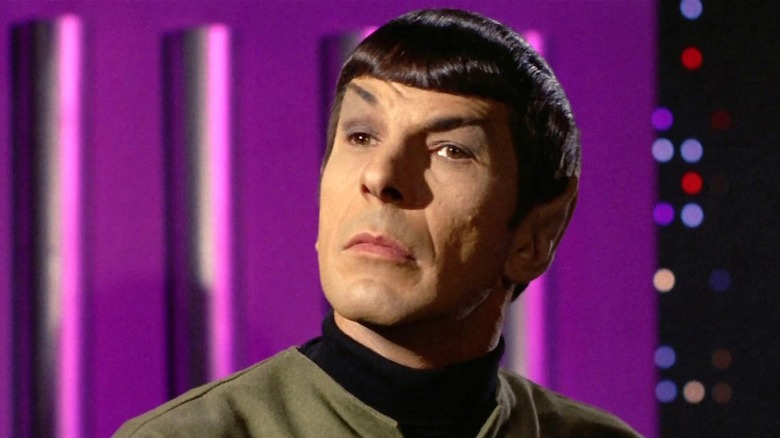
Shatner was performing a one-man "Star Trek" show in upstate New York when he received the news. He was, at most, a borderline B-lister at this point of his career, and thus was not in a position to lobby for Kirk's fictional well-being. Paramount, however, had the final say, and they didn't want to jettison the franchise's second most popular character (Spock was, and always shall be, numero uno). Instead, they showed Bryant and Scott the door, and left the rewriting duties to Kaufman, who would also direct the movie.
Most fans will disagree with me here, but Kaufman's take on "Star Trek: Planet of the Titans" would've been far more interesting (and likely better) than Robert Wise's overly reverent "Star Trek: The Motion Picture." In Robert Greenberger's "Star Trek: The Complete Unauthorized History," Kaufman explained his take thusly:
"My version was really built around Leonard Nimoy as Spock and Toshiro Mifune as his Klingon nemesis... My idea was to make it less 'cult-ish,' and more of an adult movie, dealing with sexuality and wonders rather than oddness; a big science fiction movie, filled with all kinds of questions, particularly about the nature of Spock's [duality]-exploring his humanity and what humanness was."
The idea of Spock and Mifune's Klingon, per Kaufman, "tripping out in outer space" sounds deliciously inspired, but Paramount honcho Barry Diller couldn't wrap his head around the concept. As he told New Times in 1977, "We felt, frankly, that it was a little ... pretentious." That's exec-speak for "We didn't get it." They were also inexplicably scared off by the success of "Star Wars," which they felt scratched humanity's sci-fi itch in one fell swoop. Oops.
Star Trek and Philip Kaufman both landed on their feet
Paramount wound up playing it safe by making the Roddenberry approved "Star Trek: The Motion Picture," which, when it fell short of commercial expectations, nearly mothballed the Enterprise once again. The studio saved the franchise by stripping Roddenberry of creative control, and hiring Nicholas Meyer to direct "Star Trek II: The Wrath of Khan."
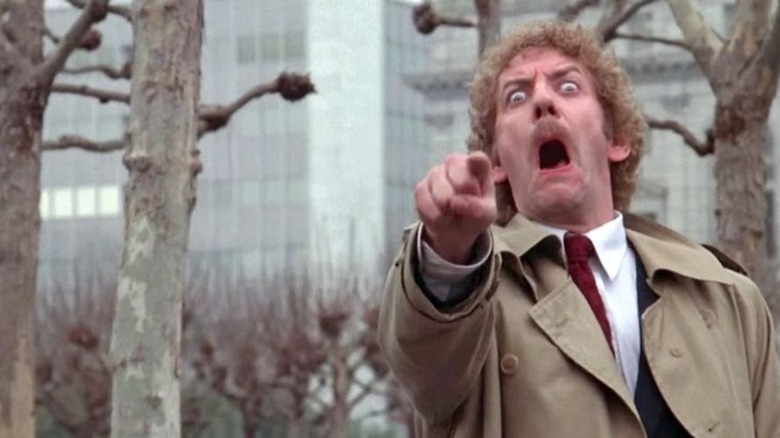
Paramount allowed William Shatner to revisit Roddenberry's Kirk v. God story with the deeply silly "Star Trek V: The New Frontier," but never went back to Kaufman's sexy, psychedelic Trek. While Kaufman was disappointed that he never got to go gonzo in Roddenberry's sandbox, he wound up knocking out a sci-fi classic with his 1978 Me Generation-infused "Invasion of the Body Snatchers." A year later he delivered the Bronx-bound coming-of-age classic "The Wanderers." Kaufman followed that up four years later by blessing us with one of the greatest films ever made, "The Right Stuff."
In 1988, he finally got to explore the sensual realm with his masterful adaptation of Milan Kundera's "The Unbearable Lightness of Being," and stuck to the same subject two years later with "Henry & June" (the first film to receive an NC-17). Alas, he never returned to the sci-fi genre, so we never got to see Uhura don a bowler hat and seduce Kirk.