

I've Seen Every Game Of Thrones Episode, And These Season 5 Storylines Are Where It All Went Wrong
As much as it seems like the entire world came together in a rare show of unity to lambast "Game of Thrones" over how HBO's top show came to an abrupt end in 2019, the accepted reasoning behind why things ended on such a sour note remains surprisingly varied. Anecdotally, it feels like many viewers were staunch supporters of the series ... right up until the final stretch of episodes, that is, when things seemed to shift into overdrive in a wild dash to reach its conclusion. Others were quicker to see the writing on the wall, arguing that this saga needed far more than eight total seasons to do it proper justice (as original author George R.R. Martin once advised).
Whatever the conventional wisdom may be, might we suggest an alternate theory? After maintaining a front row seat to every episode during the show's original run, and having devoured every book in the "A Song of Ice and Fire" series (so far, at least), perhaps there's an argument to be made that the beginning of the end arrived much sooner than most would believe. Wind the clock back to season 5, when the HBO juggernaut appeared to be at the absolute peak of its prowess. Despite arriving soon after several of the most shocking moments ever on "Game of Thrones," a closer look reveals exactly when and where the series started to go off the rails.
Did winter come earlier than even the biggest "Game of Thrones" enthusiasts would've anticipated? As far as we're concerned, the show's ultimate demise can be traced back to the season 5 storylines involving the Sand Snakes, Sansa Stark (Sophie Turner), and Ramsay Bolton (Iwan Rheon), all of which, sadly, laid the groundwork for the many problems that ultimately followed. Here's why.
The Sand Snakes subplot is the first major example of Game of Thrones falling apart
Yes, the world of Westeros may be riding high off the success of "A Knight of the Seven Kingdoms" season 1 and the impending return of "House of the Dragon," but we can't stop thinking about the one that started it all. "Game of Thrones" showrunners David Benioff and D.B. Weiss had the unenviable task of adapting the unadaptable and, to their credit, often pulled this off better than anyone could have hoped. Under their watch, fans "enjoyed" watching near-flawless depictions of the rise and fall of Ned Stark (Sean Bean), the devastating Red Wedding, and numerous battles brought to life like nothing ever seen on TV before. Yet, there's no denying some of the biggest missteps along the way, such as one that reared its head early in season 5.
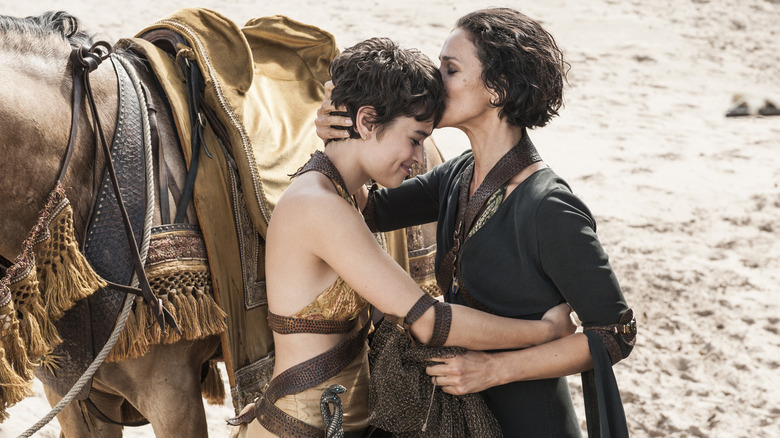
Unfortunately, we have to talk about "Game of Thrones" and its Sand Snake problem. To this point, the series generally managed to adapt or condense certain storylines from its source material in a way that never sacrificed complexity for convenience. That came to a jarring end here, as the show attempted to expand the cast and broaden the scope of its narrative considerably with the Sand Snakes in Dorne. The vengeful progeny of the late Oberyn Martell (Pedro Pascal), these oddball characters never fully fit into the overall tone of the show and, worse still, felt completely neutered compared to their more distinctive counterparts in the original books.
Rather than either excise them altogether or find a more effective way to fold them into the ongoing story, "Game of Thrones" chose a third and much worse option: a half-measured, watered-down, and failed attempt to please fans of the novels that alienated casual viewers alike.
The controversial Sansa and Ramsay storyline set a new low for Game of Thrones
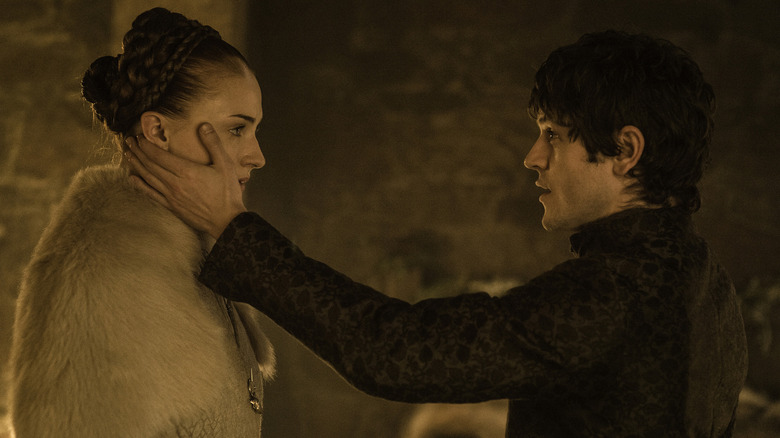
Unfortunately, this dovetails with arguably the most controversial element ever included in "Game of Thrones," culminating in season 5, episode 6, "Unbowed, Unbent, Unbroken." After Jaime Lannister (Nikolaj Coster-Waldau) infiltrates Dorne and meets the Sand Snakes in as shoddy and poorly-executed a fight scene as you'll ever see, the hour concludes with the rape of Sansa Stark by Ramsay Bolton. Similar to the Sand Snakes debacle, this was another example of "Game of Thrones" taking the broadest outlines of what happens in its source material (originally occurring between Ramsay and a minor supporting character named Jeyne Poole) and forcing it into the wildly different contours of the show. Out of all the adaptation choices to settle on, the show's creative team picked the clunkiest one imaginable. In the process, they set an infamous new low for the series.
More so than the events themselves, however, the mindset behind both of these storylines neatly encapsulates the downfall of "Game of Thrones." As David Benioff and D.B. Weiss ran out of completed novels to adapt (which, to be clear, remains the fault of author George R.R. Martin), they opted for increasingly misguided bypasses that undercut their own aims. The Sand Snakes debacle and the mishandled Sansa arc are linked by one glaring commonality: an oversimplified approach to deeply complex and intricate plot lines in Martin's books.
To put it another way? Daenerys Targaryen's (Emilia Clarke) sudden heel turn in season 8's divisive "The Bells" wasn't the root cause of all the show's problems, but merely a symptom of what already plagued the series. For those taken aback by the finale, season 5 makes it abundantly clear: The fate of "Game of Thrones" was sealed long before.