

Sam Kieth's Underrated Batman Work Reveals A Side Of The Dark Knight We've Yet To See On Film
We may receive a commission on purchases made from links.
Comic artist and writer Sam Kieth passed away on March 15, 2026, and it's difficult to assess which of his works is his greatest. In 1993, he co-created the subversive superhero Image Comic "The Maxx" (later adapted into an MTV series), and that's often cited as his signature work. However, he also helped launch the acclaimed fantasy comic "The Sandman" (a cornerstone of DC Comics' Vertigo imprint). Though the story and lead character were conceived by writer Neil Gaiman, Kieth drew the first five issues and had a co-creator credit for the series.
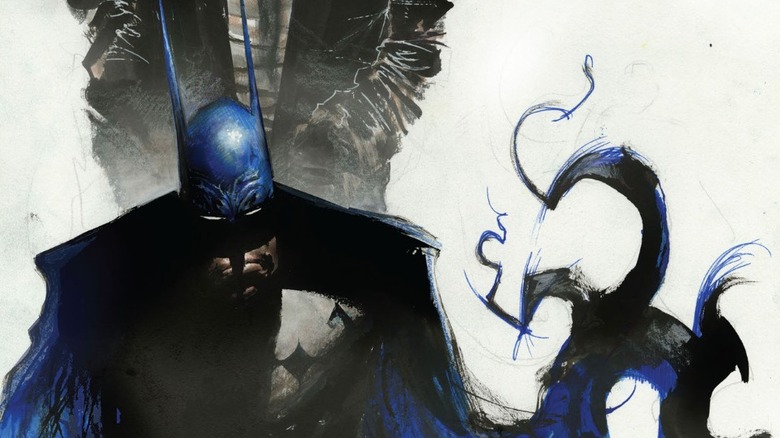
"The Sandman" follows the personification of dreams, so it needed surreal artwork to depict Dream's realm. Kieth delivered, and you can see that same art style even when he drew a more conventional DC hero: Batman. Kieth drew and authored a handful of Batman comics throughout the 2000s, including the 2006 mini-series "Batman: Secrets," the 2010 story "Ghosts" (published in "Batman: Confidential" #40-43), "Batman: Through the Looking Glass" that appropriately starred the villainous Mad Hatter, and even a crossover of Batman and the Maxx.
Kieth's Batman is muscular like the Maxx, but whereas the Maxx was big and wide, Kieth's Batman is tall and towering. Looking over Kieth's art, you can see exaggerated features, especially curvaceous frames that bend in ways that normal humans don't. Kieth's Batman has a particularly big and sharp chin, with ears that stretch so high they almost don't look like they fit in the panel. Kieth's colorists usually gave Batman's costume a blue tint on black backgrounds, but Kieth's characters could just as often find themselves in white voids.
Batman movies have been camp, they've been gothic, they've been dark and semi-realistic, but they've never been downright surreal and dreamlike the way Sam Kieth's Batman was.
Sam Kieth drew a dark, dreamy Batman
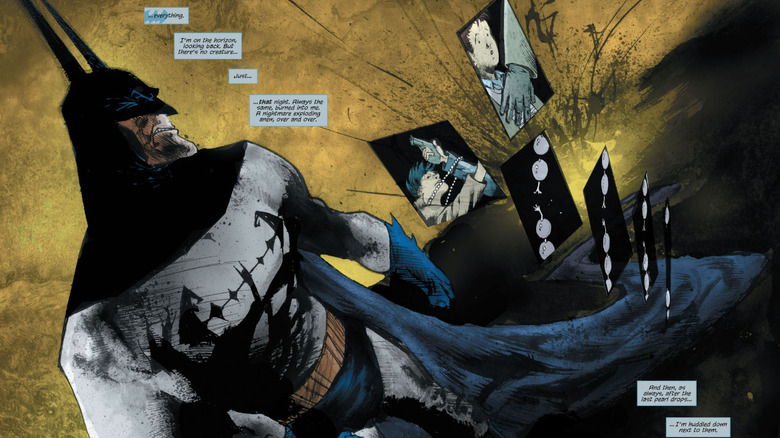
If one were to compare Sam Kieth's Batman to another artist, it would be Dave McKean, who drew 1989's "Batman: Arkham Asylum: A Serious House on Serious Earth" written by Grant Morrison. McKean drew the covers for "The Sandman," and he and Kieth share a similar dark and surreal style.
Kieth's long-eared, buff Batman also resembles the Dark Knight drawn by the late Tim Sale (best known for the legendary Batman comic "The Long Halloween," written by Jeph Loeb). Sale shared Kieth's love for exaggerated features, like the Joker's toothy grin or the Scarecrow's spindly Frame. Sale's art was not as surrealistic or unnerving as Kieth or McKean's, though, but often brighter and more classically superheroic. Even so, all three men drew Batman in a distinctive style, with little concern for photorealism.
The way Batman stories strive for realism has sometimes been laid at the feet of Frank Miller's 1986 "The Dark Knight Returns," the most famous "dark Batman" story. But as Grant Morrison has recently attested (in an interview with YouTuber Owen Likes Comics), "Dark Knight Return" is as maximalist as it gets. The book stars a Batman built like a tank who manages to throw down with Superman.
A more accurate culprit would be Miller's subsequent "Batman: Year One," where the whole point was to show Gotham as a normal enough city before Batman arrived in it (complemented by more realistic art from David Mazzucchelli). "Year One" is just as influential as "The Dark Knight Returns," and you can especially see that in Batman movies.
A grounded Batman is not neccesarily better than a stylized one
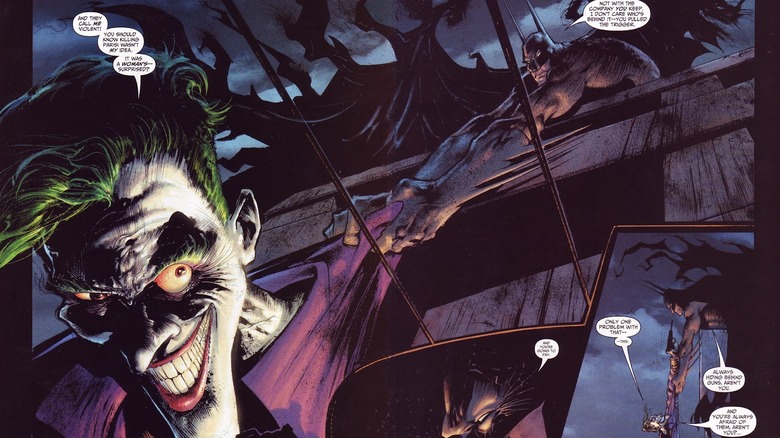
Both "Batman Begins" and "The Batman" look to "Batman: Year One" for aesthetic inspiration, even as "The Batman" leans more on the narrative of "The Long Halloween." "The Batman" is a great-looking movie, but no one will mistake its cinematography for a Tim Sale drawing. Even the animated "Batman: The Long Halloween" movie (released in 2021) didn't make much of an effort to capture Sale's art style, instead just taking his character designs and fitting them into the DC animation house style.
Many superhero fans come to comics through Marvel and DC movies, where deviations from a realistic aesthetic are rarely employed. It can vary from a dramatic commitment to realism, like the Christopher Nolan Batman movies, to the Marvel Cinematic Universe's functional filmmaking and a fear of getting too silly, without humor to offset it. Whatever the case, viewers can receive the message that tactility must come before style if superheroes are to be taken seriously.
I don't think it's a coincidence you see some of those fans brushing up against the stylized work of artists like Tim Sale or Sam Kieth. I even remember that when the now mega-popular "Absolute Batman" was first teased, some fans were dismissive of how big Nick Dragotta's Batman (and his chest Bat insignia) were, much like some others might mock Sam Kieth's Batman's long ears or huge chin.
There's nothing wrong with writing, drawing, or filming a more grounded Batman, but it's not the only approach. Open your imagination like the late, great Sam Kieth did, and you might find yourself wishing for a Batman movie as striking in its dark surreality as each page of "Batman: Ghosts."