

This Underrated '90s Sci-Fi Series Existed In Same Universe As The X-Files
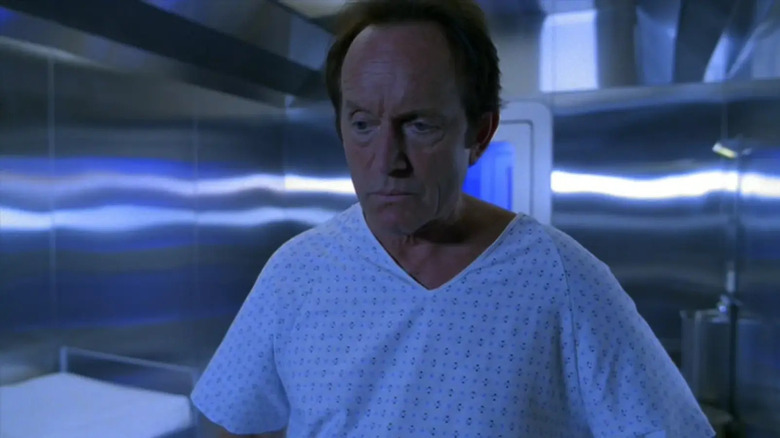
Chris Carter's 1993 TV series "The X-Files" was one of the most emblematic shows of its era. Set after the fall of the Berlin Wall, with the Cold War finally at an end, "The X-Files" depicted an America at a loss as to what it should do next. It followed the adventures of two FBI agents, Fox Mulder (David Duchovny) and Dana Scully (Gillian Anderson), as they delved into the lost cases that even the FBI deemed too weird for investigation. These were the files pertaining to the supernatural, the paranormal, or the extraterrestrial. Naturally, Mulder and Scully uncovered new monsters and aliens every week. Catch up with five essential episodes.
The underlying tone of "The X-Files," though, was one of funereal paranoia. Mulder and Scully found, on a weekly basis, that their own government was in the habit of covering up and obfuscating the truth, and that no one really had control over anything. Mulder and Scully, like the rest of the nation, no longer had a foreign enemy to be distracted by, and turned their suspicions inward. The government, after all, was capable of carrying on a paranoia-induced Cold War for decades, so what else was it capable of? The light was on, the cockroaches were scattering, and the old world was coming to an end. But not in an optimistic way, as no future lay ahead. Indeed, it felt like the whole world was ending.
It helped that the year 2000 was on the horizon, which seemed like as good a time as any to have a hard reset and end everything. Chris Carter took that millennial angst and end-of-time fear planted in "The X-Files" and, in 1996, spun them out into a new TV series called "Millennium." It's a darker show than "The X-Files," and had a notable crossover.
Millennium was all about the end of the world
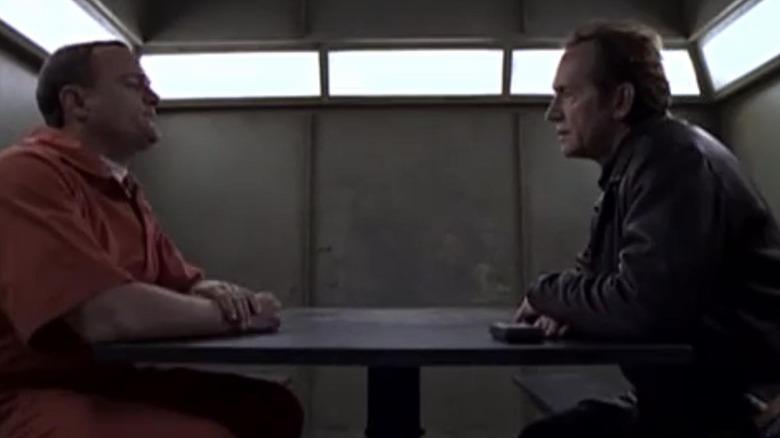
"Millennium" starred Lance Henriksen as Frank Black, a former FBI agent who now worked as a freelance crime scene profiler. Frank had ineffable psychic powers that let him see through the eyes of murderers and other criminals. The first season of "Millennium" is mostly a case-of-the-week show, wherein Frank uses his powers to arrest bad guys, but the later two seasons deal a lot with a shadowy cabal of elites called the Millennium Group. The group was an End Times cult that believed the end of the world was nigh, and that they would be capable of, uh, moving things along, as it were. A large part of the series involved the development of a world-ending virus that would wipe out humanity.
The group was somewhat religious, but also believed in a kind of social entropy. Even fans of "Millennium" will say that the Consortium is a little inconsistent throughout the series. Sometimes they seem to be religious zealots, while at others, they are an organized spy ring.
"Millennium" was dripping with doom. Like "The X-Files" before it, the series was dank and paranoid. There was a sense that the world was not going to be saved. Indeed, because ratings were low, Carter and the rest of the "Millennium" showrunners decided to merely end the world at the end of the show's second season, with the Bad Guys unleashing their virus and killing everyone. Frank's wife (Megan Gallagher) took her own life in the conflagration. Rather unexpectedly, though, "Millennium" was renewed for a third season after that, forcing Carter to find some way to backpedal the End Times.
The third season explained that the virus wasn't as widespread as previously thought, or that Frank hallucinated portions of it. Yeah, it was a little cheap.
Millennium didn't expect to get a third season
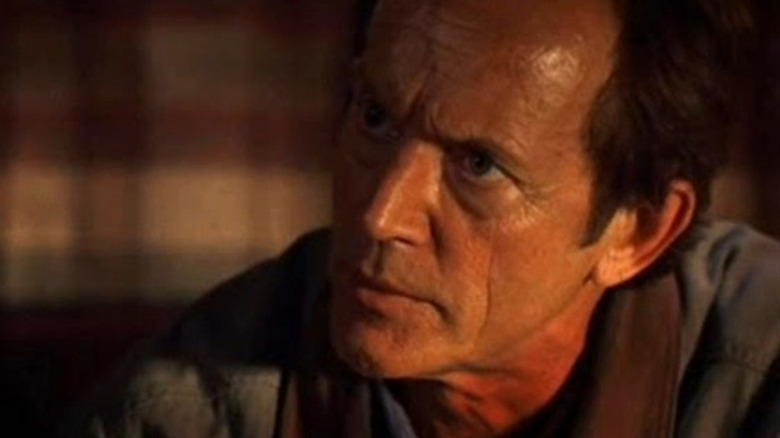
The third season was rushed into production, with the premise altered to look a little bit more like "The X-Files." On Carter's first show, the two lead characters were mismatched cops, with one being a believer, and the other being a skeptic. The third season of "Millennium," Frank was paired with a new character, an FBI agent named Emma Hollis (Klea Scott) who could serve as the skeptic to Frank's believer. She would eventually be tantalized into the Millennium Consortium by the mysterious Terry O'Quinn. The show ended with Frank absconding with his daughter and fleeing town.
"Millennium" finally folded for good after its third season, being canceled in May of 1999. It didn't even make it to the year 2000. Frank Black, however, did return for a guest spot in a seventh-season episode of "The X-Files" called (what else?) "Millennium." In that episode, Frank was still investigating the Millennium Group, and found that they had begun a new End Times plan. They were going to use necromantic means to resurrect dead group members and have them pose as the Four Horsemen of the Apocalypse as described in the Book of Revelation.
Naturally, Mulder, Scully, and Black work together to fight the resurrected zombie men, and put and end to the Apocalypse once and for all. It's kind of a let-down after three seasons of a much more complex and intriguing show like "Millennium," but /Film still called it one of the best episodes of the series. The more notable detail of the "X-Files" episode was that Mulder and Scully, carrying sexual tension for years, finally kissed in a romantic way, ringing in the year 2000 with some decorum.