

One Key Aspect Of Peaky Blinders: The Immortal Man Is Based On A True Story
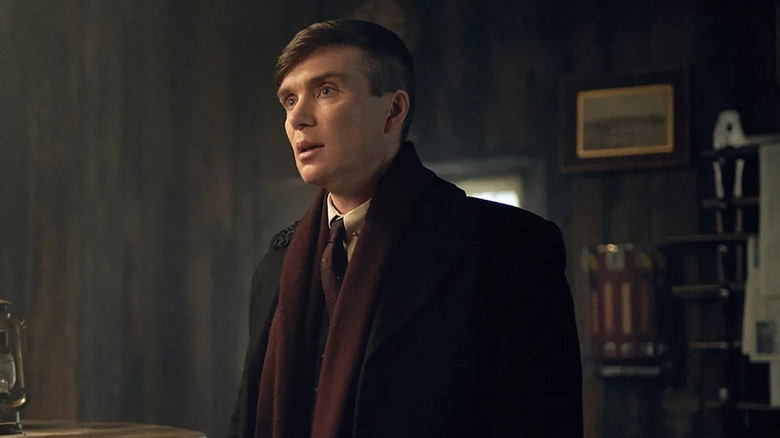
This article contains spoilers for "Peaky Blinders: The Immortal Man."
For six seasons, Steven Knight's dramatic series "Peaky Blinders" was one of the most acclaimed shows to come out of the U.K., and it exploded in global popularity once Netflix acquired the streaming rights. Despite having won the Academy Award for "Oppenheimer" and starring in beloved films like "28 Days Later" and "Inception," there's an argument to be made that Cillian Murphy's career-best performance came in "Peaky Blinders" as series protagonist Tommy Shelby. Murphy knows exactly why "Peaky Blinders" became a worldwide phenomenon and was more than willing to return for "Peaky Blinders: The Immortal Man," the Netflix original film that serves as a continuation of the series.
/Film's Jeremy Mathai called the film a "satisfying epilogue" in his review, noting that "the latest chapter of this saga drags him kicking and screaming back to a place where most no longer remember or even recognize his name. He's a ghost wandering outside of time, a king who refuses his crown, and an Immortal Man cursed to remain among the living." From the very beginning, "Peaky Blinders" blended real historical elements within the fictionalized narrative of the Shelby family, and "The Immortal Man" is no different.
The film begins during the early stages of World War II, with the Blitz over Small Heath, Birmingham — the main setting of the show and movie. The film's major action set piece focuses on the German planes that dropped bombs over Birmingham from their perspective, intercut with scenes from the Birmingham Small Arms factory (BSA) and the night-shift workers at their stations. It's a harrowing scene made doubly moving when you realize this is, like many all-time great films, based on real events.
53 people were killed in the bombing shown in Peaky Blinders: The Immortal Man
Birmingham was and remains a major city in England's West Midlands region and has been a manufacturing powerhouse since the Industrial Revolution. During the English Civil War, Birmingham became a center for metalworking, with the Birmingham Small Arms factory built in the 1860s to produce weaponry, which eventually expanded into bicycle, motorcycle, and automotive manufacturing. Given the nature of the factory, there were plenty of safety measures in place after World War I — including for potential Air Raids — but on November 19, 1940, the BSA was attacked. Nearly 1,000 night-shift employees fled to the shelters across the road from the factory, but many stayed behind at their stations, viewing their work as vital to the war effort.
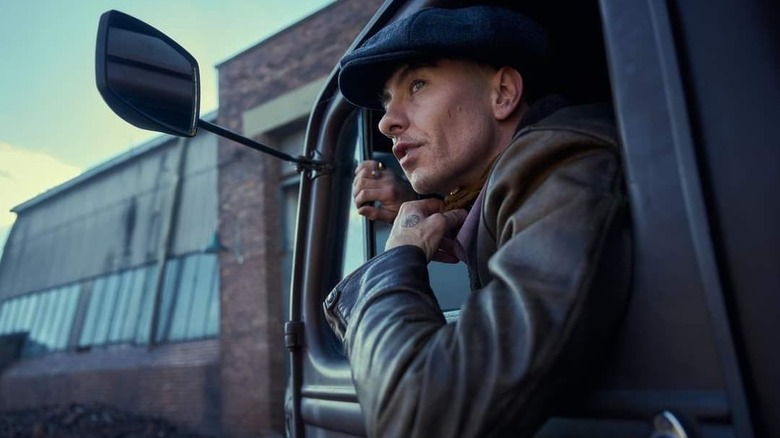
In "Peaky Blinders: The Immortal Man," the sequence makes it very clear that those who were killed in the bombing had the opportunity to cut and run for their lives, but chose to stay and die with honor. The film's central story begins as civilians sift through the wreckage and rubble, searching for survivors and any weapons that remain intact. The Peaky Blinders gang arrives (led by Barry Keoghan's Duke Shelby) and steals all the weapons right before their eyes. The civilians know they can't do anything, save for one loud, dissenting patriot whom Duke beats up to prove a point. Other than the main characters making their way through bombed-out streets and destruction, the BSA itself doesn't factor into the rest of the movie.
That is, until the end credits include an "In memoriam" title card explaining that the movie is dedicated to the women-led night shift who gave their lives. May those who perished during the Birmingham Blitz rest in peace, and may "Peaky Blinders: The Immortal Man" help to keep their memories alive.