

Project Hail Mary's Shocking Twist, Explained By Ryan Gosling And Writer Drew Goddard [Exclusive]
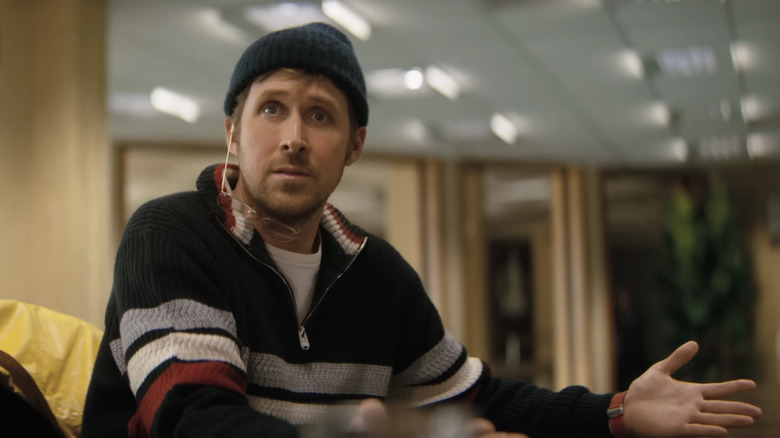
This article contains major spoilers for "Project Hail Mary."
Based on Andy Weir's best-selling novel of the same name, the outstanding big screen adaptation of "Project Hail Mary" from directors Phil Lord & Christopher Miller follows Ryland Grace (Ryan Gosling), a molecular biologist turned astronaut who is sent on a mission to hopefully save Earth from a cosmic disaster. A microscopic alien organism dubbed astrophage is slowly consuming the Earth, and if leading scientists can't figure out how to stop it, the planet's population will face drastic consequences over the next 30 years. Humanity's only hope is to send a mission to the Tau Ceti system, which contains the only nearby star that hasn't been ruined by astrophage.
After the mission loses its pilot and engineer sometime during the long journey to Tau Ceti, Ryland Grace wakes up as the only survivor, and he's unsure what he's even doing in outer space. The induced sleep for the trip to Tau Ceti has clouded his memory, but flashbacks begin to fill in the gaps as the film's story unfolds.
In the present day timeline, Grace meets an unlikely collaborator in the form of an alien whom he comes to call Rocky (voiced by James Ortiz), because he looks like a spider made of rocks. After Grace creates a makeshift translator to understand Rocky's unique, melodic language, he learns that Rocky's sun is being killed by astrophage too, so they team up to figure out a solution that will save both their planets.
While the story is ultimately filled with triumph as Grace and Rocky discover another microscopic organism on one of Tau Ceti's planets that eats the astrophage, there's a huge reveal that emotionally undercuts their victory. While celebrating their discovery, Grace remembers how he ended up in space — and it's not because he made the brave choice to embark on the mission. Ryland Grace was actually a coward.
Ryland Grace wasn't brave enough to sacrifice himself for Earth
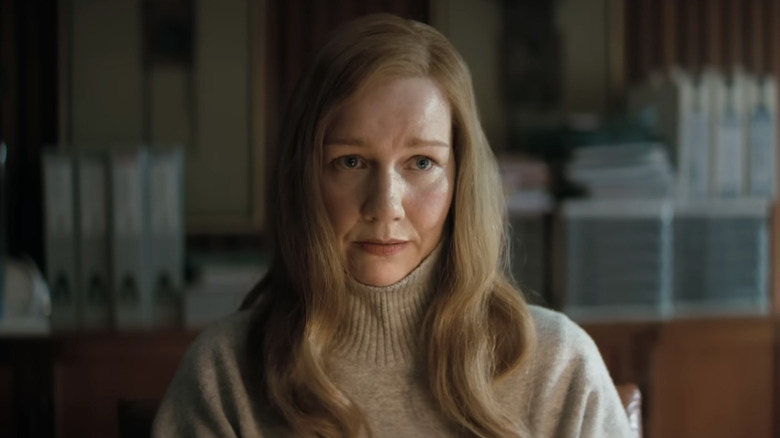
As one of the flashbacks reveals, the Project Hail Mary mission was dealt a tragic blow when its astrophage experiments resulted in a catastrophic explosion that killed their primary science officer and their back-up. This left Ryland Grace as their only expert who could conceivably carry out the science officer's responsibilities.
But when faced with the decision to go on a mission where the astronauts will end up dying in space, due to the lack of sufficient fuel for a return trip, Grace takes the coward's way out and tries to run. Project Hail Mary's lead, Eva Stratt (Sandra Hüller) is left with no choice but to send him on the mission against his will, confident that Grace will ultimately be able to do what needs to be done.
Leading up to the release of "Project Hail Mary," I spoke with Ryan Gosling about this surprising turn in the story and how he approached the concept of rejecting the call to become Earth's hero. Gosling said it wasn't a stretch to put himself in that position:
"I could relate. That was the beauty of this film and this character is that I didn't have to pretend to be more heroic than I am or I didn't have to — I mean, I had to pretend to be smarter than I am. But I didn't have to pretend to be this idea of a hero, that I could just play things as I think I would and connect to the honesty of it and the overwhelming nature of what's being asked for him. And just also be inspired by Andy's writing and the story and this idea that we're all capable of so much more than we think that we are and more than we're told that we are."
Writer Drew Goddard knew he shouldn't mess with Project Hail Mary's big twist
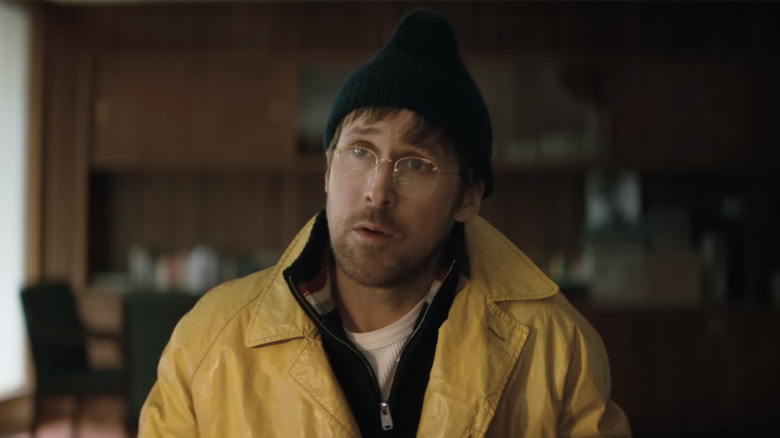
This kind of twist in a story that's meant to be uplifting is rather unexpected. But screenwriter Drew Goddard knew how important the late reveal was, especially because of the story's flashback structure. During my interview with him about "Project Hail Mary," I talked about the mystery of the story structure and the eventual gutpunch, and Goddard recalled feeling the same way:
"Honestly, when I read the book, it was thrilling because of the very thing you're describing, the mystery of how did we end up in this situation we find ourselves in. And just like you describe, you get to the end of that story, the flashback story, and the whole movie flips on its head. And I remember reading that and the hair stood up on the back of my neck. I am paid to do this, my job is to see where things are going, and I did not see that coming. I didn't see it coming."
So how did Goddard approach bringing such a pivotal moment to life? It was actually easier than you might think. The screenwriter knew he needed to keep the original approach by author Andy Weir (who also loves the movie) intact because it already worked so well:
"I remember going, 'Okay. First rule of screenwriting, protect what's great.' But your first rule is don't overthink it. When it's working and you feel that, my job becomes about protecting. And so I was like, 'We're not going to question this. We're going to build the story about that moment.' The moment you're describing where you realize how Ryland actually got up on the spaceship, that was the moment for me that made me go, 'I have to do this movie. I have to do this movie.' So really it was more about like, 'Okay, let's just not overthink it.' And lay the structure in so that reveal had as much power as possible."
"Project Hail Mary" is playing in theaters everywhere now.