

One Of 2026's Scariest Movies Needs To Be Seen In Theaters – But Not For The Reason You Think
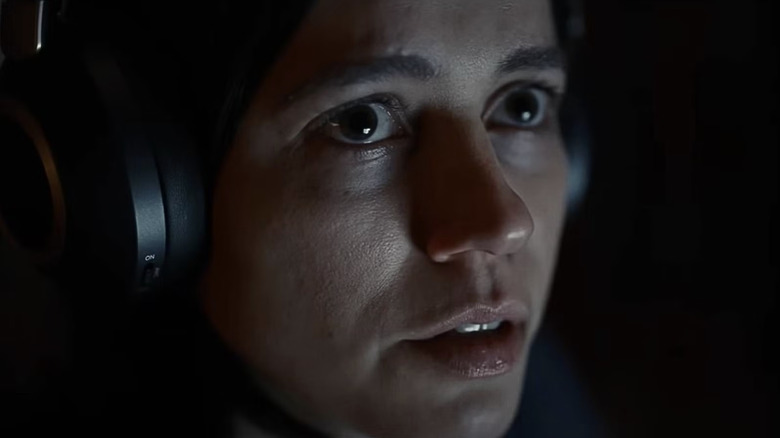
When you've been obsessively watching horror movies for your entire life, you eventually become desensitized to the mechanics of scares. Part of the fun then becomes the thrill of the hunt, chasing the adrenaline rush that can only come from one of the scariest movie scenes ever. And when you've found it, it's next to impossible not to evangelize it to anyone who is willing to listen. Even mainstream general audiences have gotten hip to the ways of the jump scare, which has forced filmmakers to get a little more creative in how they dish out the goods. A film like "Skinamarink" quickly forged a place as one of the scariest horror movies of 2023 by screwing with audiences' imaginations and tricking them into anticipating seeing things that weren't actually there. And now, writer/director Ian Tuason's "Undertone" has managed to crawl under audiences' skin through ridiculously effective sound design.
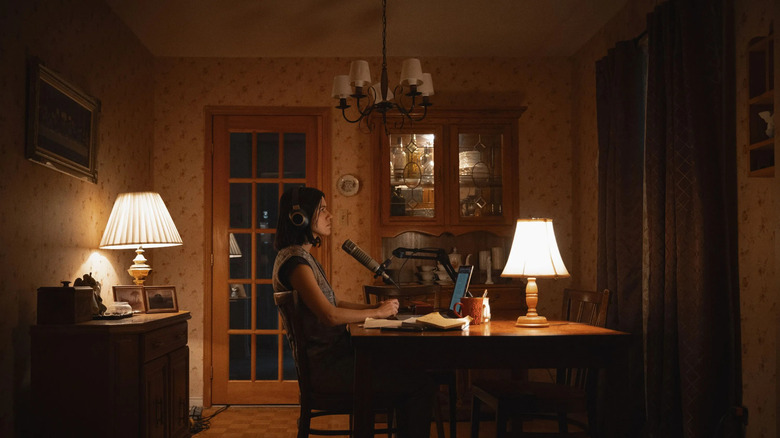
As /Film's Chris Evangelista noted in his "Undertone" review, "using impeccable sound design and making great use of negative space, Tuason's stripped-down film builds a continuous amount of dread as it creeps along." The movie centers on Evy (Nina Kiri), who's essentially the only human ever shown speaking. A podcaster who's taking care of her dying mother, Evy co-hosts a show with Justin (voiced by Adam DeMarco) about creepy content. The pair are then sent eerie recordings of a pregnant couple's paranormal encounters, and each new file unlocks increasing mayhem that parallels the unexplained weirdness happening in Evy's home.
Admittedly, the story of "Undertone" is paint-by-numbers enough that well-versed horror fans can easily predict every beat, but watching the film with the best sound possible renders that irrelevant. This is a movie that demands a Dolby theater, because under the best circumstances, "Undertone" is a haunting experience that shouldn't be missed.
Undertone was written with sound direction in mind
/Film's Ben Pearson recently spoke with Ian Tuason, who confirmed that the sound design was always going to be the primary source of the horror in "Undertone," but getting it right required a lot of trial and error. "Is the negative space in the background in front of Evy or behind Evy? Where's the negative space in relation to Evy? Is the entire shot negative space?" he asked himself. Tuason continued:
"I even remember having a Word Doc with each shot and then copy/pasting those shots into the script whenever I felt like I needed it. So, the shooting script was a lot of camera direction, a lot of sound direction, more sound direction than camera direction. And the storyboards were pasted directly onto the original script, which was about 270 pages long."
By keeping the film confined to one location and following only Evy, "Undertone" successfully immerses the audience in her point of view. The only possible distraction is her dying mother in a bed upstairs, which means if something looks or sounds out of place, there's no "normal" explanation for any of it. While we watch her descend into podcast Hell, we also feel as if we're going through it with her. At one point during my screening of the film, one of the "RESERVED" signs on the back of the seats in the press row fell to the ground, and the entire theater gasped.
When a horror movie is truly effective, it's like watching someone pull off a magic trick, and that's precisely what "Undertone" does. By the end of my screening, I was practically sweating, and my muscles ached as my body involuntarily tensed from the immersive sound design completely possessing my faculties.
The sound design in Undertone was recorded as practically as possible
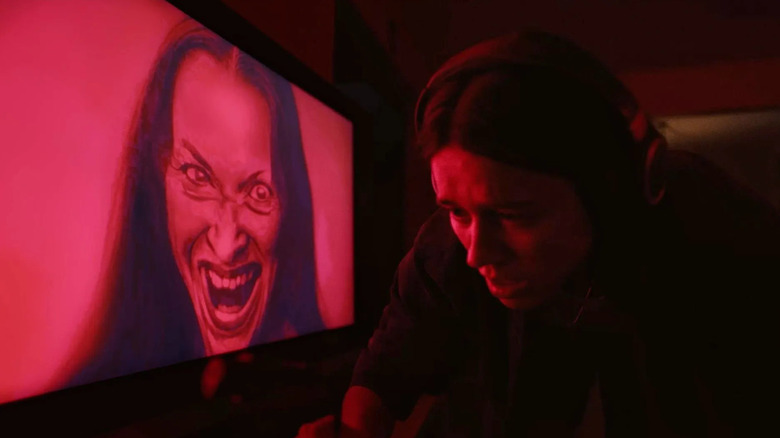
Part of the eerie charm of "Undertone" is that the film's so effective that it overrides any logistical quibbles you have with its story's reasoning until you've left the theater and "gotten off the ride," so to speak. (See also: Evy planned to record her podcast at 3:00 a.m., yet when she wants to call it quits early, her co-host acts surprised it's 3:00 a.m. despite that being the scheduled time.) And part of that effectiveness lies in the practical sound design.
The audio clips Evy listens to were recorded on iPhones operated by actors Jeff Yung and Keana Lyn Bastidas — who are the voices of Mike and Jessa on the files emailed to the podcast — in the house used as Evy's mom's home. "We captured a lot of it organically, and then on set, when Nina [Kiri] was in, we had her listen to the recordings for the first time when we were shooting those scenes," as Ian Tuason put it.
The minimalist audio recordings are deeply unsettling and only escalate as the film goes on. Knowing that Kiri had never heard them before only enhances the viewing experience, because she's reacting to them the same way we are in the audience. Where are these soundscapes going? What are we going to hear next? The anticipation is titillating and anxiety-inducing. For a horror fan, it's bliss.
I have no idea how well "Undertone" will play at home without the intoxicating power of Dolby sound, so if you have even a passing interest in checking it out, you owe it to yourself to see it with the best sound possible. The theatrical experience is alive and well.
"Undertone" is now playing in theaters everywhere.