

Paul McCartney's Favorite Horror Movie Is A Genre-Defining Classic With A 98% Rotten Tomatoes Score
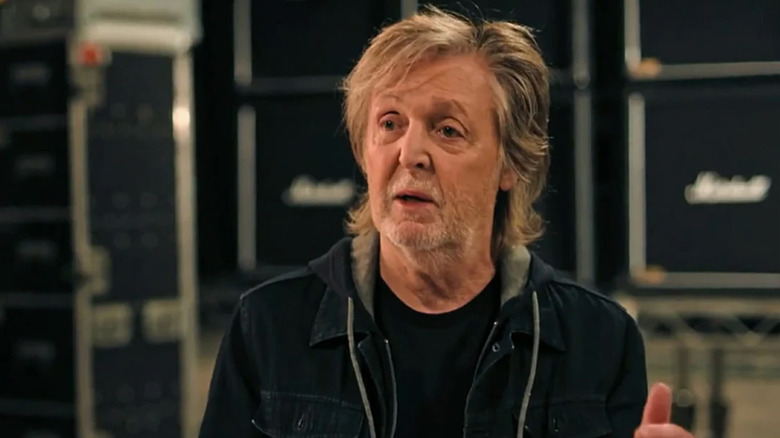
The Beatles' individual tastes in film are as eclectic as the Fab Four themselves. They also make a whole lot of sense. George Harrison, for example, always had a mischievous streak as an artist, so it's no shock that he enjoyed Mel Brooks' puckish, satirical comedy classic "The Producers." John Lennon, meanwhile, liked drugs and anti-war statements, so of course he was all in on filmmaker Alejandro Jodorowsky's acid Western/anti-Vietnam War allegory "El Topo." (That's barely even a joke.)
Compare that to Ringo Starr, whose appreciation for cinema and television runs so deep that he's popped up in numerous films and TV shows over the years (often for no other reason than to have a good time, which, again, is on brand for him). Lastly, this brings us to Paul McCartney, who's taken the liberty of listing his favorite movies on his Letterboxd account. And while they're mostly either cherished Golden Age Hollywood titles that he likely first saw at an impressionable age ("The Girl Can't Help It," "On the Waterfront") or, in the case of the Martin Scorsese-directed "The Last Waltz," a documentary that speaks directly to his love of music, he made the somewhat unexpected choice to list "Get Out" as one of his picks.
Now, writer/director Jordan Peele's Oscar-winning 2017 horror flick is unquestionably a genre-defining modern classic and one of the most influential movies of the 21st century (as its 98% critics' score on Rotten Tomatoes is testament to), but why does McCartney, specifically, adore it? "I think Jordan Peele did a great job with that," as he simply remarked in a Q&A for the official Paul McCartney website. Look a little closer, though, and you may notice that McCartney's work and "Get Out" actually occupy somewhat similar spaces in pop culture history.
Get Out, like McCartney's work with the Beatles, is often imitated but never duplicated
Just as you can't blame the Beatles for the many uninspired copycats that sprang up in their wake (more power to those who prefer the Monkees, naturally), you can't begrudge Jordan Peele for making a film so good that other folks have spent the last near-decade imitating it without ever duplicating what makes it tick. Funnier still, many of the Beatles' best songs, like "Get Out," hit that sweet spot of being well-crafted, idiosyncratic, crowd-pleasing pop art that manages to say something meaningful without sacrificing its pure entertainment value for the sake of its messaging.
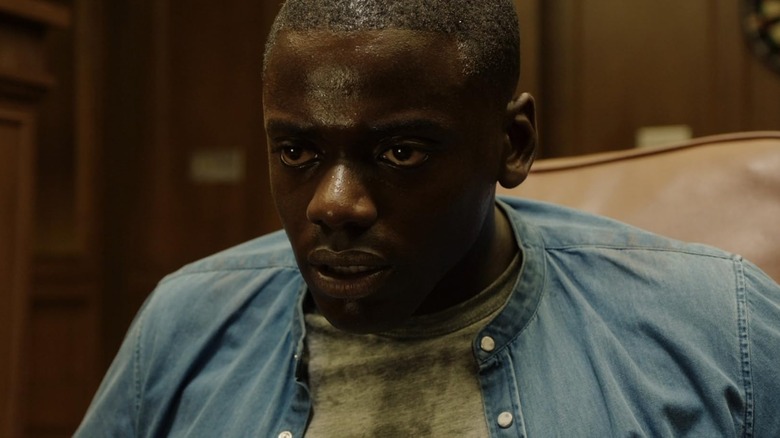
The parallels don't end there. Like the Beatles' music, "Get Out" has a sense of humor about itself, yet that doesn't prevent it from being deadly serious when the occasion merits. It's a movie that encourages you to chuckle at the cringe-inducing interactions that ensue when its Black lead, Daniel Kaluuya's thoughtful and sensitive photographer Chris Washington, finally meets his white girlfriend's liberal family ... only to turn those moments on their heads as it becomes apparent that the performative displays of allyship and microaggressions that Chris is being subjected to are the least of his concerns. Perhaps most critically, it does all this through nothing more than strong performances, sharp writing, and eye-catching imagery like those used to realize "the Sunken Place."
Many of the "Get Out" wannabes that've followed in its wake have lacked that precise tonal control and storytelling intent, which just goes to show: There's no surefire formula for great art. It's the same reason why Paul McCartney and his fellow Beatles could churn out tunes with utter nonsense lyrics and create something profound, whereas everyone else just ended up with, y'know, nonsense.