

Roger Ebert Gave A Near-Perfect Score To Gore Verbinski's Most Underrated Movie
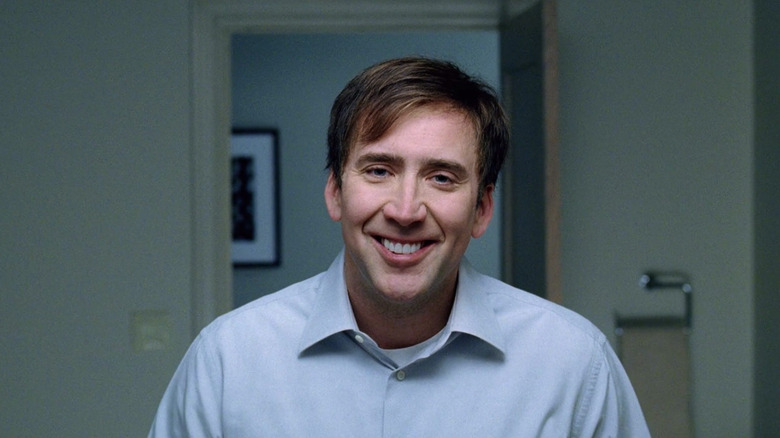
Over the course of his 40-year career, Gore Verbinski's films have grossed a combined $3.7 billion worldwide. So why does he have a reputation for being one of the most under-appreciated directors working today?
Verbinski's sin is that, while he excels at crafting blockbuster entertainments (as evidenced by the first three "Pirates of the Caribbean" movies), he'd prefer to make quirky movies that aren't spawned by pre-existing IP. His most interesting movies by far have been based on original screenplays. Most of these films were not hits (and some were tepidly received by critics), but Verbinski seems more determined than ever to apply his considerable visual talents to off-kilter projects that give marketing departments nightmares.
And why not? He seems to have a permanent get-out-of-director-jail-free card given that he was able to follow up the catastrophic flop "The Lone Ranger" by making a pair of quirky genre films in "A Cure for Wellness" and "Good Luck, Have Fun, Don't Die" on his own creative terms. It's just a bummer that these films failed to connect with audiences during their theatrical release. Of his commercial misses, I think the studios generally mis-sold the movies. When it comes to 2005's "The Weather Man," however, which stars Nicolas Cage as a glum Chicago TV news personality, I can't think of a campaign that would've enticed moviegoers. It's an unabashedly depressing movie that isn't interested in finding an unearned silver lining – and I agree with Roger Ebert that it's a special movie.
Giving "The Weather Man" a near-perfect 3.5/4 score, Ebert praised it as "absorbing" and "morbidly fascinating." He also defended it from complaints that it was glum and depressing, countering: "Surely that is a description of the movie, not a criticism of it. Must movies not be depressing?"
Verbinski's The Weather Man forecasts a stormy mental breakdown for Nicolas Cage
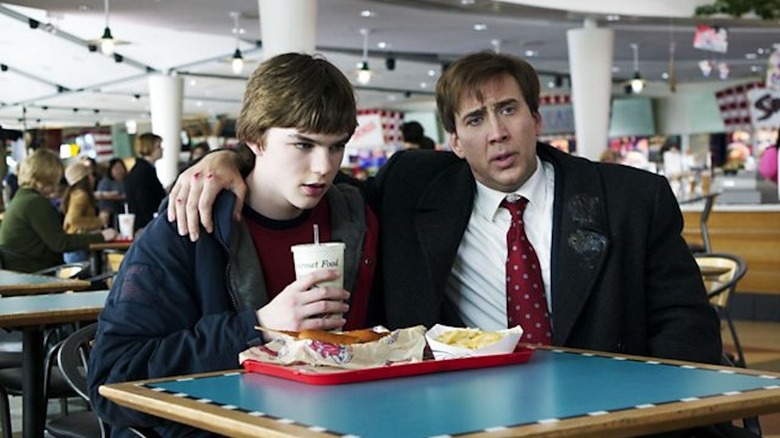
Written by Steve Conrad, whose screenplay for "The Pursuit of Happyness" was an emotionally honest portrayal of a drowning man getting his head just above water, "The Weather Man" centers on a schlub who's caught in an undertow of despair. Cage's David Spritz is a camera-friendly weather man who believes himself to be a fraud. This sense is reinforced by his Pulitzer Prize-winning father (Michael Caine), who disapproves of his son's lack of expertise (David is not a meteorologist, and basically regurgitates wire reports). The whole of Chicago considers David a joke, which leads to people occasionally flinging fast food at him.
Remarkably, David still has prospects. He's in the running for a weather man spot at a morning show in New York City. But it all feels like a pipe dream given that his wife has left him for another man, and his kids are in various states of emotional distress. This is certainly a dark comedy, but Cage is so believably human and wincingly pathetic as David that you never feel like laughing. He's a loser whose life is a mess because, at some point, despite his financial success, he stopped believing that he had anything to contribute to society. It's a peculiar character study that challenges your sympathies for the protagonist. Why can't he accept his losses, take the new gig and move on?
Verbinski brings a suitably subtle visual flair to the movie, realizing that all he needs to do is follow the downbeat lead of his star. It's one of Nicolas Cage's finest performances. "The Weather Man" won't brighten your day, but it will remind you that the clouds do eventually part.