

We Asked 6 Comic Book Experts Which Superhero Movie Costume Is The Absolute Worst
We may receive a commission on purchases made from links.
If you've ever heard the aphorism "a true thing poorly expressed becomes a lie," then you'll understand why superhero costumes are so important. You can have the most compelling character, but all of that means nothing if their outfit looks ridiculous. In that sense, superhero costume debates are much more than arcane squabbles over trivialities. People care how these icons of pop culture are represented, and for good reason: A difference of material and budget makes all the difference between a Nicholas Hammond Spider-Man costume and a Tobey Maguire one, and that directly impacts how seriously the general public takes your favorite character.
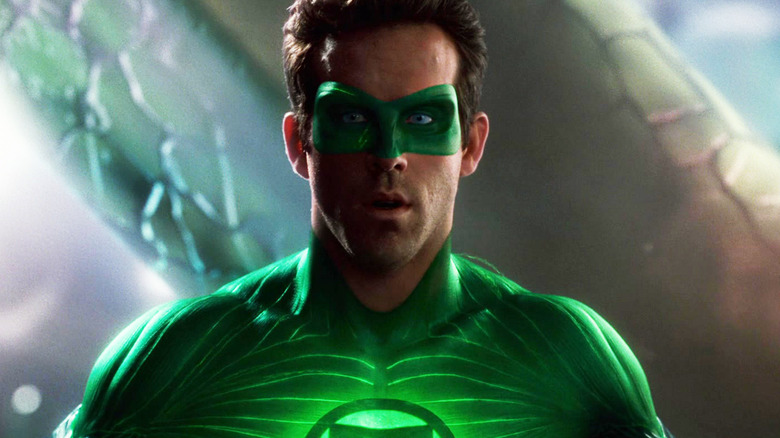
Superhero movies have been reliably popular since Richard Donner's "Superman" established the modern blockbuster blueprint back in 1978. In the decades since, fans have taken their favorite hero's costume almost as seriously as the movies themselves. From the infamous Bat nipples of the Val Kilmer and George Clooney era to the debacle that was Ryan Reynolds' CGI suit in "Green Lantern," these outfits have sparked contentious and heated debates, and perhaps none quite so lively as the question of which costume, above (or beneath?) all others, is the absolute worst.
Now, we've done the work to answer that. We asked several comic book experts for their opinions on this very matter, including founder and editor-in-chief of Comic Book Herald Dave Buesing, author of "Understanding Superhero Comic Books" Alex Grand, Matt Rich of Legacy Comics and Cards in Glendale, CA, /Film's resident comic book experts Devin Meenan and Rafael Motamayer, and veteran comic book journalist Stephen Gerding. Which costume did this team of heroes pick as the very worst? While it was a close call, it seems there's no arguing that the first cinematic Deadpool "costume" in "X-Men Origins: Wolverine" was the pits.
Ryan Reynolds' disastrous Deadpool costume is officially the worst... but only just
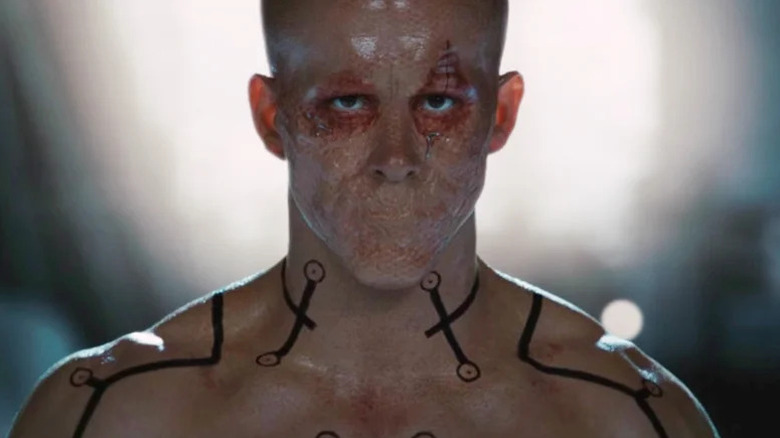
"X-Men Origins: Wolverine" director Gavin Hood knows what went wrong with his version of Deadpool and so do our experts. Ryan Reynolds' first appearance as the Merc with the Mouth was all wrong — partly because this merc didn't actually have a mouth. Instead of a wisecracks and rapid healing, this version of Wade Wilson looked like a rejected creature from the Conjuring universe — a hairless, mouthless monstrosity who could suddenly teleport and shoot lasers from his eyes.
Powers and characterization aside, though, this non-gift came with the worst wrapping paper imaginable. Matt Rich dubbed this costuming debacle, "A terrible finale to a terrible movie." Stephen Gerding was even more critical: "Hands down, Ryan Reynolds' Deadpool from 'Wolverine: Origins' is the absolute worst," he said. He added, "But while the costume — or lack of one — is terrible, what's worse is how the character's look reflects how badly the entire concept fails, from the lack of a working mouth to the complete absence of the personality that makes Wade Wilson special and distinctive from every other character in comics." /Film's Devin Meenan agreed, adding, "It doesn't even attempt to capture Deadpool's comic costume or personality."
Coming in a close second was Oscar Isaac's Apocalypse from 2016's hollow, by-the-numbers, yet still somehow entertaining "X-Men: Apocalypse." As /Film's Rafael Motamayer put it, "It looks like Ivan Ooze from 'Power Rangers,' with goofy facial makeup and a ridiculous helmet that feels like cheap cosplay." Alex Grand concurred, adding that while Isaac is a great actor, he wasn't cast well. "He was too short to portray the giant ancient Egyptian mutant," Grand said, and also felt that the outfit made him look like a "Power Rangers" villain.
(Dis)honorable mentions for the worst superhero costume of all time
With comic book movies being as ubiquitous as they are, there were bound to be several runners up in this battle to the bottom, especially considering there's also a glut of just straight up impractical superhero costumes in movie history. And wouldn't you know it, there were indeed multiple misfires our experts wasted no time in absolutely eviscerating.
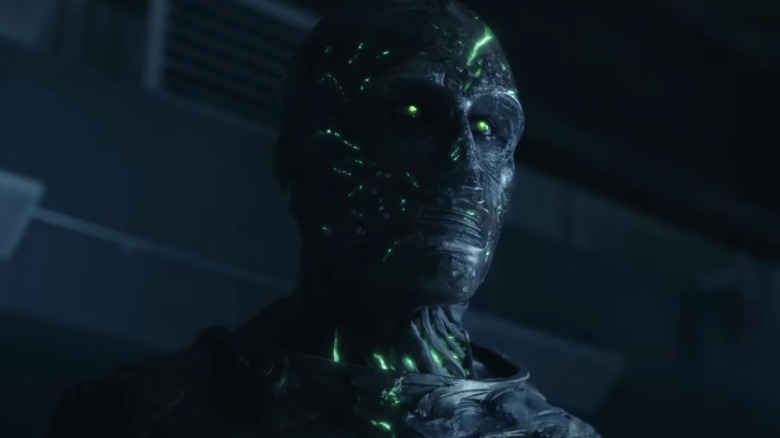
Ryan Reynolds was in the firing line again with his CGI "Green Lantern" suit, which almost every one of our experts lambasted. For Dave Buesing, however there was one "costume crime" that really stood out — Toby Kebbell's Victor Von Doom from Josh Trank's major 2015 box office flop "Fantastic Four." For Buesing, "[Fantastic Four] invents new ways to get costume design wrong," with the Comic Book Herald founder describing the outfit as a "gangrene-infested metal gimp suit ... a deliberate middle finger to fans of Doctor Doom." Devin Meenan also called out Kebbell's suit as looking like "glowing green tinfoil."
Meanwhile, Matt Rich highlighted another well-known costuming blunder: Jared Leto's Joker. Rich described the "Suicide Squad" villain as "an almost literal Hot Topic advertisement" with the "Damaged" forehead tattoo being particularly egregious. He continued:
"Every other piece of his outfit seems like what a thirteen-year-old would think is cool. The grill, the purple alligator skin jacket, and all the other tributes to vanity on a character who has no ego. The Joker doesn't want to be seen as cool. He's a clown. He finds the humor in the grim cruelty and chaos of the world."
A superhero movie costume that isn't fun enough is also a grievous error
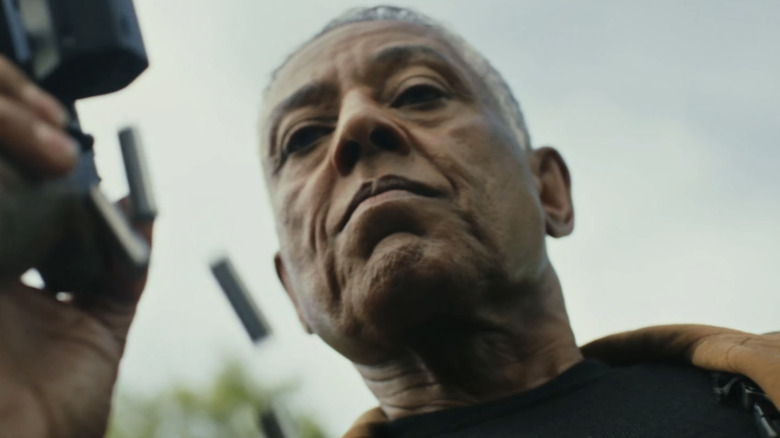
A comic book costume adaptation being too silly is easy to point at laugh at. Being not silly enough, though, can also land you on the list of worst offenders. Take Giancarlo Esposito's Sidewinder for instance.
For Dave Buesing, Esposito's villain from the safe, forgettable rehash that was "Captain America: Brave New World" remains an underrated dishonorable mention. "Everybody loves Esposito," he said, "so I understand that few want to admit it, but there is no scenario in human history where an outfit was not improved by an absurd snake's head, frill, and cape." For Buesing, Esposito's Seth Voelker was far too bland a version of the character. Noting how we tend to surrender the MCU's love of military garb, Buesing said, "In a film where Harrison Ford transforms into a Red Hulk, why on earth are we pretending the Serpent's Society needs a modern revamp?"
Elsewhere, Matt Rich highlighted Tom Hardy's Venom as a surprise contender for the worst cinematic representation. "He needs to be a Spider-Man villain, and he needs to have the white spider on his chest," he said.
Why movie superhero costumes are important
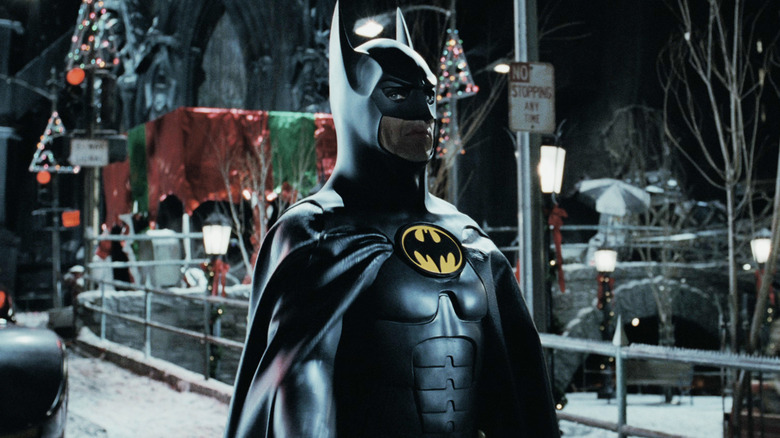
Judging the worst movie superhero costumes might seem trivial to non-comic book fans. But as our experts' responses show, there's a lot more that goes into a superhero's cinematic look than you might think. "Costumes are important because they should be a vehicle to inform the character in an immediately clear, perceptible way," said Devin Meenan. "Think of Superman and Batman: one's got a bright costume, one's got a dark costume, which reflects how one is a beacon of optimism and the other a gloomy avenger." Stephen Gerding offered other examples, such as Captain America's shield representing his patriotism and Iron Man's chrome armor being emblematic of Tony Stark's ostentatious tastes.
While this doesn't mean movies can't make changes to superhero costumes — just look at how the darker tone of the "Daredevil" show called for a different kind of costume, trading in the comic book character's bright red spandex for burgundy body armor — all choices should remain true to the character. As Alex Grand put it, "I don't think you have to necessarily stick to comic history but I think it helps. Look at Hugh Jackman pull off the classic Wolverine costumes in 'Deadpool and Wolverine.' If the classic is already awesome, then adapt that into modern standards."
More important than any of this, however, is to preserve the sense that superheroes can act as a canvas onto which we can project ourselves. Grand recalled how "[Stan Lee] used to guess on talk shows that people like the face covered because they can imagine themselves fighting for justice [...] those costumes transcend race and even gender. Everyone can connect with them."