

Captain America's Civilian Job Was Perfect - And The Last Career You'd Expect
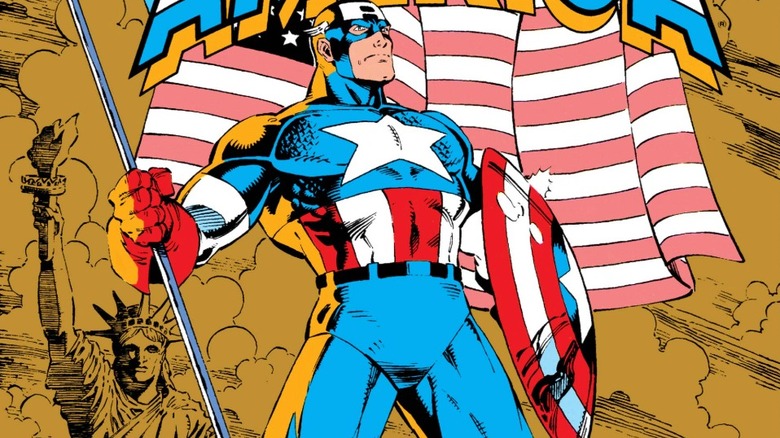
You wouldn't know it from Chris Evans' Captain America in the Marvel Cinematic Universe, but for most of Marvel Comics' history, Cap had a secret identity. In the original "Captain America Comics" #1 (by Jack Kirby and Joe Simon), Bucky became Cap's sidekick after he walked into Steve's tent and saw him changing into the Captain America costume. Steve recruited Bucky to fight by his side because they "must share [his] secret." (Stan Lee later thought it was foolish for Cap to make that call, so to explore consequences, he killed Bucky off when Cap returned in 1964's "Avengers" #4.)
Later comics and the MCU removing Cap's secret identity is an understandable change; it's laughable to think that Steve could keep his identity secret from his men while fighting on the frontlines of World War 2. Plus, how do you explain both Steve Rogers and Captain America returning, unless the public knows they're the same person? But Cap having a secret identity did lead to an amusing story arc when Steve Rogers got a job as the artist of the in-universe "Captain America" comics.
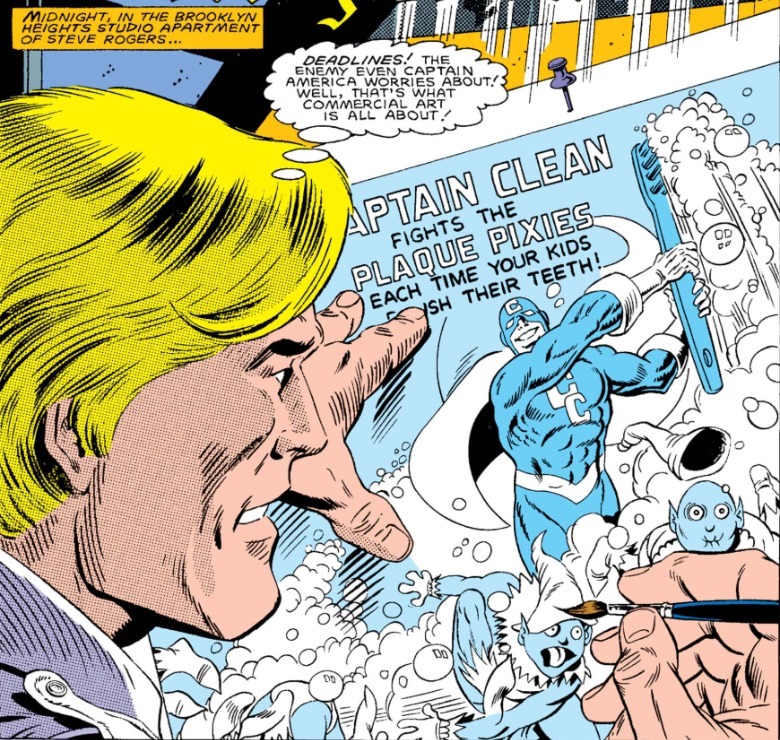
Steve is as skilled wielding a pencil as he is with his mighty shield. During "Captain America" comics published through the 1980s, Steve supported his civilian life working as a commercial artist, mostly for advertising agencies. In 1985's "Captain America" #305 (by Mike Carlin and Paul Neary), Steve is shown drawing a toothpaste ad: "Captain Clean Fights The Plaque Pixies."
 Marvel Comics
Then, in issue #309 (by Mark Gruenwald and Neary), he's fired from the "Captain Clean" job after missing a submission deadline. In the following issue #310, Steve rides a subway and wonders where he'll find a new job... until he overhears two kids reading licensed "Captain America" comics.
Steve Rogers drew the in-universe Captain America comics
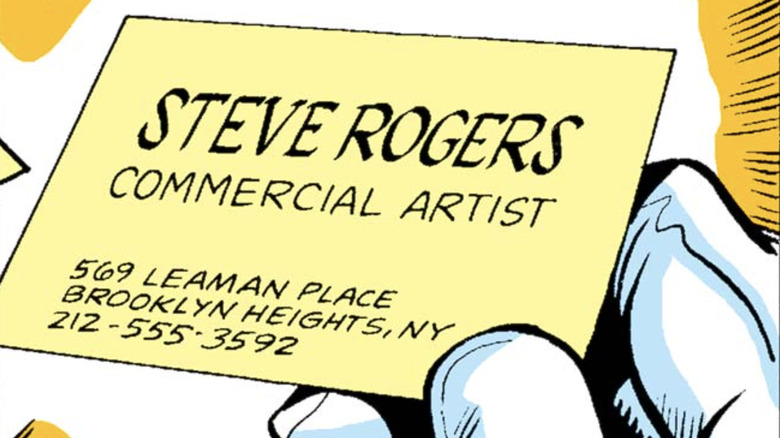
In 1979's "Captain America" #237 (co-written by Chris Claremont and Roger McKenzie, drawn by Sal Buscema), Steve Rogers tries to quit being Captain America after the apparent death of his girlfriend Sharon Carter. He shows up at Avengers Mansion in a businessman's suit and debuts his new calling card to his fellow heroes: "Steve Rogers — Commercial Artist."
Now, this retirement didn't last, but Steve still spent about 100 issues trying to balance his two careers. The comic even used Steve's side gig for its trademark political themes. In 1982's "Captain America" #275 (by J.M. DeMatteis and Mike Zeck), Steve goes to drop off some art at an ad agency — but he quits on the spot, tearing up the sketch, after he learns the agency's boss, Mr. Bennett, is an antisemite: "I keep thinking we rid the world of people like you 40 years ago, Bennett! But you just showed me I was wrong!"
In "Captain America" #310, when Steve gets the idea to submit to Marvel Comics, he realizes there's truly no artist better equipped to draw how superheroes move and fight than him, since he literally is a superhero. His editor is so impressed that he hires him on the spot, and Steve is all the more amused when the book he's offered is "Captain America" itself. In "Captain America" #320 (by Mark Gruenwald and Paul Neary), Cap even sketches some comic pages during downtime on his other job.
However, Steve only has the job for about 20 more issues. In "Captain America" #332 (by Gruenwald and Tom Morgan), he resigns as Captain America due to disillusionment with the American government and naturally quits drawing the comic for Marvel too.
Captain America's artist side adds to his character
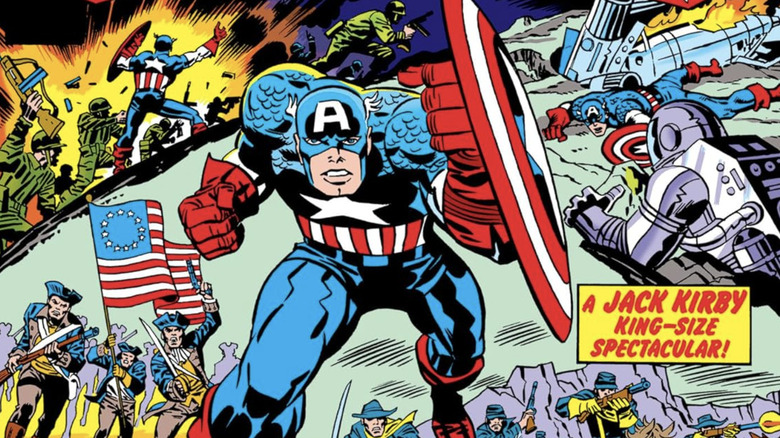
"Commercial artist" wasn't the first or only job that Marvel Comics has ever given Steve Rogers. In 1971's "Captain America" #139 (by Stan Lee and John Romita Sr.), Steve became a New York Police officer and worked that job for about 40 more issues. During Roger McKenzie's run on "Captain America," he and artist Don Perlin had an ambitious (but unrealized) idea: Captain America would be elected U.S. President, and the next four years of the comic would follow him in Washington.
Unlike the police or politics, the people writing and drawing "Captain America" know firsthand what it's like to work for Marvel Comics — the way Steve was depicted as knowing how to best draw Captain America. Many famous comic artists also drew commercial art for advertising agencies, too. It's akin to how Superman is, as Clark Kent, a journalist, and a 20th century newsroom was a deadline-driven bullpen full of writers, just like the offices of Marvel and DC. (Steve Rogers drawing "Captain America" comics is not far off from Peter Parker taking photos of himself as Spider-Man for the Daily Bugle.)
Later comics have thus depicted Steve working as an artist before he became Captain America. If he hadn't become a super soldier, he might've worked on Madison Avenue after the war.
In 2011's "Captain America: The First Avenger," Steve (Chris Evans) is shown drawing a performing monkey in a Captain America suit, channeling his frustrations at being a propaganda performer. A deleted scene from 2012's "The Avengers" also showed Steve sketching Stark Tower from an outdoor restaurant table. Between battling HYDRA, Thanos (Josh Brolin), and a teensy Civil War, Steve never had time to pick up any commercial art (or Marvel Comics) work in the movies, though.