

Legendary Sci-Fi Author Harlan Ellison Had Nothing But Harsh Words About Star Wars
We may receive a commission on purchases made from links.
Most stories one reads about the legendary sci-fi author Harlan Ellison tend to be about how cranky and/or litigious he was. Harlan Ellison hated Hollywood. The stories about his dissatisfaction with "Star Trek" are legendary, and he often took other writers and/or studios to court, claiming they had ripped off his idea. He once sued the makers of the obscure 1970s sci-fi cop show "Future Cop," and he famously (and successfully) sued James Cameron over "The Terminator." He sued the movie "In Time" for "borrowing" one of his ideas. And in interviews, Ellison remained cantankerous. A notable 1979 interview with the Comics Journal revealed the man's open hatred for studios' habit of stealing other authors' ideas and claiming them as their own.
In 1989, Ellison published a book of reviews and essays called "Harlan Ellison's Watching," which compiled 25 years of his ancillary nonfiction writing output. He weighed in on various pop sci-fi films and TV shows, adding his two acidic cents to the otherwise genteel conversation. It was never a secret that Harlan Ellison hated George Lucas' 1977 sci-fi opera "Star Wars," as he would make passing mention of it in ancillary interviews, but in "Watching," he got to lay his opinions bare in an essay entitled "Luke Skywalker Is A Nerd And Darth Vader Sucks Runny Eggs." As one can tell, Ellison was not about to launch into a paean about the glories of Lucas' Skywalker saga. He was about to lay out, in explicit detail, just how much he hated "Star Wars" and why.
In brief, Ellison felt that "Star Wars" was shallow and thoughtless, not interested in anything complex or adult. Because it was a mere adventure, it didn't fully exploit the depths of its own genre.
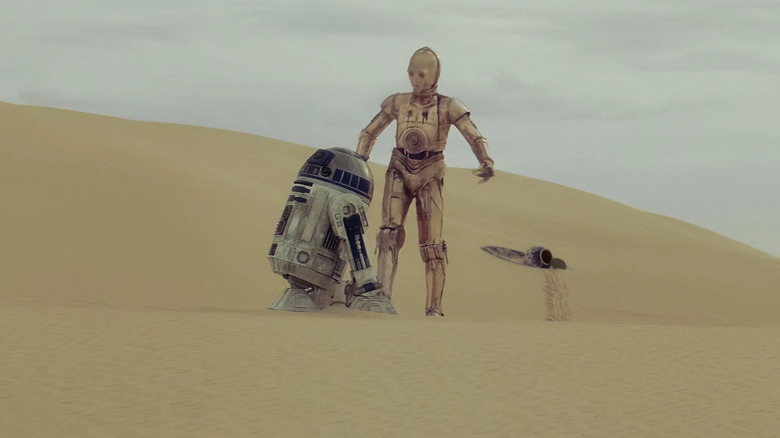
Harlan Ellison felt that Star Wars was shallow and immature
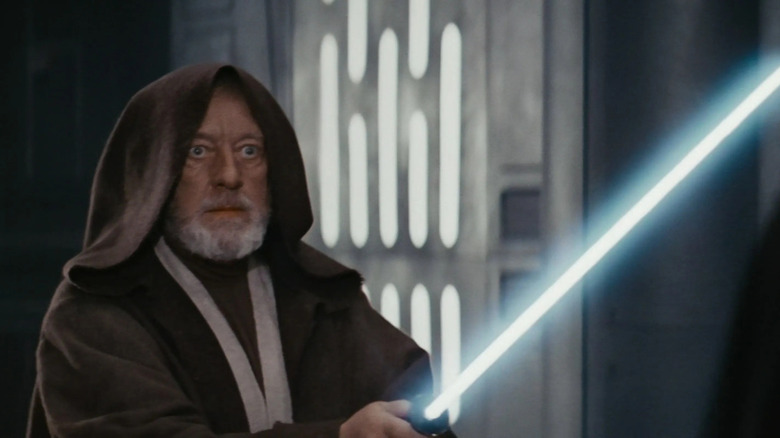
The Grailrunner website printed some passages from Harlan Ellison's essay, and boy howdy are they harsh. Ellison hated that sci-fi, a genre he associated with imagination, ambition, and philosophy, was being wielded to tell a mere swashbuckling adventure pic. He called "Star Wars" "some half-wit wild west adventure in outer space." He said that Hollywood doesn't know the difference between making a sci-fi movie and making any other genre. Sci-fi is "just another shoot-'em-up with laser rifles." He wrote:
"For all of its length, for all of its astonishing technical expertise, its headlong plunge and its stunning effects, at no time can one discern the passage of a thought. It is all bread and circuses. The human heart is never touched, the lives unexamined, the characters are comic strip stereotypes."
And he does have a point. The first "Star Wars," taken independently from its many, many sequels, most closely resembles the 1930s sci-fi adventure serials that George Lucas watched as a kid. The characters are quite deliberately archetypal and even a little arch and artificial. The original "Star Wars" is using modern special effects and 1970s filmmaking tech to link up contemporary cinema with older, squarer filmic traditions from decades previous. There is no moral nuance or complexity to "Star Wars." It's an adventure novel, a "heroes and villains" story. Ellison seemingly felt that devoting all that time and all those cinematic resources to a story about comic book stereotypes was a waste of time.
Sci-fi was, as Ellison wrote, a "what if" genre that probes the possibilities of broad, high-concept ideas. What if we were all psychic? What if we met aliens? There is, one might agree, no "what if" quality to "Star Wars." It's a caper film.
Harlan Ellison eschewed special effects
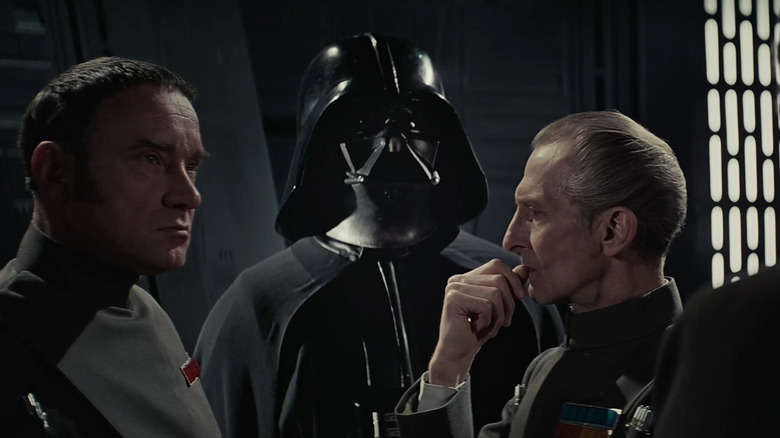
Harlan Ellison was keen to recommend sci-fi movies that he felt did explore the genre in interesting ways. He liked the movie "Charly." He liked "1984," of course. He also recommended L.Q. Jones' 1975 film "A Boy and His Dog" ... which is based on one of his own short stories. Ellison was famously not fond of Stanley Kubrick's seminal sci-fi text "2001: A Space Odyssey," as he felt it was too focused on its visuals, and not its humanity. He wrote:
"[A]ll the films that we thought were great, like '2001,' become, in retrospect, merely exercises in special effects. There are damned few 'people' stories that deal with what science fiction at its best and most valuable handles better than any other kind of story: the effects on human beings of technology, unusual happenings and the future."
One of Ellison's biggest issues with "Star Wars" was how uncritical the public seemed to be. He hated that NASA scientists were singing its praises, and that a friend, author Ben Bova, dared to give it a good review. He saw no dissenting voices among the rising tide of what would come to be known as "the fandom." He wrote:
"I sincerely hope that science and scientists differ from science fiction and its practitioners. Heaven help us if they don't: we may be headed for a very boring world indeed. Strip 'Star Wars' of its often striking images and its highfalutin scientific jargon, and you get a story, characters, and dialogue of overwhelming banality ... trite characters and paltry verbiage ... Still, 'Star Wars' will do very nicely for those lucky enough to be childish or unlucky enough never to have grown up."
Harsh. Harsh indeed.