

Emerald Fennell's Wuthering Heights Has Been Accused Of Going Too Far – It Should've Gone Further
This article contains spoilers for "Wuthering Heights."
Emerald Fennell's successful take on Emily Brontë's "Wuthering Heights" is a loose adaptation at best. Most high school students may be familiar with Brontë's 1847 novel, as it is still commonly assigned on literary syllabi. Its characters are certainly well-worn in cinema, as there have been several dozen film and TV adaptations over the decades. Fennell doesn't so much re-adapt "Wuthering Heights" as she does turn it into the lascivious, sex-soaked romance that it feels like to outsiders. There is a lot of sexual tension between the book's protagonists, Cathy and Heathcliff, and Fennell spun out that tension into an openly erotic drama about two would-be lovers whose lust for each other cannot be abated.
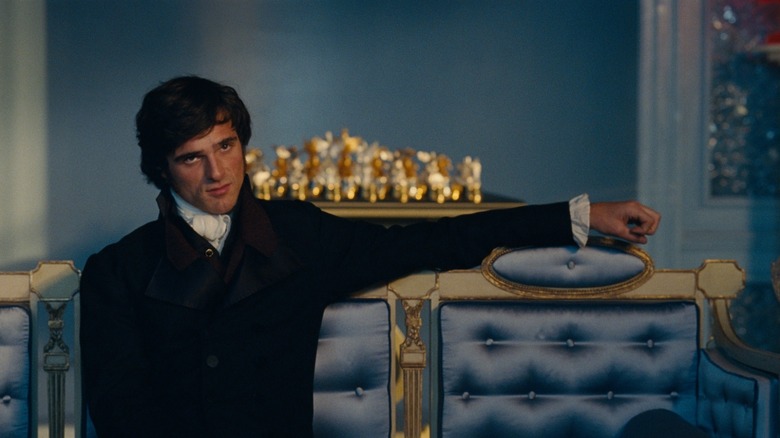
Cathy (Margot Robbie) is re-envisioned as something of a harridan, a woman who knowingly rejects Heathcliff, seemingly out of spite. Heathcliff (Jacob Elordi), meanwhile, is possessed of a sexual, animal energy that he doesn't bother hiding. He can lift Cathy off the ground with one hand entwined around the threads of her bodice. Fennell films a scene wherein Heathcliff interrupts Cathy in the midst of an act of onanism, and ... well, I cannot describe what he does next on a safe-for-work website.
Later in the film, Fennell breaks with Brontë's narrative altogether and allows Cathy and Heathcliff to consummate their relationship. Repeatedly. In every room of the house. "Wuthering Heights," then, becomes a story not so much about stymied romance as the dangers of lust.
There is a scene late in the film where Fennell even teeters on the edge of taking "Wuthering Heights" away from Brontë altogether ... and I wish she had. If you're going to skew away from the source material to make it trashy, go all the way with it.
If you're going to stray from Wuthering Heights, go all the way
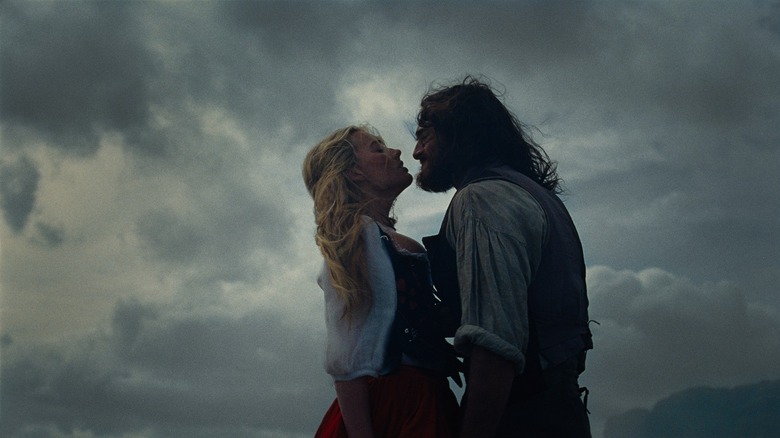
Late in Emerald Fennel's version of "Wuthering Heights," Cathy and Heathcliff have been carrying on an affair for an extended period. Cathy interrupts their sexual dalliances for a moment to ask where their relationship may be going. She is married to Edgar Linton (Shazad Latif), after all, and they won't be able to keep their affair hidden forever, right? Heathcliff then suggests, rather darkly, that they team up to kill Edgar, and Cathy will inherit his fortunes. Cathy, however, is appalled by the idea and turns him down. It should be noted that absolutely none of that is in Emily Brontë's novel.
But then, Fennell already pushed us up to this point. She threw Cathy and Heathcliff in bed together, and we got to witness both of them being overwhelmed by their mutual lust. There are many scenes of Jacob Elordi's massive tongue in this movie. The book's themes of tortured romantic dissatisfaction were abandoned in favor of sexual release. "Wuthering Heights" is full of sexual imagery (flesh-colored walls, phallic mushrooms, vaginal book pages), and Fennell rolls around in it. This is no longer about frustration, but the enjoyment of vice, the glories of soap-opera-like sexual dalliances.
And as long as that's true, why not let Cathy and Heathcliff team up to murder Edgar? We're far away from Brontë in both story and theme, so turn "Wuthering Heights" into something new altogether. Make it a crime drama. Make it violent. Turn it into a Jackie Collins novel. By not going that far, it almost felt like Fennell was backing off from her own ideas. She tiptoed up to the precipice and then pivoted away. How frustrating.
Wuthering Heights could have been so much more twisted
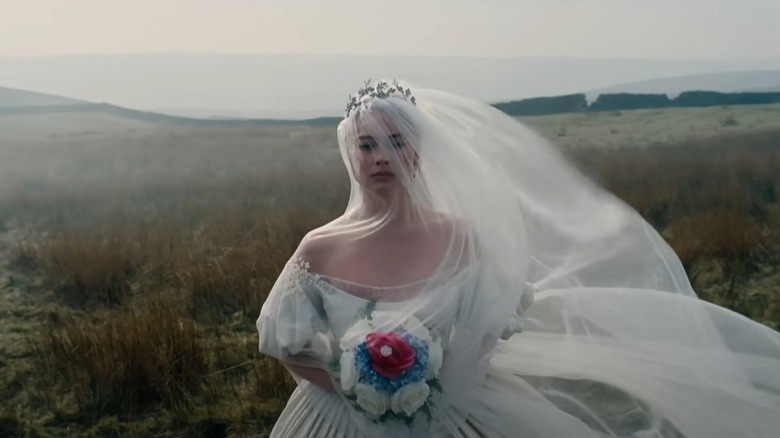
This ache for trashiness is not mere prurience on my part. Indeed, the film goes out of its way to cater to the prurience in the audience. No, my frustration with the film's refusal to tip full-bore into a trashy soap-opera narrative is also implied in its heightened style. Fennell got some excellent work from her photographer and production designers to create an unreal space for her film to take place in. One might be reminded of the films of Ken Russell, complete with their sexual excess.
The heightened look very much leaves the door open for a more extreme approach. Some might be upset that Fennell took her film so far from the source material. I am frustrated that she didn't take it far enough. She could have turned "Wuthering Heights" into a straight-up horror movie. What if Heathcliff and Cathy murder Edgar and can only dispose of the body by eating it? What if Nelly (Hong Chau) or Isabella (Alison Oliver) found out about the murder? The line between an angst-riddled romance like "Wuthering Heights" and 1950s issues of "Tales from the Crypt" is startlingly fine, and Fennell could easily have taken her film into EC Comics territory.
And this would merely be following the path that Fennell herself laid out for us. It wouldn't have been surprising at all. And it would have certainly been more fun. By backing off and ending "Wuthering Heights" as a tragedy, it merely highlights that Heathcliff and Cathy are kind of bad people whose own actions brought nothing but pain and misery. I love a good tragedy, of course, but it's not a great tragedy at the end of the day. But if Fennell had added murder, we would have had something.