

Wonder Man And A Knight Of The Seven Kingdoms Prove An Important Franchise Lesson
Warning: This article contains spoilers for both "A Knight of the Seven Kingdoms" and "Wonder Man" season 1.
Remember when TV shows were allowed to be TV shows? At the risk of unleashing countless "Sure grandpa, time for bed" memes, there was indeed a time when even franchises on the small screen opted not to subject their audiences to hours and hours of unnecessary, extracurricular homework. The CW superhero series "Smallville" didn't rely on movies or comics to be understood; it merely existed in its own self-contained little corner, requiring nothing more from us than pop culture's general knowledge of Superman. The beloved "Batman: The Animated Series" took a similar approach, using its source material as a guideline to tell what oftentimes became the definitive versions of the show's DC Comics characters. Continuity hasn't always been king, in other words, no matter how far we've swung in that direction lately.
What "A Knight of the Seven Kingdoms" and Marvel's recently-released "Wonder Man" propose, however, is that those days shouldn't be a distant gleam in our rearview mirrors. Sure, both shows have obvious ties to ongoing universes and neither can quite escape the shadow of the projects before them. "Wonder Man" uses Sir Ben Kingsley's Trevor Slattery to complete a heroic arc that began in another Marvel Cinematic Universe title entirely, after all, while "A Knight of the Seven Kingdoms" goes out of its way to draw music connections to "Game of Thrones." But, even with that, these two spiritual siblings are a timely reminder of how good we used to have it.
If there's a lesson to be learned here, it's that blockbuster TV need not be an exercise in excess. Sometimes, simply telling a good story is enough to make it worthwhile. These two shows have proven exactly why.
Wonder Man and A Knight of the Seven Kingdoms have lower stakes, and that's a good thing

A pair of episodic shows about two very different strangers coming together — one of whom is hiding a game-changing secret, while the other has their sights set on fame and fortune — and going on a series of misadventures that bring them closer than they ever could've imagined? Yeah, it's no wonder why both "Wonder Man" and "A Knight of the Seven Kingdoms" are inviting so many obvious parallels and comparisons between them. In a barren sea of mediocre, slapdash, and all-too-corporate productions, these are two tropical islands unto themselves.
It all starts with them knowing their limits. In no universe would Marvel greenlight "Wonder Man" with the hopes of instigating the type of canon-reshaping bombshells seen in, say, "Secret Invasion." Neither was "A Knight of the Seven Kingdoms" ever going to rival "Game of Thrones" or "House of the Dragon" in terms of scope, scale, and ambition. Instead, the frivolity is the entire point. While modern viewers have unfortunately been trained to dismiss anything that doesn't "advance the plot" in the larger universe, that comes at the expense of two shows that are as character-focused, no-frills, and purely entertaining as anything in their respective franchises.
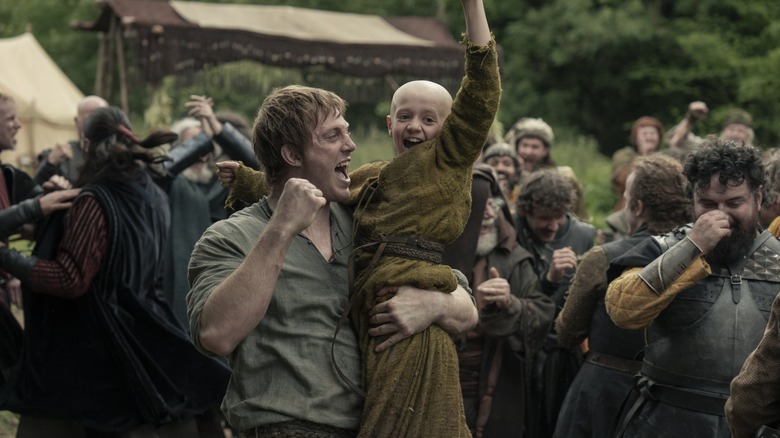
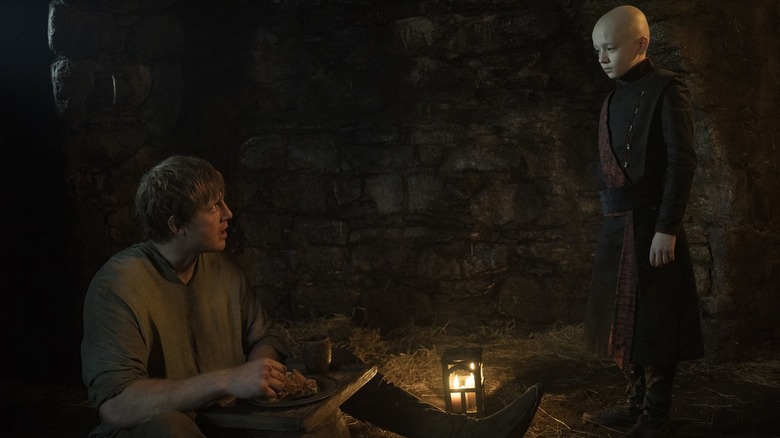
Isn't that as refreshing as it gets nowadays? The fraught emotional journeys of both Simon Williams (Yahya Abdul-Mateen II) and Trevor Slattery might be utterly meaningless in the face of "Avengers: Doomsday" and "Secret Wars," while Dunk (Peter Claffey) and Egg's (Dexter Sol Ansell) travels across Westeros as hedge knight and squire don't (directly) lead to the political intrigue at the start of "Game of Thrones." But by making us invested in these heroes, they end up meaning the world to us anyway.
Hollywood needs more shows like A Knight of the Seven Kingdoms and Wonder Man to avoid franchise fatigue
In an era full of increasing blockbuster spectacle, there's something to be said for the necessity of stories that play out in a minor key. The success of all the various "Avengers" crossover films can be chalked up primarily to the careful bricklaying and setup from the solo movies in between them. Meanwhile, "Game of Thrones" became a phenomenon due to its dragon-sized action and end-of-the-world stakes, but where do you go from there? In place of "House of the Dragon," yet another series about political squabbling and power grabs for the throne, imagine how effective a palate cleanser "A Knight of the Seven Kingdoms" would've been instead.
Obviously, this logic runs counter to Hollywood's conventional wisdom, but that's precisely what makes shows like "A Knight of the Seven Kingdoms" and "Wonder Man" so vital and important. Underneath their buddy-comedy charms and low-stakes thrills, these are reminders of why viewers all over the world fell in love with these properties in the first place. Watching Simon and Trevor scramble to make an audition tape or Dunk and Egg good-naturedly mocking each other while taking in a jousting tournament can be every bit as captivating as the most epic, larger-than-life moments in either of these universes (if not more so). Dragons and portals get all the sexiest headlines, but they mean absolutely nothing when divorced from the emotional grounding we need in the first place.
Thank goodness that "Wonder Man" and "A Knight of the Seven Kingdoms" arrived when they did, just as their respective properties most needed a boost. What could be more heroic than almost singlehandedly keeping franchise fatigue at bay? Hopefully, the rest of the industry is taking notes.