

Viola Davis' Historical Epic With A 94% Rotten Tomatoes Score Is A Must-Watch On Prime Video
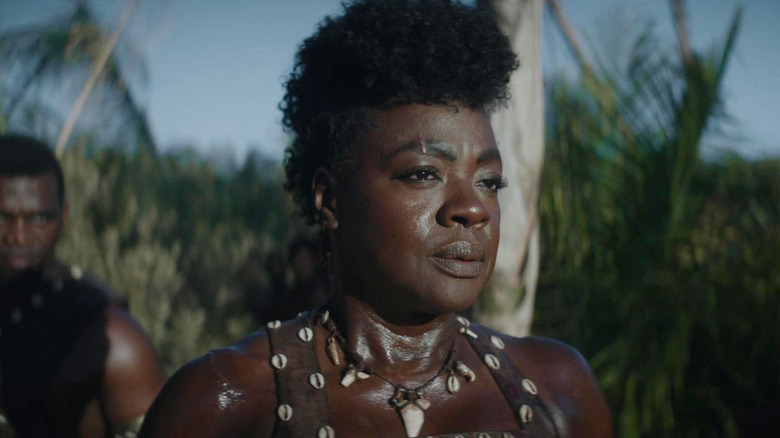
Unless you happen to be named Ridley Scott or Christopher Nolan, your odds of getting a sweeping historical epic green-lit in Hollywood at this moment in time are next to zilch. That only makes it that much more impressive that Gina Prince-Bythewood (who, unlike those fine gents, is not a white English guy over 50 with clout to spare) was able to secure a budget to make her 2022 period piece "The Woman King," a movie about the real-life West African Kingdom of Dahomey and the all-women warrior battalion, aka the Agojie, charged with defending it. In fact, as the picture's creatives would happily tell you, "The Woman King" might've never happened at all had it not been for a little film called "Black Panther."
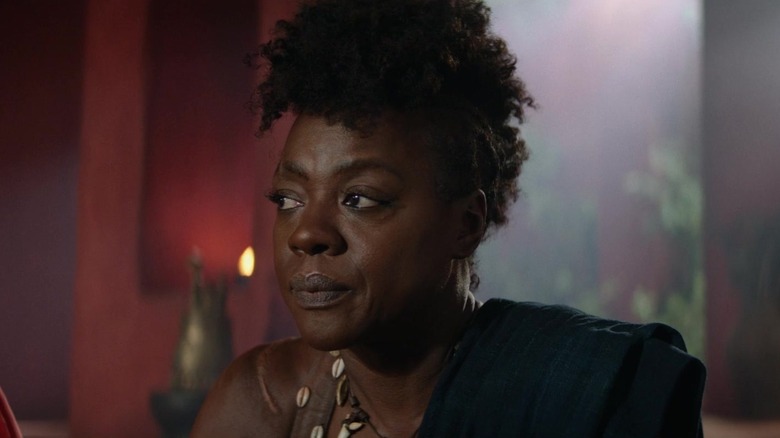
Having already cut her teeth as an action director on "The Old Guard," Prince-Bythewood hits the ground running when it comes to the blade-and-spear-swinging spectacle in "The Woman King." Really, the only thing fiercer than the film's precisely-captured fight scenes and rich colors (top marks to cinematographer Polly Morgan) are its performances. While Viola Davis is the obvious standout cast-wise as Nanisca, the Agojie general who's tough-as-nails in battle yet sensitive and diplomatic when need be, one shouldn't also overlook Thuso Mbedu ("The Underground Railroad") as Nawi, the young Agojie recruit determined to prove herself. Meanwhile, "Star Wars" veteran John Boyega brings the swagger as King Ghezo, the Dahomey ruler burdened with fending off his realm's many enemies in the early 19th century.
Add all that to its 94 critic score on Rotten Tomatoes, and that should be incentive enough to get those who haven't seen it yet to finally catch "The Woman King" while it's streaming on Prime Video ... which brings us to the part of the film that's not so flattering.
The Woman King is a roaring actioner ... but a problematic take on real-world history
To be clear, historical accuracy is not the be-all, end-all of what makes a movie great. "Amadeus" gets very little about its namesake's life right, after all, but that doesn't make it any less compelling in a vacuum. As such, the problem with "The Woman King" isn't that it plays fast and loose with the facts, per se; it's that it does this in a way that hurts the film creatively.
For example, "The Woman King" (which is credited to screenwriter Dana Stevens and based on a story attributed to her and actor Maria Bello) openly acknowledges that Dahomey was involved with the European-American slavery trade under King Ghezo. Moreover, the all-too-timely dilemma of what one should do when their livelihood makes them complicit in another's suffering (and there's no easy way to remedy the situation) is one "The Woman King" wrestles with for much of its runtime ... that is, until its third act abruptly resolves this conflict in a way that's both wildly historically inaccurate and feels like a cop-out in the context of the movie.
The compromised ending isn't the only way "The Woman King" rewrites Dahomey's history and paints certain real-world individuals in a more favorable light, mind you; it's just the most egregious one that stands out even when you're unfamiliar with the true story behind the movie. But as much as it's a reminder to always question the media you engage with (especially when it's telling you something that you find comforting), this doesn't make the film any less of a roaring actioner. And if it gets more people to learn about the real Dahomey and dwell on the issues it raises? That would be a victory unto itself.