

5 Amazing '70s Movies You Didn't Know Were Remakes
Even though I tend to bristle when people say that modern movies aren't as good as those released decades ago — frankly, 2025 alone was one of the best cinematic years in recent memory thanks to some of the incredible filmmaking achievements we got to enjoy in theaters and at home — I'll happily admit that the 1970s happened to be a really spectacular decade for movies. For crying out loud, this is the decade that gave us the first-ever "Star Wars" movie (retroactively subtitled "A New Hope"), "The Godfather," "A Clockwork Orange," "Taxi Driver," "Apocalypse Now," and "Blazing Saddles," just to name a few. All of those were either originals or adaptations, though (yes, including "Apocalypse Now," which is a literary adaptation of Joseph Conrad's "Heart of Darkness, for those who weren't required to read that slim novel in high school). What about great 1970s movies that were remakes of other movies?
We went ahead and spotlighted five films released in the 1970s, many of which are still beloved classics today, that you might not realize were actually remakes of previously released movies. From one film that got another remake in 2018 to an iconic horror movie that you probably didn't know had an earlier version, here are five phenomenal movies from the 1970s that are actually remakes.
Sorcerer
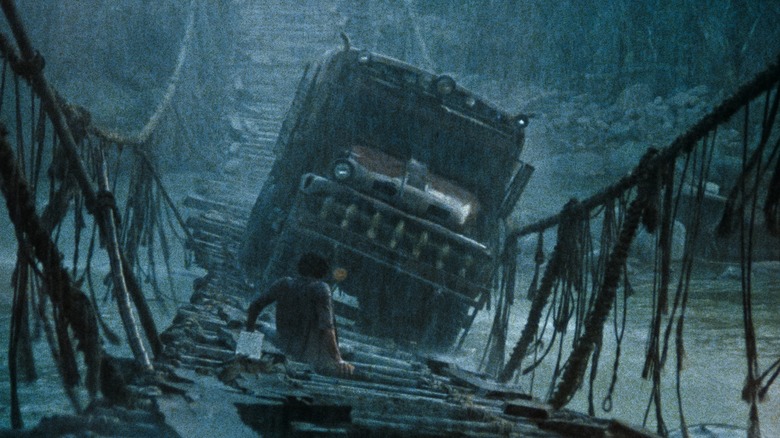
Directed by William Friedkin (yes, the director of "The Exorcist") from a screenplay by Walon Green — which itself is based on Georges Arnaud's 1950 novel "The Wages of Fear," 1977's action flick "Sorcerer" is, in fact, a remake. (That's in addition to being an adaptation!) Still, Friedkin did apparently insist that "Sorcerer" is not a remake of the 1953 movie "Le Salaire de la peur" (which directly translates to "The Wages of Fear") directed by Henri-Georges Clouzot. Instead, Friedkin, according to an essay written for The Criterion Channel in 2025 by Justin Chang, "conceived his film as more readaptation than remake, and he meant to put his own mark on the material."
So what is "Sorcerer" about, and what differentiates it from "Le Salaire de la peur?" Both center around the same thing: specifically, four fugitive men tasked with a life-threatening mission to transport trucks filled with old, unstable dynamite for hundreds of miles. In Friedkin's version, the action primarily takes place in Latin America but also includes scenes set in multiple nations across a series of vignettes; Roy Scheider, Bruno Cremer, Francisco Rabal, and Amidou play the four central men.
Famously, "Sorcerer" had a deeply troubled production; as Chang's essay noted, remote filming locations meant that the crew kept coming down with a variety of illnesses, a river meant to be a setpiece dried up unexpectedly, and an entire village ran for their lives upon seeing Friedkin simply because they knew him as the guy who directed "The Exorcist." Whether or not Friedkin believes that "Sorcerer" is a remake, it's regarded as one ... and at the very least, this movie, which flopped critically and commercially when it came out in 1977, has gained new appreciation over the years.
Invasion of the Body Snatchers
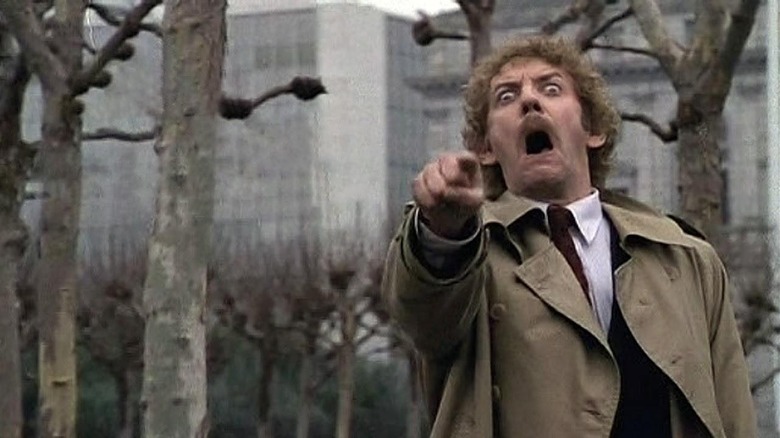
Like "Sorcerer," the 1978 version of "Invasion of the Body Snatchers" is, technically, another adaptation of Jack Finney's 1954 book, which is simply called "The Body Snatchers." Still, it's not just widely regarded as a remake of the 1956 version of "Invasion of the Body Snatchers," which was directed by Don Siegel with Kevin McCarthy and Dana Wynter in the lead roles, but as one of the best remakes in cinematic history and as a true horror classic.
The 1978 film, helmed by Philip Kaufman, stars Donald Sutherland as Matthew Bennell, a San Francisco health inspector minding his own business when his colleague, Elizabeth Driscoll (Brooke Adams), says that her boyfriend, Geoffrey Howell (Art Hindle), has been acting weird ever since physically interacting with a strange flower. The flower, as it happens, was infected by a parasitic alien, whose race is now hell-bent on overtaking the Earth by — you guessed it! — snatching bodies and using them as hosts.
With the utmost due respect to Siegel — who, alongside McCarthy, appears in a cameo — this version of "Invasion of the Body Snatchers" is the definitive one, and it's also one of the most well-regarded horror movies of the 20th century. As of this writing, the movie boasts a pretty incredible 93% on Rotten Tomatoes, with the critical consensus agreeing that the movie takes a deeper approach than the 1956 version. You can watch both and decide for yourself, but it's possible that even the biggest horror fanatic reading this didn't know Sutherland's "Invasion of the Body Snatchers" was a remake.
A Star is Born
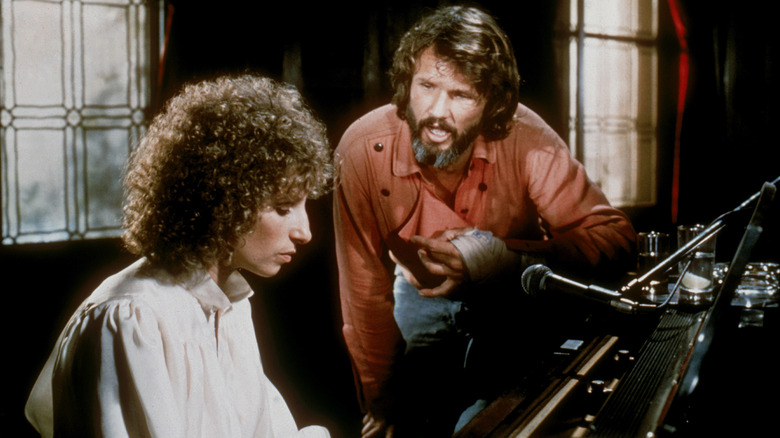
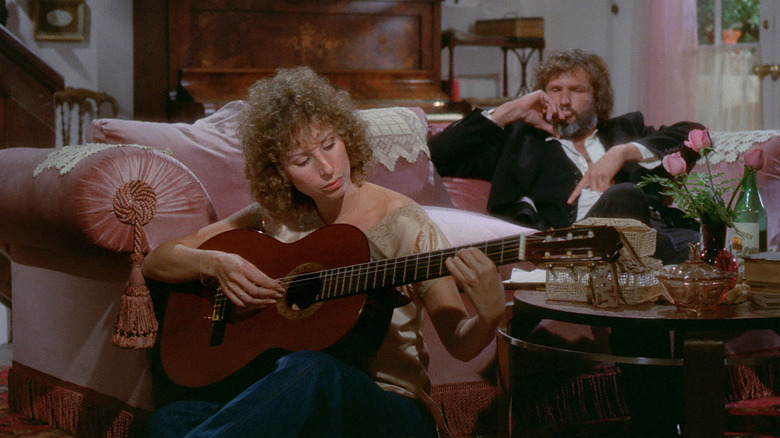
Okay, so, full disclosure: there have been four versions of "A Star is Born" as of this writing, with the most recent (again, as of this writing) released in 2018. I'll circle back to that one, but let's go over the history really quickly. In 1937, the first-ever "A Star is Born" movie, produced by Hollywood bigwig David O. Selznick and directed by William A. Wellman, was released with Janet Gaynor as a hopeful young actress mentored by a fading star (Fredric March). In 1954, that same story became a musical thanks to director George Cukor, with Judy Garland in Gaynor's role — as an aspiring singer this time — and James Mason as her love interest and guiding light. That's how we got to the 1976 version of "A Star is Born," which was written and directed by Frank Pierson and stars Barbra Streisand and Kris Kristofferson.
In Pierson's story, Kristofferson plays John Norman Howard, a rock star whose best days are behind him ... and who unexpectedly meets the younger and undeniably talented singer Esther Hoffman (Streisand) when she performs at a bar. As the two chart a romantic and professional relationship — and as John's star falls while Esther's rises — they try to navigate their newfound lives. The 2018 version, directed by Bradley Cooper (who also stars as singer Jackson Maine alongside Lady Gaga as the ingenue Ally), follows the 1976 version very closely, so queue up both for a movie marathon if you want to get the full "A Star is Born" experience.
The Lady Vanishes
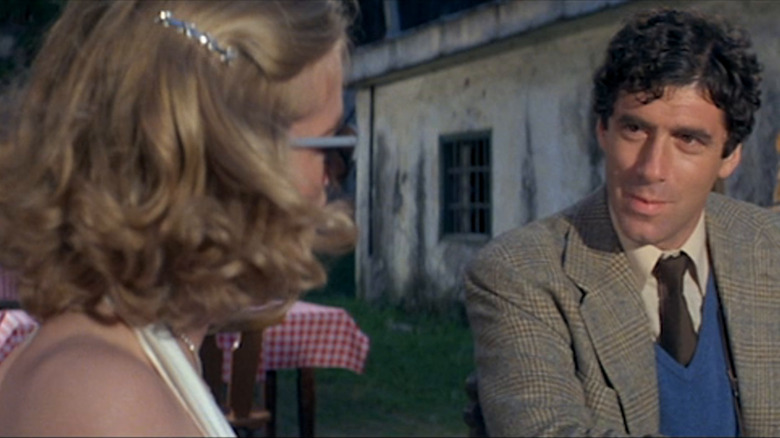
There are a handful of layers when it comes to the 1979 film "The Lady Vanishes" — directed by Anthony Page and written by George Axelrod — so bear with me for just a moment. The very first iteration of this story, titled "The Wheel Spins," was a novel written by Ethel Lina White and released in 1936; it became "The Lady Vanishes" as directed by thriller master Alfred Hitchcock in 1938. After several decades, Page and Axelrod adapted the script of Hitchcock's film, penned by Sidney Gilliat and Frank Launder, for their own version of "The Lady Vanishes," which makes the main characters American instead of British but keeps the plot beats pretty much the same.
The film is still set in 1939 as two strangers — heiress Amanda Metcalf-Mdivani-Von Hoffsteader-Kelly (Cybill Shepherd) and photographer Robert Condon (Elliott Gould) as they take a train from Bavaria (in Germany) to Switzerland. After Amanda drinks too much one evening and wakes up in a cabin with a bunch of other travelers, including a mysterious woman named Miss Froy (Angela Lansbury), who "vanishes" in short order. Amanda enlists Robert's help to figure out precisely what's going on — and even though the mystery remains more or less the same across the multiple versions of "The Lady Vanishes," it's worth watching both Hitchcock and Page's versions.
Heaven Can Wait
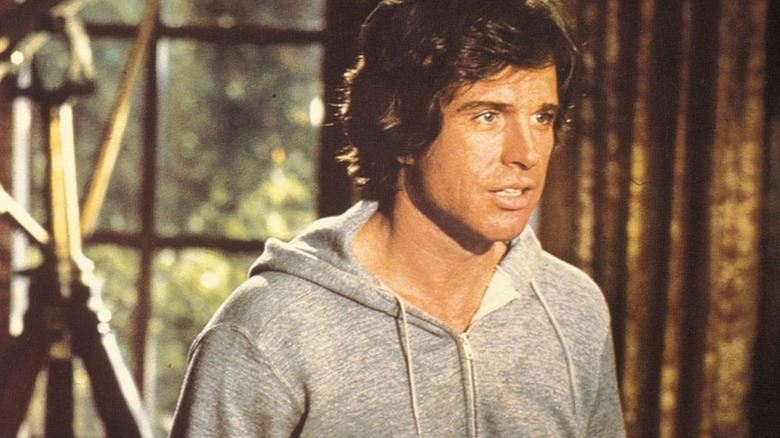
Directed by Hollywood heavyweights Warren Beatty and Buck Henry (and written by Beatty and Elaine May), the 1978 version of the sports drama "Heaven Can Wait" is an adaptation of the 1938 play of the same name by Harry Segall ... but it's actually the second of three major adaptations. In 1941, Alexander Hall directed "Here Comes Mr. Jordan," where a boxer played by Robert Montgomery gets a second chance at life after dying too young. Apparently, Beatty wanted to stick with the boxing angle for his remake and cast Muhammad Ali, but as the director and actor told Deadline in 2019 while celebrating the movie's 40th anniversary, Ali wasn't enthusiastic about giving up his thriving and very real boxing career to appear in the film. "I told him, 'Ali, if you're not going to quit, I'm going to just change the movie to a football story and go out and do it myself.' So that's how that happened," Beatty recalled.
That's why, in "Heaven Can Wait," Beatty's Joe Pendleton is a backup quarterback for the Los Angeles Rams who's mistakenly brought to heaven by a guardian angel who's new to the job (Henry). The film ultimately scooped up multiple nominations at the Academy Awards, and the story was then made into a third adaptation, 2001's "Down to Earth," where Chris Rock plays a comedian who's taken from Earth too soon. That's honestly the most interesting thing about this series of remakes: the basic story is the same, but each one features a totally different profession and changes the direction of the narrative.