

5 Forgotten '90s Westerns That Still Hold Up Today
Some of the best Westerns of all-time were released in the '90s — "Unforgiven," "Dances with Wolves," "Tombstone," and "The Quick and the Dead" to name a few notable examples. The decade also produced some great Weird Westerns, like "Back to the Future Part III," "Ravenous," "From Dusk Till Dawn," and "Dead Man." In short, the '90s showcased just how diverse the Western genre really is, and the aforementioned flicks are rightfully regarded classics.
With that being said, some of the best Westerns of the '90s flew under the radar and now exist in the ghost towns of days gone by. So, for this exercise, we are going to shine a light on some of the great films that don't deserve to ride off into the sunset quite yet.
From horror-tinged thrillers to rousing actioners, this list has something to accommodate the taste buds of every type of Western fan. With that in mind, grab your Stetson, pour a shot of whiskey (or any beverage you desire), and get ready to shout "yee-haw" while (hopefully) enjoying some awesome '90s Western movies you might not be familiar with.
El Diablo (1990)
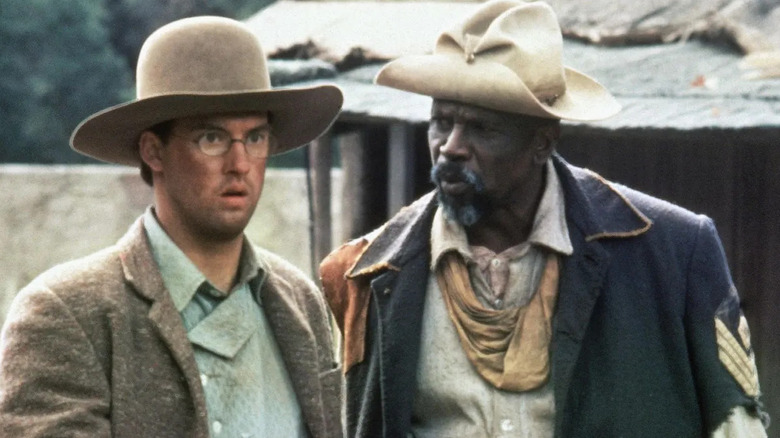
Every movie fan is familiar with the filmography of John Carpenter, the legendary genre auteur behind classics like "Halloween," "The Thing," and "Escape from New York." What's more, anyone who is familiar with Carpenter's background knows that he got into the movie business wanting to make Westerns. He's yet to direct a traditional Western, but he co-wrote the screenplay for the delightful "El Diablo," a lighthearted caper about a kidnapping in the Old West.
Directed by Peter Markle, "El Diablo" follows Billy Ray Smith (Anthony Edwards), a schoolteacher who embarks on a mission to rescue a student who has been kidnapped by the titular outlaw (played by Robert Beltran). The only issue is that Billy isn't exactly skilled in the art of shooting, so he enlists the help of an aging gunslinger, Thomas Van Leek (Louis Gossett Jr.), and his crew. Cue an exciting adventure across the frontier.
"El Diablo" boasts a similar set-up to so many other men-on-a-mission Westerns. That said, the Carpenter-penned movie puts a fluffier spin on age-old tropes, making it an entertaining homage to the Westerns of yesteryear. "El Diablo" is unlike anything else Carpenter's name has been attached to, but it proves that he's a versatile and creative talent. I also recommend this one to fans of Bruce Campbell's canceled sci-fi Western "The Adventures of Brisco County, Jr.," as both projects are tonally similar and in love with the genre.
On a side note, fans of Carpenter's horror fare should also check out "Vampires," his underappreciated neo-Western from 1998. The film isn't forgotten enough to make this list, but it's certainly underappreciated.
The Last Outlaw (1993)
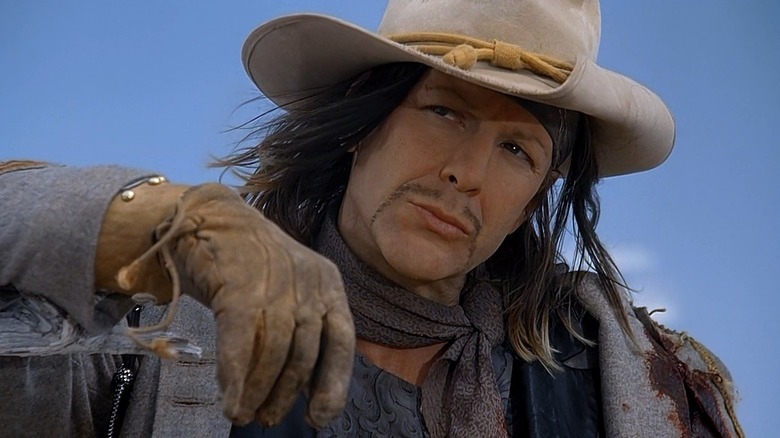
Screenwriter Eric Red knows a thing or two about making Westerns. After all, he co-wrote Kathryn Bigelow's cult classic horror-western hybrid "Near Dark," as well as several novels about gunslingers — the "Joe Noose" series is especially entertaining. Regardless of what genre he's operating in, Red's stories are full of action and excitement, so new viewers can go into "The Last Outlaw" expecting a fun shoot 'em up.
"The Last Outlaw" stars Mickey Rourke as Graff, a Confederate soldier-turned-outlaw left for dead by his gang following a robbery. Hell-bent on getting revenge, he joins forces with another posse and hunts down the no-good, filthy traitors, but it's a dangerous trek across the frontier. Rourke's gruff sensibilities are great for a role of this ilk, and he's joined by a strong supporting cast that includes Dermot Mulroney, Keith David, John C. McGinley, Keith David, and Ted Levine.
Boasting stunning landscapes, morally grey characters, and moments of brutal violence, "The Last Outlaw" was seemingly designed to tickle the fancies of Western movie buffs. Check this one out if you enjoy movies like "The Wild Bunch."
Clearcut (1991)
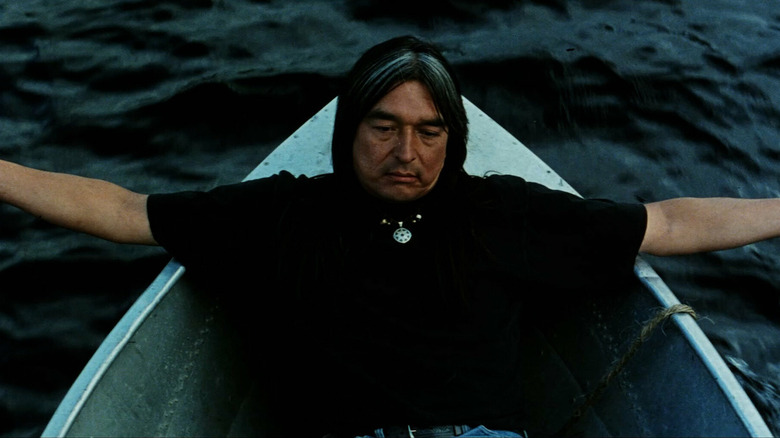
If you like your neo-Westerns that are politically charged, look no further than "Clearcut." Ryszard Bugajski's horror-tinged adaptation of M.T. Kelly's "A Dream Like Mine" tells the story of Peter (Ron Lea), a white lawyer who represents a First Nations reservation against the logging company out to destroy its land. When his efforts fail, a Native resident, Arthur (Graham Greene), kidnaps and tortures the boss of the logging company at the heart of the oppression, leaving Peter in a morally conflicting predicament.
"Clearcut" opens with a heated protest, where the Native inhabitants are trying to block construction work that will rip through their land. The police are out in full force and happy to engage in strong-arm tactics, which sets the tone for a movie that offers little respite from thought-provoking subject matter and intensity. "Clearcut" isn't a pleasant experience, but there is a point to the madness.
Similar to Jordan Peele's "Get Out," "Clearcut" challenges the sincerity of so-called allies. When he's around the Native characters, Peter talks about how someone needs to pay for the injustices going on. He says the right things, but is he willing to turn those words into actions when the system fails?
"Clearcut" raises some complex questions about morals and justice — how far is too far when getting payback against genuine systematic oppression. Is violence the answer? Does anybody win in these situations? The world wasn't ready for this movie in 1991, and it deserves more recognition.
The Jack Bull (1999)
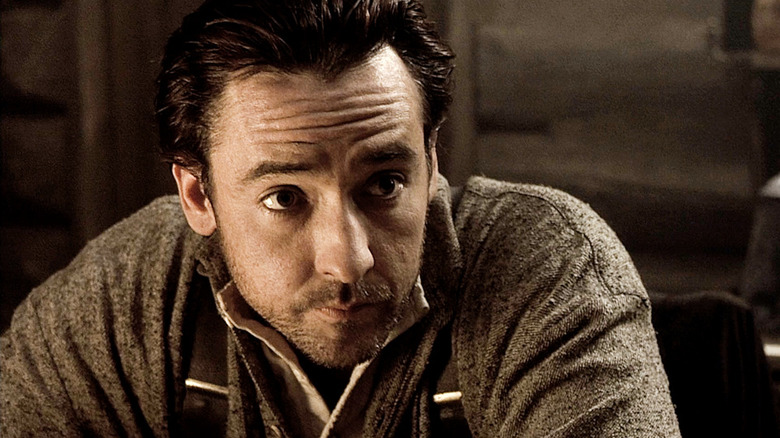
Revenge-themed Westerns often revolve around wronged heroes exacting bloody retributions against the villains who have oppressed them. This usually culminates in a bloody standoff where bullets fly and viewers can find catharsis in justice being dealt. John Badham's "The Jack Bull" certainly sees justice being administered, but it's to the letter of the law, and that means consequences for everyone.
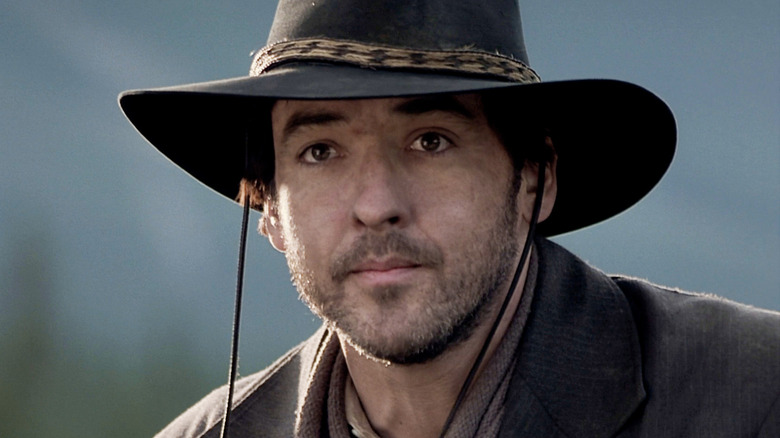
The story follows Myrl Redding (John Cusack), a simple horse trader who gets on the bad side of Henry Ballard (L.Q. Jones), a corrupt cattleman who runs their Wyoming territory with an iron fist. When Ballard's goons mistreat Redding's prized stallions, it sets off a chain of events that leads to numerous tragedies.
"The Jack Bull" is a story of the little man being trampled by a corrupt system, and it's easy to root for Redding (especially since Jones expertly makes Ballard so detestable). That said, it isn't a clear-cut revenge tale, as Dick Cusack's script explores justice through a nuanced lens. Don't go into this one expecting levity or catharsis, but you will leave it with plenty of food for thought.
Posse (1993)
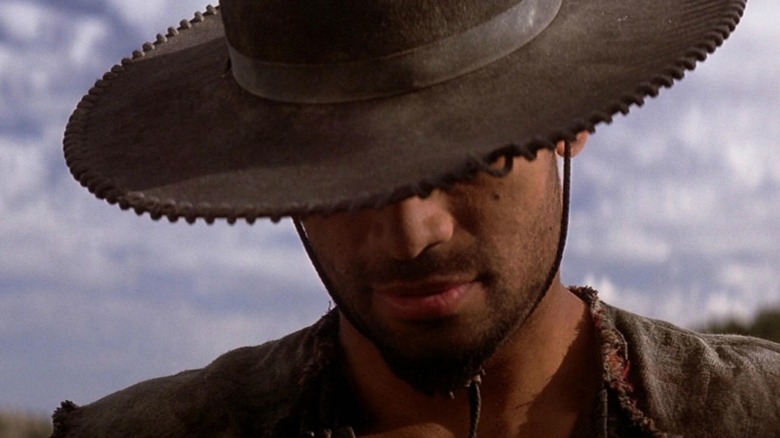
Netflix's stylish and fun "The Harder They Fall" is an intentional ode to the Old West's Black cowboys who rarely get movies made about them. It isn't the only film of its kind, though. In fact, director Mario Van Peebles, in collaboration with screenwriters Sy Richardson and Dario Scardapane, had the same idea when they made "Posse."
In this one, a group of African-American soldiers, led by Jesse Lee (Van Peebles), return to America in the wake of a fallout with their white comrades during the Spanish-American war. Loaded after stumbling upon some gold, the ex-soldiers head for a town that's mostly populated by African-American citizens, while evading their old boss, Colonel James (Billy Zane), along the way. Jesse is also out to kill a bunch of KKK weirdos who wronged him in the past — and he is packing gold bullets just for them.
"Posse" is a pulpy shoot 'em up that oozes style, swagger, and personality — and viewers won't have to wait long for the next action set-piece to arrive. Be that as it may, the film makes a point to remind viewers that Black cowboys served in the military, built towns, and contributed toward America's growth in a significant way. More than anything, though, "Posse" is a rip-roaring good time.