

George R.R. Martin On What He Actually Wants When Compared To J.R.R. Tolkien
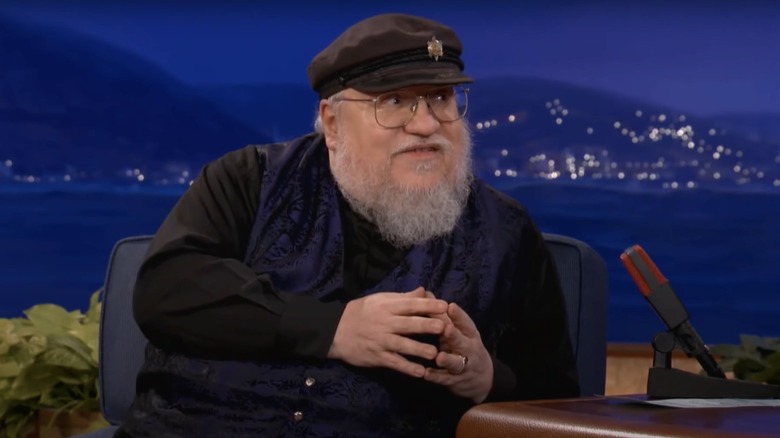
Even though their respective brands of fantastical storytelling are different, George R.R. Martin seems to understand why people liken his work to that of J.R.R. Tolkien. And while he isn't the first fantasy author whose output has been stacked up against that of the "Lord of the Rings" writer (nor will he be the last), Martin isn't bothered by the comparisons. In fact, the "Game of Thrones" creator hopes that, in the long run, readers will continue to engage with his writing the way they have with Tolkien's.
Martin previously opened up about this in an interview with Grace Dent. As he put it at the time:
"I don't think it's a matter of me replacing him or overtaking him or anything like that. If my work is being read 50 years from now as Tolkien's work was being read, I'd be thrilled."
As of this writing, many fans are waiting impatiently for Martin to finish his "A Song of Ice and Fire" books, which serve as the basis for HBO's "Game of Thrones." Completing that story surely won't hurt the odds of his work being read for years to come, but it's safe to say that Martin has already made a real impact on pop culture in his own right. That said, he's also been forthcoming about his fondness for Tolkien's work.
Why George R.R. Martin appreciates J.R.R. Tolkien's The Lord of the Rings
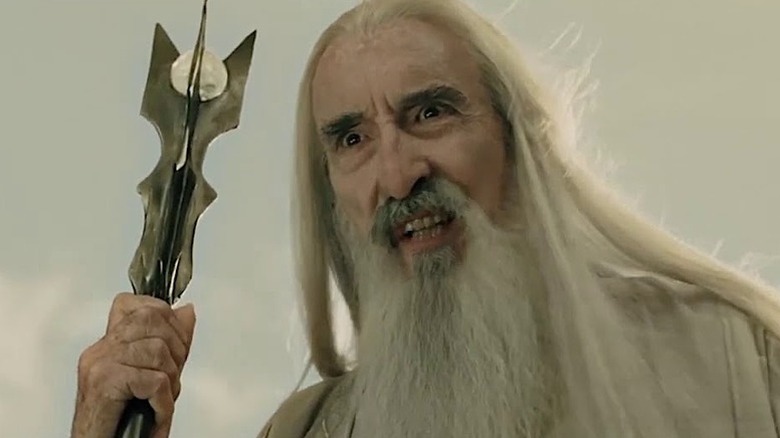
George R.R. Martin first read "The Lord of the Rings" as a teenager, and he wasn't a fan of the story's lack of happy ending back then. He wanted Frodo to live happily ever after, and he was upset that Saruman ruined The Shire after the Ring of Power was destroyed. Fast forward to adulthood, though, and those are now the reasons why Martin loves J.R.R. Tolkien's story. As he told Rolling Stone in 2014:
"Now, every time I re-read 'The Lord of the Rings' — which I do, every few years — I appreciate the brilliance of the scouring of the Shire. That's part of what lifts the book from all its imitators. There was a real cost to Tolkien's world. There's a tremendous sadness at the end of 'Lord of the Rings,' and it has a power. I think that's partly why people are still reading and re-reading these books."
Of course, part of Tolkien's everlasting success can also be attributed to people's fondness for filmmaker Peter Jackson's "Lord of the Rings" and "Hobbit" movie adaptations. Indeed, with even more Middle-earth film and TV projects currently in the works (like "The Hunt for Gollum"), it's highly likely that attention will continue to be shone on Tolkien's legendary literature for many years to come.