

Why The Biggest Fallout Season 2 Fan Complaint Is Just Silly
This article contains spoilers for season 2 of "Fallout."
Amazon Studios' "Fallout" is an interesting exercise in adapting a video game. For the most part, the show is completely standalone. It features original characters and an original storyline, tangentially touching on specifics of the games, as the show shares a timeline with the game's canon and features identifiable locations and factions. Still, the show is removed enough from the games that it doesn't really clash with them, at least in the first season. Season 2, however, leaned into the show's connections to the games by setting the action in and around New Vegas. This season highlighted the big factions of "Fallout: New Vegas," and even some of its biggest characters, like the corpse of Caesar and the enigmatic Mr. House.
From the start, fans have had issues with this approach. In the first season, there were complaints that "Fallout" seemed to contradict some events from "Fallout: New Vegas" in the bombing of Shady Sands. For the second season, the complaints remained. Specifically, some fans weren't happy with how the TV adaptation seemed to diminish the role of factions in the "Fallout" universe. The New California Republic, the biggest and most successful post-nuclear government in the games, had been turned to dust by the time of the show. Caesar's Legion is now split into two following the death of their leader. Even the Brotherhood of Steel, a heavily armed religious military faction, is rather quiet and fractured in the time of the show.
But if there is one thing the season 2 finale of "Fallout" makes clear, it is that those complaints are silly. Factions might become smaller. Tools are different, the reasoning for fighting might be different, but conflict is always the same — war never changes.
War, war never changes
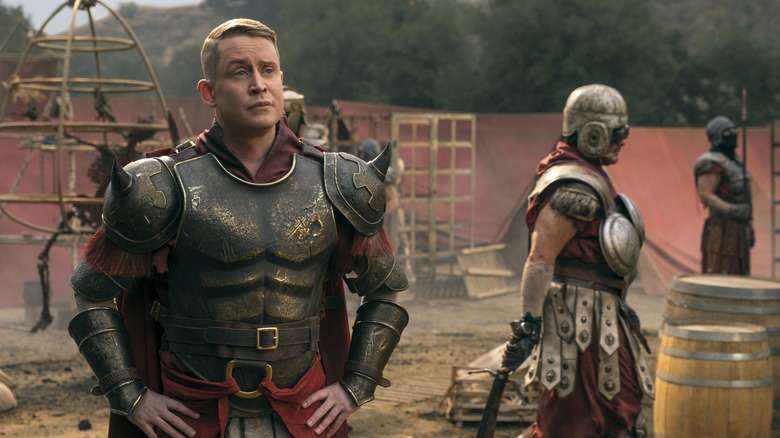
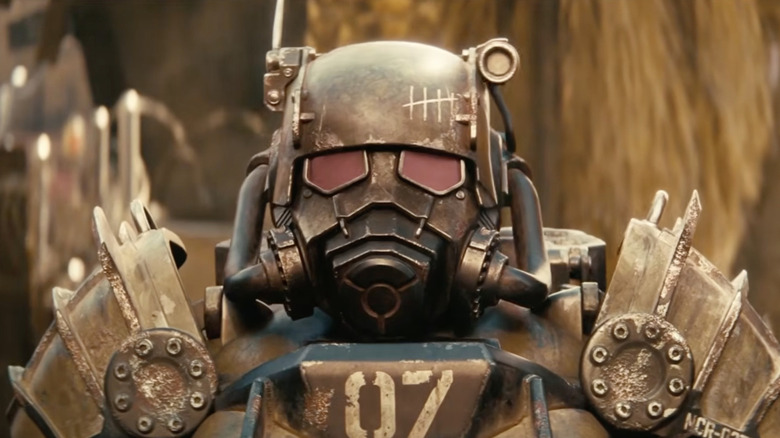
The finale of "Fallout" season 2 felt like a throwback to, well, the ending of "Fallout: New Vegas." Replace the Hoover Dam with Freeside, and you get almost the same climax. After we all thought they were dead, the New California Republic (NCR) returned to save the day and help Maximus kill the remaining Deathclaws that guarded the entrance to the Lucky 38 Hotel and Casino. Meanwhile, Caesar's Legion remnants overcame their differences and united under Macaulay Culkin's Lacerta Legate, marching to New Vegas at the end of the episode, looking to conquer the city.
Though the Brotherhood of Steel is technically not involved in the New Vegas conflict this time, they aren't exactly free from fighting. The season ends with a post-credits scene of the Brotherhood in the middle of what seems to be a civil war.
The return of the NCR in particular is a very welcome plot development. The shows make it clear that the NCR, despite not being perfect, is the closest thing this world has to good guys. Plus, they have the sickest armor in the "Fallout" universe. To have them return and liberate the town of Freeside is great news.
Except that freedom and peace might be short-lived. The war between the NCR and the Legion is definitely back, regardless of the player's choices in "Fallout: New Vegas." Some fans may take issue with that, but it does make sense for the world of "Fallout." This is a universe that's as silly as it is tragic. The idea that these two factions can't really be defeated, but they will somehow find a way to still try to kill each other no matter what, is pointlessly horrific and completely fitting the "Fallout" universe.